Introduction
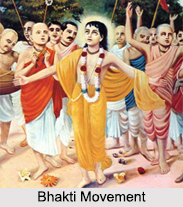 Bhakti movement was a Hindu religious movement of the medieval period that promoted the belief that Moksha was attainable by everyone. It was a silent revolution in the Indian society that was responsible for many rites and rituals associated with the worship of God by Hindus, Muslims and Sikhs. Kirtan at a Hindu Temple, Qawwali at a Dargah by Muslims and singing of Gurbani at a Gurdwara are all derived from the Bhakti Movement. Shankaracharya, the great thinker and a distinguished philosopher was the leader of this movement and Chaitanya Mahaprabhu, Namadeva, Tukaram and Jayadeva propounded this movement. The major achievement of Bhakti Movement was its abolition of idol worship.
Citation of Bhakti Movement in Ancient Scriptures
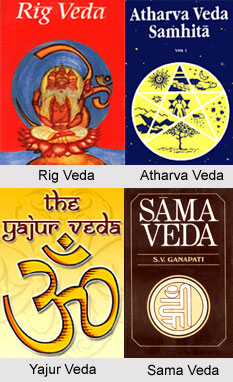
The feeling of Bhakti or devotion can be traced back to the "Rig Veda". It is the very first hymn of Rig Veda, which gives expression to a feeling of intimacy with the highest God. In the "Katha Upanishad", it is said that the divine help, which is the reward to Bhakti, is necessary before one can be saved. The "Svetasvatara Upanishad" speaks of the highest devotion to God. Panini refers to the object of devotion in the "Ashtadhyayi". The earliest God connected with bhakti is Vishnu-Krishna. In the "Bhagavad Gita" there is emphasis on love and devotion to God. The attitude of love to the Supreme God continued to be recommended in the "Bhagavata Purana".
Features of Bhakti Movement
The main features of Bhakti Movement are as follows:
(i) A devotee could worship God by love and devotion. A loving relationship between a devotee and his personal God.
(ii) Bhakti emphasised devotion and individual worship of a God or Goddess rather than performance of elaborate sacrifices. There was no need to worship idols or to perform elaborate rituals for seeking his grace.
(iii) Discarding of any discrimination based on gender, caste or creed. There was no distinction of high or low as far as the devotion to God was concerned.
(iv) If a devotee worships the chosen deity with a pure heart, the deity will appear in the form in which he or she may desire.
Development of Bhakti Movement
 Bhakti Movement spawned into several different movements all across North India and South India. There were a number of factors, which contributed to the rise and growth of the Bhakti movement during the medieval period. They are as follows:
i. The first important factor was the destruction of Hindu temples by the invaders. They destroyed idols of Hindu Gods and Hindu Goddesses. The Hindus lost faith in the dependability of their religious rites and, therefore, chose the path of love and devotion.
ii. The second factor can be presumed as the persecution of Hindus by the Muslim rulers, who tried to convert them to Islam and imposed jaziya if they were not prepared to become followers of Islam.
iii. The third factor was the ill treatment of the lower classes in Hindu society by the persons of upper castes. The people of the lower castes had to suffer injustice and cruelties.
So the teachings of the Bhakti saints who preached equality of castes as far as the devotion to God was concerned appealed to the people of lower castes.
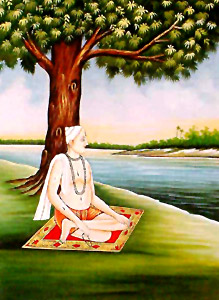 The evolution of Hindu Dharma may be divided into three periods: the ancient (6500 BC-1000 AD), the medieval (1000-1800 AD) and the modern (1800 AD to present). The Ancient Period is characterised by the worship of Shiva (Pashupati) during the Harappan times; the composition of the early Rig Vedic hymns; the Epic Period during which the Ramayana and Mahabharata were composed; period of Sage Vishvamitra, in whose reign a majority of the Vedic hymns were composed. The Bhagwad Gita was compiled between BC 500-200; Nyaya, Sankhya, and Brahma Sutras were recorded, which later gave birth to six popular schools of Hindu philosophy and final versions of Puranas, Tantras and other sectarian literature were developed (200-750 AD). Development of six popular schools of religious thought, establishment of Shankara`s Advaita Vedanta and the decline of Buddhism are the main landmarks of this period (750-1000 AD).
The Medieval Period saw the rise of devotional movements led by Ramanuja, Ramananda, Tukaram, Guru Nanak, Surdas, Chaitanya, Mirabai, Tulsi Das and many other saints. These devotional movement named as Bhakti movement started between the 7th and the 12th century. Several factors favoured the rise of Bhakti Movement, some of them were (a) Hinduism became more ritualistic and dogmatic and was ridden by caste system, which alienated the lower castes; (b) Both Buddhism and Jainism preached extreme austerities and had gradually lost their charm; (c) With the advent of Islam in India, the Sufi saints preached the idea of equality and brotherhood; (d) People were interested in religious thoughts that could satisfy their reason and emotions.
 The Bhakti Movement of South India was led by a series of popular saints Nayanars (Shaiviites) and Alvars (Vaishnavites), who disregarded the austerities preached by Jainism and Buddhism but instead preached personal devotion to God as a means of salvation. These saints, some of whom were also women, spoke and wrote in local languages like Tamil and Telugu and travelled widely to spread their message of love and devotion to everyone, irrespective of caste, colour and creed.
The Bhakti saints either believed in the existence of God in many forms and attributes like Rama and Krishna, or believed that God has no attributes. Ramanuja gave the Bhakti Movement a new meaning and spread to other parts of India during the 12th century AD. At the same time, Basava and his nephew Channabasava founded the Lingayat or Vir Shaiva Movement in Karnataka. The Lingayats, who were worshippers of Shiva, strongly opposed the caste system and rejected fasts, feasts, pilgrimages and sacrifices. They tried to bring about a reform in the Hindu social order by opposing child marriage and encouraging widow re-marriages. Ramanuja founded the Visistadvaita philosophy. His Sirbhasya, containing a commentary on the Vedanta, and the Gitabhasya are great masterpieces. Other philosophies that came into being were Dualism expounded by Madhavacharya, Dvaitadvaitavada (dualistic monism) expounded by Madhavacharya and the Suddhadvaita (pure non-dualism) propounded by Vallabha.
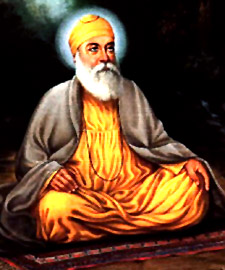
The spread of Bhakti Movement from south to north India was a long-drawn process. Namdev (first part of 14th century) and Ramananda (second half of 14th century) were the earliest Bhakti saints to spread their ideas to the north. Ramananda, who was a follower of Ramanuja, was born at Prayag (Allahabad). He preached the doctrine of Bhakti in Hindi to people of all the four Varnas. He substituted the worship of Rama in place of Vishnu. Kabir (1398-1518 AD) was the most renowned disciple of Ramananda. He emphasized on the unity of God, whom he called by many names. He denounced caste system, untouchability, idol worship, pilgrimages and other rituals. He rejected those principles from Hinduism and Islam which were of no significance in attaining real spiritual knowledge. His dohas are still chanted widely in India. Other important saints include Guru Nanak, Baba Farid, Baba Malukadasa, Baba Dharinidasa and Garibadasa. Guru Nanak also laid emphasis on one God and advocated the purity of character and conduct as the conditions for approaching God. He stressed on the need for a spiritual guru for guidance. His teachings gave birth to a new religion called Sikhism.
Indian Preachers of Bhakti Movement
Indian saints preached the concept of Bhakti Movement in the language of the common people. They laid stress on purity of heart and practice of virtues like truth, honesty, kindness, and charity. According to these saints, only virtuous man could realize God. These saints considered God as omnipresent and omnipotent. Even a householder could realize God by love and devotion. Some of the saints of Bhakti movement are mentioned below:
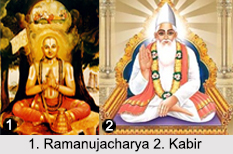
Ramanuja: The first great exponent of Bhakti was Ramanuja. He lived in the 11th century. He asked his followers to worship Vishnu. He did not believe in Sankara`s Advaita doctrine according to which the universal soul and the individual souls are one. According to Ramanuja, the individual souls exhale from him but are not essentially one with the Supreme Reality.
Ramananda: Ramananda flourished in North India in the 14th century. He entirely discarded the theory of caste system by birth. He preached the worship of Rama and Sita. Persons of all castes became his disciples. Among his chief disciples there was a barber, a blacksmith and a weaver. He preached in Hindi ,which was the language of the common man in northern India.
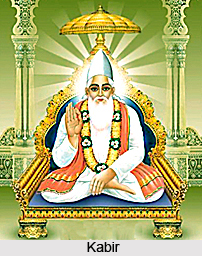
Kabir: The life of Kabir is totally unknown to the humankind. A true proponent of the Bhakti Movement, Kabir was a holy soul who further preached about the unity of Hindu and Muslim.
Guru Nanak : Nanaka was born in 1469 in the village to Talwandi. His parents belonged to Khatri caste. His father Kalu was the Patwari of the village. Nanaka was educated in the village school.
Vallabhacharya: Vallabhacharya was a Tailang Brahmin. He preached the worship of Vishnu in the form of Krishna. He was born in 1479 in the Telugu country. He visited Mathura, Vrindavan and many other sacred places and finally settled at Varanasi.
Chaitanya: Chaitanya was the greatest saint who preached the worship of Krishna and Radha. Chaitanya was born at Nabadwipa in 1486. His father Jagannatha Misra was a religious and scholarly man and his mother Sachi was also a pious and religious minded lady.
Bhakti Movement in Maharashtra
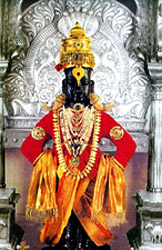 The Bhakti movement in Maharashtra gained momentum due to the people of modest origin who visited from place to place singing devotional songs and praising the name of God. These saints had devoted themselves in prophesying the harmony of God and fraternity of man. They preached in simple and lucid language that could be perceived by the common people of India.
Among the Indo-Aryan vernaculars devotional bhakti first appeared in Marathi. It started in the thirteenth century with Jnanesvara, also known as Jnanadeva, who wrote a long Marathi commentary on the Bhagavad Gita, called Bhavartha Dipika, more commonly known as the Jnanesvari, the fountain-head of Maharashtrian devotionalism. More than a commentary, the text constitutes a religious sermon in the form of a song composed in a rhythmic prose which should be chanted. Jnanesvara was initiated in the Natha sect, which explains his leaning towards monism, but his bhakti was due to his connection with the Varkarx sect, which instituted the regular popular pilgrimages to the shrine of Vithoba in Pandharpur.
The Jnanesvari forms a transitional stage in the development of devotional mysticism. It is still greatly influenced by the traditional commentary style of the theologians, but breaks new ground by using the vernacular. Thus was revived that contact with the masses that the great tradition of Hinduism had lost. It innovated also by using a form meant for kirtan chanting, by address¬ing itself to the mass of the people, and by drawing from the simple life of the village for examples and metaphors. The movement lasted till the seventeenth century, and we now describe its main personalities.
Namdev (1270-1350) was a contemporary of Jnanesvara, but outlived him by over fifty years. A tailor by caste, he was surrounded by other low-caste hymnodist-saints: Gora the potter, Samvata the gardener, Chokha the un¬touchable, Sena the barber, Janabai the maid. The object of his devotion was Vithoba, the form of the great Lord Vishnu residing in the Pandharpur temple. This Vithoba was the god of the Varkarl-Panth, a sect that has an important place in the history of Maharashtrian devotionalism. It differs from most other sects in several ways. Its members are householders, and have a strong aver¬sion to asceticism. Their main cult is the twice-a-year pilgrimage to Pandhar¬pur, when thousands of Varkaris walk from village to village, from town to town, singing the praises of Vithoba. The membership cuts across the whole caste structure, and their most important aid to religion is the society of saints, by which term is meant their brothers and sisters in the faith and the saints who have died but left their immortal songs behind. The spread of this intensely devotional movement over the whole of Maharashtra was connected with the names of Jnanesvara and Namdev.
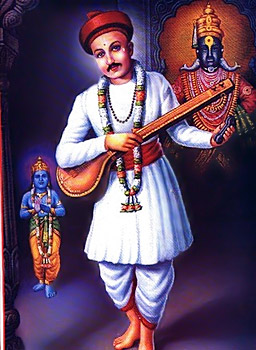 Namdev"s songs reflect a passionate nature, completely given to the love of Vithoba and the continuous invocation of his name. Often Namdev is troubled by the conflict between his all-absorbing bhakti and his everyday duties. Either his bhakti bears him away from the world and its demands, or his involvement in secular life makes him lose the presence of his Lord and thus have a foretaste of that "Dark Night of the Soul", the bitter sweetness of which Tukaram will experience to the full.
After Namdev two centuries went by without leaving any names of great saints. The coming of the Turks and of Islam drove the movement under¬ground as it were. The temple at Pandharpur was razed, but the spirit did not die. It was Eknath (1533-1599) who revived the inspiration and the tradition. He was a Brahman, born in a family of celebrated saints. As a scholar, he published the first reliable edition of the Jnanesvari, and thus gave the Marathi Gita back to his people. By writing a commentary on the Ramayana, the Bhavartha-ramayana, he also presented the story of Lord Rama to them. His mystical teachings found their supreme expression in his famous commentary on the eleventh book of the Bhagavata Purana, in which he obviously modelled him¬self on the great master Jnanesvara.
However, it was Eknath who invented a new form of deep religious life that needed no institutions or monasteries and no resignation from the world. He was a family man, devoted, austere, whose life was regulated around his hearth and his manuscripts, and yet he was a mystic. Every day he practiced kirtan, and his songs are part of the Marathi heritage. They have a strong moral basis, are concerned with the simplest aspects of life, and yet often soar to great heights of personal mysticism.
Another persona of Bhakti movement was Tukaram (1598-1650) who was the greatest Bhakti poet of Maharashtra. He was born in a rural family of grain traders and a tragedy set him on the path of devotion. His hymns are considered the glory of devotional poetry, the favourites of the Varkari pilgrims, and they are woven into the very texture of the Pandharpur rites. More than any other of his fellow saints, Tukaram was a mystic overpowered by love, by the presence or the absence of his Lord. Again and again his songs describe the terrifying passage through the "Dark Night of the Soul", where his feelings of sin and nothingness combine with the absence of the Lord to crush him down in the depths of despair. His burning desire for the Lord"s vision is frequently fulfilled, and in this fulfillment an ecstasy takes hold of his mind and his senses and transports him into visions, now cosmic, now intensely personal. All this is expressed in the concise, vigorous, sometimes brutally knotted style that is all his own.
Another personality of the Bhakti movement was Ramdas (1608-81). From his life history it has been known that he was orphaned as a child, left home and, after long years of spiritual training and wandering, he settled down on the banks of the Krishna River where he built a temple to Lord Rama. This last of the great Maharashtrian hymnodists is in several ways quite different again. His main work, the Dasabodha is not written in the commentary form, but is rather a compilation of his writings and sermons produced over many years. The content though was new, but also a reformer concerned with the contemporary state of society, with the bad condition of the Brahmans, with the threat of Islam. Ramdas was a devotee of Rama whereas the others centred their devotion on Krishna and the Vishnu of Pandharpur.
The devotees of Krishna and Vishnu have characteristics that set them apart from those of other regions: theologically there is a strong current of monism, and although mostly devotees of Krishna their works are devoid of erotic imagery. They revitalized Hinduism, estab¬lished the Maratha literary and cultural identity, and insisted on unifying social forces: these were to become important political factors in the building of the great Hindu kingdom of the Marathas, and later characterized the Maharashtrian nationalist reformist movement.
Bhakti Movement in Bengal
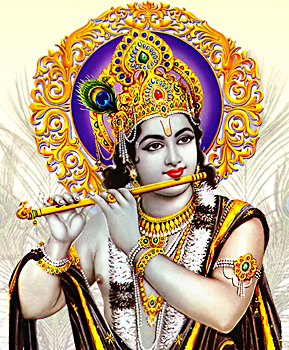 Bhakti Movement in Bengal had been fastened by sheer devotions of a good number of Bengali saints and social reformers who preached about the unison of God. Some of the saints of Bengal aimed to propagate the monism and dualism into a distinctly separate system.
Medieval devotionalism in Bengal has different roots from that of Mahara¬shtra and developed in quite a different way. Two distinct streams of religio¬sity determined the growth of Bhakti movement in West Bengal. On the one hand there is the influence of the Vaishnava tradition, and on the other the non-Vaishnava influences from Buddhist and Hindu sources.
The Vaishnava momentum came first of all in the scene of Bhakti movement through the Bhagavata Purana with its glorification of Lord Krishna. This came to West Bengal under the Pala kings and found its typically Bengali literary trans¬formation in Jayadeva"s passionately lyrical Gita-Govinda towards the end of the twelfth century. The Gita-Govinda brings into Bengali Vaishnavism a new aspect, derived from another source than the Bhagavata, namely the prom¬inence given to Radha, the favourite of Krishna. The erotic-mystical theme of the love of Lord Krishna and Radha occupies here the centre of the stage, and henceforth dominates Bengali devotionalism.
Non-Vaishnava influence in Bhakti movement came from two sources, distinct yet interrelated. Buddhism had been on the decline in India for some time, but in Bengal it survived under the Pala Dynasty, after which it became decadent. In its de¬cadence it produced forms that affected the development of Vaishnavism, and both these Buddhist and Vaishnava forms then influenced Bengali devotional¬ism. The emphasis of them was on the female principle of the universe and they exalted the religious value of sexual passion. In reaction against the cogencies of the discipline of Mahayana Buddhism they preached the doctrine of naturalism, thus idealizing the sensuous and showing a new path to salvation in and through the senses. Intense emotionalism and eroticism pervaded their rites and mysti¬cal teachings. Chaitanya, the greatest of the Bengali Bhakti saints, did not himself come under their spell, but they certainly had an impact on the erotically in¬spired Krishna-bhakti of Bengal, leading in some cases to decadent practices.
Chandidas (fourteenth century) is the first great name in Bengali Bhakti literature. His poems, which include poems to the Mother Goddess and to Krishna and Radha, testify to his being influenced by both the Gita-Govinda and the Sahajiya doctrines. He holds that the only way to salvation is the love of God, and that this love must be based on an earthly passion for a particular person. This passion, however, needs to be sublimated, and therefore one should choose an inaccessible person, for instance a low-caste or married woman, for its object. More influential than these Sakta poems was his Krishnakirtan, devoted to the love of Krishna and Radha, permeated with great depth of feeling and transfused with profound symbolism.
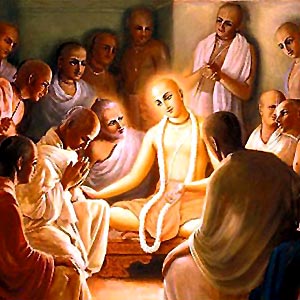 Although Vidyapati (fourteenth to fifteenth century) did not write in Bengali, but in Maithili, an allied dialect, his songs on Radha and Krishna are part of Bengali Vaishnavism. He wrote eight works in Sanskrit, and nearly a thousand of his love-ballads have been collected. His work is similar in con¬tent to that of Chandidas, but his poetry is more classical, polished, and learned. In fact it mostly reads as a Maithili version of Sanskrit courtly eroticism, and the tradition injected a religious symbolism into the poems which one sometimes suspects was absent in their making.
The saint who gathered together the various strands of Bengali Vaishnavism, became a reformer, and founded a sect with enormous influence on Bengal religious life was Visvambhar Misra, called Chaitanya (1485-1533). He was unique in medieval Bhakti history in that he was the initiator of a very broad movement which covered Bengal and spilled out into the whole of east India. It was a movement which encompassed an organized sect, a strong theological school, and a broad-based popular cult. Chaitanya was probably at first a member of the Sankarite Dasnami sect, and he did not leave any theological writings, but only a few devotional songs, He himself was primarily a vision¬ary ecstatic. He sent six theologians, the "six Gosvamins", to the sacred Krishnaite place Vrindavan to work out the theology of the emerging sect. These were the people who codified its doctrine and formulated its rules and rites. They were learned Sanskritists, familiar with the revelation and the tradition, and primarily intent on fitting their theology into com¬mentaries on the sacred texts, particularly the Bhagavata Purana. The main peculiarity of their theology is that Krishna is considered to be not a mere incarnation of Lord Vishnu, but the highest aspect of the divine, its "true essence". In this aspect he is united with the highest shakti, which ex¬presses the blissful power of divine life and is manifest in Radha. The aim of the devotee is gradually to ascend the ladder of bhakti till he reaches the supreme state of madhurya, or sweetness, in which he emotionally identifies himself with Radha and achieves the blissful state of union with Krishna. This step of perfection is expressed in a terminology taken over from the refined science of aesthetics, describing the experience of the beautiful. The whole theological edifice is thus based on a formalization of sublimated emo¬tional eroticism, and couched in terms derived from aesthetics. It should be stressed that this mystical theology insists strongly on virtue and on ethical training, as the necessary prerequisites for the full realization of bhakti.
In fact, this theology, elaborated at a physical distance from Bengal, in some way distanced itself from Chaitanya himself and the popular movement that grew around him. Chaitanya expressed himself in the sankirtan, a session of hymn-singing by a group of devotees. These songs were often accompanied by ecstatic dancing to the sound of tambourines. In homes or temples the sessions took place, or erupted in the streets in the form of processions. Chaitanya was the centre of the cult, and a whole literature of hymns, biographies, legends, and dramas sprang up around him. In fact Chaitanya himself became the object of popular devotion, and was considered the living Krishna, or rather the incarnation of Radha-Krishna. The Chaitanyites were no social reformers militating against the caste structure. Within the sphere of devotional practice they completely rejected all distinction of caste and thus promoted a sense of equality that penetrated deep into Bengali life. Lord Krishna and Chaitanya remained the main inspiration of high Bengali culture for three centuries. The seventeenth century produced a new crop of hymnodists, the greatest of whom was Govinda Das.
In the Bhakti movement in west Bengal, the orders of sadhus sprang up in the Chaitanya tradition, but they came strongly under the decadent influence of the Tantric orders. The Chaitanya movement had a great impact on Bengali life as a whole. It gave it a special identity which persisted even through periods of stagnancy, and provided time and again new inspiration to its religious reformers and poets namely Keshab Chandra Sen, Bankim Chandra Chatterjee, and Rabindranath Tagore.
The philosophical schools that took part in the Bhakti movement in West Bengal) had brought a reformation in the mental set up of people about their thought about God. In this movement the denunciation of caste offered up alternative for Hindus from the orthodox Brahaminical systems. Moreover, the Bhakti movement had enriched the art and culture of India and even the entire world by music, literature and art and provided India with reformed spiritual momentum.
Bhakti Movement in South India
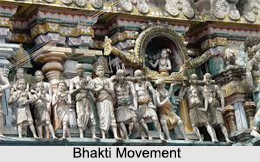 It would appear that the Hindu religious leaders were apprehensive of the growing popularity of the Jains and the Buddhists. This led to the intemperate language and the determined propagandist methods adopted by the leaders of the Bhakti movements. Though the early Alvars of the 6th century, as the Vaishnavite men of the religion were called, were more tolerant, from the 7th century onwards both the Saiva Nayanmars and the Vaishnava alvars adopted an attitude of stern hostility towards Jainism and Buddhism.
The Bhakti Movement was essentially founded in South India and later spread to the North during the late medieval period. This Movement itself is a historical-spiritual phenomenon that crystallized in South India during Late Antiquity. It was spearheaded by devotional mystics (later revered as Hindu saints) who extolled devotion and love to God as the chief means of spiritual perfection. The Bhakti movement in South India was spearheaded by the sixty-three Nayanars (Shaivite devotees) and the twelve Alvars (Vaishnavaite devotees), who disregarded the austerities preached by Jainism and Buddhism but instead preached personal devotion to God as a means of salvation. These saints, some of whom were also women, spoke and wrote in local languages like Tamil and Telugu and travelled widely to spread their message of love and devotion to everyone, irrespective of caste, colour and creed.
South India`s 75 Apostles of Bhakti is the twelve Alvars (also, Aazhvaars, Aazhwaars) and sixty-three Nayanmars (also Nayanars, Naayanars, Naayanmaars). They were all great devotees of the Lord most of whom came from the Tamil region. Of these Appar, Sambandar and Sundarar were authors of the Tevaram, a collection of standard Saivite canonical literature. Manikkavachakar of the 9th and perhaps early 10th century was the fourth of this illustratious group of Saiva bhakti-ites. Kannappa nayanar karaikkal ammai, kochchenger cholan and few others listed among the saiva saints belonged to pre 6th century while the rest lived between then and the late 8th century.
Among the Vaishnavites there were twelve Alvars of whom Pey, Bhudam and Poygai called Mudal Alvars lived in the 6th century and are supposed to have been contemporaries. Nammalvar considered by Vaishnavas, as the greatest among the Alvars was a great and true mystic and the author of a thousand verses collectively called Tirywaymozhi; he was Velala saint. His hymns are treated as equal in spiritual merit to the Vedic hymns. Of the alvars perialvar andak and kulasekhara of kerala were among the latest chronologically. Tirumangai mannan, a robber chief turned devotee, composed the largest number of verses in the Nalayariram i.e, the collection of 4000 devotional hymns sung by the twelve Alvars.
The Bhakti movement especially its Saivite wing set out to achieve two purposes and they were equally onerous. The first was to stem a heretical tide of the mass popularity of Jainism and Buddhism and to reclaim the people to sort of Hindu orthodoxy. The second was to convert the kalamukhas kapalikas pasupatas and a variety of other primitive sects, which exulted in violent orgies and indulged in barbarous superstition, which did not exclude a belief in and practice of human sacrifice and dealing in crematorial relics. The Mattavilasa Prahansana of Mahendravaramna I and some allusions in the periyapurnama of Sekkilar point to this situation. So the twin concerns of the Bhakti-ites were to prevent external heresy and internal religious disorders so that a reformation and Counter Reformation were simultaneously undertaken. By the end of the 9th century at least by the time of andal of srivilliputtur and Manikavachakar the famous author of the reputed tiruvachakam , the situation has been completely redeemed i.e. from the point of view of Bhakti leaders; this qualification is needed because we know that primitive Saivism though deprived of its more objectionable features was still popular in some quarters, and this is shown by its prevalence as late as the reign of Rajendra I (Chola) in Tiruvorriyur and other religious centres. The followers of the Saktha religion (worship of Shakti female of generative energy) at time degenerated. But Shaktism of a sort has persisted even in high quaters like a Adi Sankara himself.
In the development of religion in the Tamil country in particular the following tendency is noticeable and is to be remembered. A considerable segment of this development may be described as an attempt on the part of continuously reforming Hinduism to adjust itself to the changing situation created by the Jainas and Buddhist- popularity that waxed and waned by turns.
The Hindu bhakti movement reached its culmination with the collection and editus of the Vaishnava and Saiva hymns by Nathamuni and Nambiander Nambi respectively in the late 10th and 11th centuries. The standardization of the canonical texts was followed by other texts being added to the corpus as part of the total. But the Bhakti movement, which obviously was a departure from the sacrificial Vedic religion, or the intellectual Upanishadic pursuits, embarrassed the Hindu revivalists and so it became incumbent on their part to link the devotional hymns to the Vedic tradition. Hence Ramanuja in his Sri Bhasya and Madhva in his commentary on the Brahmasutras compromised Bhakti with Vedas and created Vaishnavite theism. Sankara of kaladi in Kerala, who lived earlier in the 8th century (788 to be precise) along with Kumarila Bhatta recreated the ancient Vedic brahmanical thought and established Smartaism to which all the non Vaishnava Brahmins are now affiliated. He preached a philosophical monism. He promotes the great doctrine of maya or illusion which to the Hindu mind was so alluring.
A number of commentaries on the 4000 Vaishnava hymns by erudite scholars have comedown to us. Among these commentarors Periavachan pillai is considered to be the greatest. The writings of these scholars spread Sr Vaishnava religio-philosophical ideas far and wide. A number of esoteric texts called Rahasyas were also written and among these Sri Vachna Bhushanam ranks very high.
Influence of Bhakti Movement on Tamil Literature
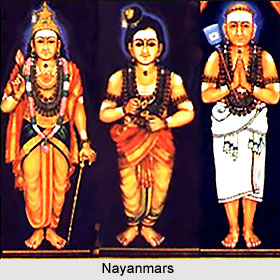 The influence of Bhakti Movement on Tamil Literature was noticed in the period after the Sangam age and the period of Ethical Tamil literature. The Bhakti movement initiated in ancient Tamil Nadu and later to spread to the northern India, during the late medieval ages. In the south India, Bhakti Movement centred on both Lord Shiva and Lord Vishnu in all his incarnations.
Bhakti Movement and Spreading of Tamil Literature : The saints, which even included women, spoke and wrote in vernacular languages such as Tamil and Telugu. The saints traversed through out the country to preach the message of devotion and love among people, irrespective of caste, colour and creed. Since the 7th century the Nayanmars and Alvars of the Shaiva and Vaishnava sects of Hinduism went to numerous temples and sang about the magnificence of the presiding deities with the objective to speak for their respective sects in the Tamil land.
The Alvars and the Nayanmars used the fine arts such as poetry, music, dance and drama to propagate the Bhakti movement in the nation. The saints believed that family life and the performance of a vocation were not a restriction for the realisation of enlightenment. But they definitely stressed that the mind should be instilled with the spirit of God. Due to this realistic view, the Bhakti movement helped the various temples to evolve as centres of fine arts. The metrical compositions of the Alvars and the Nayanmars in Tamil also supported the Bhakti movement in gaining popularity.
Role of Songs in Bhakti Movement : The poignant devotional songs were utilised to confine the excessive influence of Jainism and Buddhism in India. Tamil literature and music played a significant role in this movement. The various saints composed many verses and songs praising Lord Shiva and Lord Vishnu. Saint Cuntarar believed Lord Shiva was the embodiment of the 7 ragas and the soul of music. Saint Tirunanacampantar promulgated Tamil through music. Saint Tirunavukkaracar is another renowned leader of the Bhakti movement who disseminated Tamil and music.
For the Shaivites the musical compositions of Tirumular and Karaikkal Ammaiyar indicated the initiation. In case of the Vaishnavites the fore-runners of Bhakti movement were Peyalvar, Puttatalvar and Poikaiyalvar. Some of the other renowned poet saints of the Bhakti movement include Tirunavukkaracar, Nanacampantar, Campantar, Cuntarar and many others.