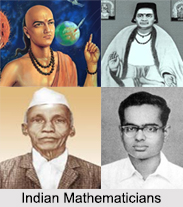
 Indian Mathematicians have made significant contributions to the field of mathematics, like introducing the concept of zero and place-value arithmetical notation. Indian mathematicians are considered amongst the best in the world who have guided the future generations of mathematicians with their varied works. From discovering the concept of zero to calculating the correct days in a year, mathematicians in India have been at the forefront of challenging the norms as well as a thirst for knowledge.
Early Indian Mathematicians
Indian mathematicians date back to Indus Valley Civilization and Vedas. Some of the renowned Indian mathematicians during the early Vedic Period include names like Apastamba, Aryabhata, Katyayana, Manava, Yajnavalkya, Baudhayana and Panini. Renowned mathematician Baudhayana was also a priest and a noted author. Apastamba"s Dharmasutra constitutes a part of the superior Kalpasutra that contains around "30 prasnas", literally means questions. Aryabhata formulated and introduced the concept of Zero. In 750 AD, Shridhara composed "Patiganita Sara", which is a book on algebra.
 Classical Indian Mathematicians
From the classical age, Aryabhata I is one of the most popular and actually the first one in the list of Indian mathematicians-astronomers. He has contributed significantly in the field of mathematics. The most well-known works of Aryabhata include, "Aryabhatiya" and "Arya-Siddhanta". Bhaskara I was a renowned 7th century Indian mathematician. He is the first one to write numbers in Hindu-Arabic decimal system, and who gave a unique and remarkable rational approximation of the sine function in his interpretation on Aryabhata"s work. Jayadeva was a popular Indian mathematician of 9th century. He mainly worked on Chakravala method or cyclic method. Brahmagupta was also a popular mathematician of the early age. Bhaskaracharya was also a notable mathematician of the early age and his work had given an algorithmic approach.
Mahavira from South India was a prominent mathematician of the 9th century. His work had given special emphasis on problems related to quadratic and cubic equations. Madhava was also a prominent mathematician of 14th century and his works included detection of elements that are related to differential calculus. He had also given an approximation of pie. Moreover, Madhava had started a school of mathematics in the state of Kerala and some notable followers of that school were Nilakantha and Jyesthadeva. Gopala was also one of the well-known Indian mathematicians.
Modern Indian Mathematicians
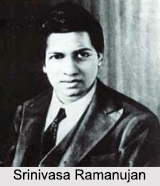
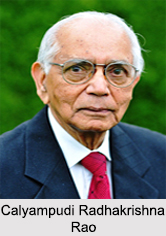
Manjul Bhargava, another noted mathematician of the modern era is known for composing the law for ternary quadratic forms. The work of Manjul Bhargava bears a deep approach and serves as a mathematical guidance. S. Ramanujan is most famous amongst the modern mathematician of India. He is one of the most recognised Indian mathematicians although he had almost no formal training in pure mathematics. He is known for mathematical analysis, number theory, infinite series and continued fractions, including solutions to mathematical problems considered to be unsolvable. Prasanta Chandra Mahalanobis was a renowned Indian scientist and applied statistician. He founded the Indian Statistical Institute, and contributed to the design of large-scale sample surveys. Calyampudi Radhakrishna Rao"s contributions include estimation theory, statistical inference and linear models multivariate analysis, combinatorial design, orthogonal arrays, biometry, statistical genetics, generalized matrix inverses and functional equations. Some of the famous Indian mathematicians of the later age are A. A. Krishnaswami Ayyangar, D. K. Raychaudhuri, Harish Chandra, Shreeram Shankar Abhyankar, Ramdas Lotu Bhirud, Jayant Narlikar and many others.
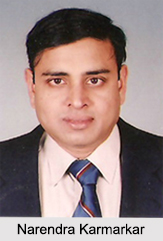 Other noted Indian mathematicians from various ages include, Aryabhata II, Bhaskara II, Varahamihira, Nilakantha Somayaji, Jagannatha Samrat, Gadadhara Bhattacharya, Narayana Pandit, Vinod Johri, Biswatosh Sengupta, Narendra Karmarkar, M. S. Raghunathan, Akshay Venkatesh, Sucharit Sarkar, Vijay Kumar Patodi, Navin M. Singhi, Kannan Soundararajan, S. S. Shrikhande, C. S. Seshadri, K. S. S. Nambooripad, L. Mahadevan, Chandrashekhar Khare and others.