





 Indian historical dynasties consist of the various royal dynasties which administered different portions of India, since ancient ages. These dynasties in the present contemporaneous times entails a very much different and diversified context, referring primarily to the political dynasties in India, luminaries in these families who have for generations served their nation with untiring and relentless spirit. However, the present Indian administration, following a democratic and sovereign form of government, is rooted on terms on a very dissimilar plane; the Government of India espouses that mode of administration, which was formulated by the British Empire, largely following in their liens, with a few exceptions. Indian historical dynasties consist of the various royal dynasties which administered different portions of India, since ancient ages. These dynasties in the present contemporaneous times entails a very much different and diversified context, referring primarily to the political dynasties in India, luminaries in these families who have for generations served their nation with untiring and relentless spirit. However, the present Indian administration, following a democratic and sovereign form of government, is rooted on terms on a very dissimilar plane; the Government of India espouses that mode of administration, which was formulated by the British Empire, largely following in their liens, with a few exceptions.
As such, the notion of politics and politic view to ruling the country is entrusted generally with the ruling Indian political dynasty since Indian Independence. The present Republic of India, as in universally known from Indian ancient historical annals, never was governed in the present manner, with ancient Indians and the nationwide populace resorting to the monarchical system of administration, involving the dynastic form of government, ruled for time immemorial by one single dynasty, owing to his royal blood line and lineage. As such, the concept of Indian dynasties in erstwhile times entailed a much different context, pitching rulers against rulers for absolute supremacy. 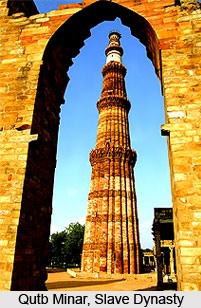 Ancient Historical Dynasties
Maurya Dynasty (322 to 185 BCE) was amongst the most important historical dynasties of ancient India, founded by Chandragupta Maurya and it reached great heights especially during the regime of King Ashoka. He ruled for 37 years (268 to 232 BCE) and later embraced Buddhism. The Kushanas ruled Jammu and Kashmir, along with several other portions of northern India during the 1st century and it flourished under King Kanishka (ca 127 to ca 140). He administered his kingdom from two capitals, one at Purushapura which currently corresponds to Peshawar, north-western Pakistan and another in Mathura, Uttar Pradesh. The Fort at Bathinda or Qila Mubarak, Punjab is attributed to him. It was followed by Gupta Dynasty which commenced from 320 to 550 CE whose illustrious rulers were Chandragupta I, Samudragupta, Chandragupta II, etc. Termed as the Golden Age of India, India witnessed excellent growth in the spheres of religion, philosophy, science and technology, mathematics, literature, engineering and others. During 3rd century CE, the Vakataka Dynasty controlled several parts of India and then it was succeeded by the regime of Harsha Vardhana who ruled from 606 till 647 who was known to be a compassionate ruler. Thereafter, kings of Chalukya Dynasty reigned over vast portions of central and southern India between the 6th and 12th centuries. Medieval Historical Dynasties Medieval historical dynasties involve the Rashtrakuta Dynasty which prospered from the 8th till the 10th century, The Pala Dynasty which continued from 8th till the 12th century, Chola Dynasty which was in imperial power from 9th to 13th century, the Islamic Sultanates, Delhi Sultanate which controlled India during the 12th and 13th centuries, Mughal Dynasty which enjoyed royal administrative powers from 1526 till 1740, Maratha Dynasty which lasted from 1674 to 1818 and Sikh Dynasty which continued from 1799 till 1849. Rulers of Slave Dynasty (1206 to 1290) administered large tracts of India, followed by Khilji Dynasty (1290 to 1320) whose famous king was Ala-ud-din Khilji which enabled the empire to safeguard against the repeated Mongol conquests. 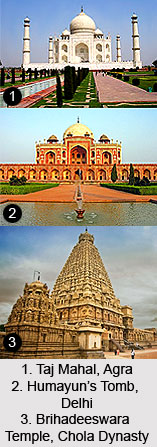 Urdu language was born during Delhi Sultanate. Ghiyas- ud- din Tughlaq established the Tughlaq Dynasty (1320 till 1414). During 14th to 16th century, Vijayanagar Empire was at its peak, founded by Harihara I and is a World Heritage site, known as Hampi. Delhi, Punjab, etc. were ruled by Lodhi Dynasty from 1451 till 1526 and Ibrahim Lodhi, Sikander Lodhi, Bahlol Lodhi were some of the famous rulers of this dynasty. Urdu language was born during Delhi Sultanate. Ghiyas- ud- din Tughlaq established the Tughlaq Dynasty (1320 till 1414). During 14th to 16th century, Vijayanagar Empire was at its peak, founded by Harihara I and is a World Heritage site, known as Hampi. Delhi, Punjab, etc. were ruled by Lodhi Dynasty from 1451 till 1526 and Ibrahim Lodhi, Sikander Lodhi, Bahlol Lodhi were some of the famous rulers of this dynasty.
A major part of India was governed by the Mughals belonging to the Mughal Dynasty which was established by Zahiruddun Mohammed Babur in 1526 and continued till 1858. It started declining after 1707 onwards, while some of its most renowned rulers included Humayun, Akbar, Jahangir, Shah Jahan and Aurangzeb, most of whom patronised arts, architecture and literature. Humayun's Tomb, Red Fort of Delhi, Fatehpur Sikri at Agra, Taj Mahal at Agra and numerous others. Another royal dynasty which ruled large parts of northern India with its capital in Delhi was the Sur Dynasty (1540 to 1556) which was established by Sher Shah Suri. The Marathas were the only imperial power which thwarted the Mughal Dynasty, Nizam, Nizam of Bengal, etc. and was founded by Shivaji and gathered considerable power during the rule of the Peshwas. Sikh Empire flourished under the rule of Maharaja Ranjit Singh from 1780 till 1839 and it experienced gradual downfall by the first and second Anglo-Sikh war. Modern Historical Dynasties Modern historical dynasties belong to the final Mughal rulers of the Mughal Dynasty and also the various Nawabs including Nawab Siraj-Ud-Daulah of Bengal who ruled from 1733 till 1757, emperor Shah Alam II or Ali Gauhar who reigned from 1728 to 1806 CE and Farrukhsiyar whose rule continued from 1685 till 1719. These rulers fought several force battles against the Indian colonial powers, particularly the British forces, of the British East India Company. |
| ||||||||||||||||||||||||||||

