 Uday Shankar is known to be the Father of Modern Indian dance. When he came into contact with the great ballerina, Anna Pavlova, he had as much to give to her as to receive from her. Again on a different note, Rabindranath Tagore`s visit to South-east Asia resulted in an awareness of the radiance which lay behind a dusty mirror. A creative mind like Pandit Uday Shankar and a literary genius like Rabindranath Tagore smashed the narrow-mindedness against an art which had been reduced to mere entertainment.
History of Modern Indian Dance
Rabindranath Tagore received back what India had given to South East Asia many centuries ago. He received Operatic forms of theatre which was lost to the complicated 19th century Indian theatre. He was curious about Balinese and Javanese dancing which made him invite Guru Nabha Kumar of Tripura to Shantiniketan. Uday Shankar realized after his visit to Paris that the West is looking for fresh inspiration from India.
Uday Shankar had experimented in two ways. The primary one was the desire to revive dance. Here Indian mythology and legends were presented beautifully. The second was expression of sensitive man`s reaction to the ugly mechanization of life. For the first type he had used long, flowing, slow movements in a slow rhythm. He used jerky movements which had no inclination to any specific raga. He laid the foundations of modern dance. His style came to be known as the `Oriental Dance.`
A parallel development was taking place which can be apparently termed as the growth of revivalism. This was inspired by the neo-traditionalists, inspired by Rabindranath Tagore. They tried to do what Tagore had done in literature, poetry, painting and theatre. They were trying to recreate it as best as possible as well as present it in such a way which would be acceptable to all. Contributions of Menaka, Gopinath, Ragini Devi and Rukmini Devi may be considered as belonging to this school. Their art was shaped in accordance with their discoveries of the tradition. These artistes strictly adhered to the classical pattern of relating movement to the metrical cycle and to the sahitya.
Aspects of Modern Indian Dance
Dance as a performing art has been enthralling the audience since centuries. This art form has experienced a long journey from the Devadasi system to the modern times. The beginning of the modern era in India experienced various European invasions. During these invasions and foreign rule, every form of culture, art and craft of India deteriorated. Moreover, the status of women in the Indian society also degenerated. However, gradually after the social reforms the position of women in the society was regained and music, dance and other performing arts began to be explored with newer depths. Thus contemporary dance became the involvement of body movement and originality.
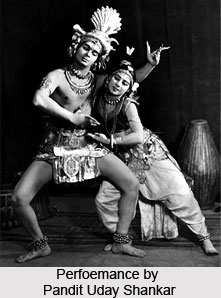
Uday Shankar wanted to break away from traditional pattern. The style he had created had no distinction between Nritta and abhinaya. Primarily it was movement of human form for its own sake. Music was composed after the composition of the dance. This was a reversal of the classical pattern. Movement evolved first and was not guided by any stylized pattern; any point of expression of body could be used. Except for some singing to create required feel there was hardly any vocal accompaniments. The dancer could not interpret according to the melody of music.
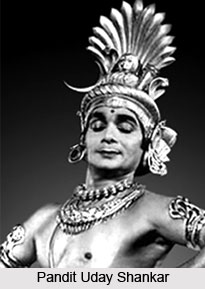
Another experiment was that the dance was not based on kinetic hypothesis. Repetition of any basic pose was null. There was no self-imposed limitation of the ardhamandali of Bharatanatyam, or the chowka of Odissi, or the erect spinal treatment of Kathak. The steps were a series of movements against counts or beats. No poetry was sung. Hastabhinaya played an important role as the story was told through a series of movements. Hands performed different function unlike tradition classical styles.
However he discovered later the rich storehouse of the classical styles which needs to be explored. Almora Centre was built. Guru Kandappa, Guru Namboodiripad and Guru Amobi Singh were invited to this centre. He learned the Indian classical styles taught by these gurus. Majority of the dancers who were pupils of these masters were influenced by these styles and thereby adapted it to modern dance. The break up of the Centre and the establishment of various schools all over the country by these artistes may be called the second phase of the development of the modern dance in India. Majority of them fell back on the known and tested traditional language of the classical styles. Their creations became music dependent. There lied an initial classical style behind any modern dance creation. The only new thing was to have a story in which characters played a part rather than one person depicting various roles.
None of the disciples of Uday Shankar evolved an individual style. They could not even break away from the tested principles on which classical styles were based. Since the training was limited, they looked towards other classical forms. The ultimate result was a string of different types of movements drawn from the different classical styles.
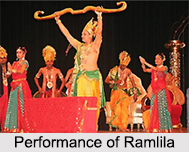
Shanti Bardhan was one of the disciples of Uday Shankar. He was an exceptional who had imbibed his master`s technique to create a new form of dance. He created two ballets, Ramlila and Panchatantra, which may be correctly termed as "modern dance". In Ramlila human beings acted as if they were puppets. One single movement was chosen for this. The story of the Ramayana was portrayed through this. This creation was refreshing as it was a departure from anything that had been done earlier. In Panchatantra, a distinctly new style was created. The arm, spine and the knee movements were a real contribution to modern dance. In this ballet there was no relationship between word and mime. Shanti Bardhan had gone a step further by discarding the statuesque the word-gesture relationship, and by ignoring the tukda or toda principle. However he did not live to complete his work and his colleagues did not possess the creative genius which was required to carry on his tradition.
There have been attempts to reinterpret Ramayana, Mahabharata and other mythical legends. Discovery of India by Jawaharlal Nehru has been an active source for many choreographers. This book played an important role in the history of the modern dance movement. However, the book was a presentation of a series of episodes from the history of India. The choreographers were attracted to the moral overtones of life stories of Shivaji, Maratha Empire or the Court of Akbar. Basically no one has attempted to present modern themes.
Influence of Natyashastra in Modern Indian Dance
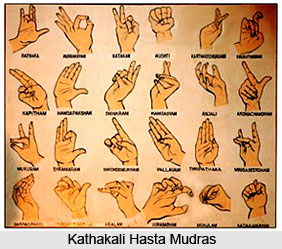
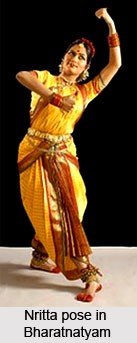
Dance in Contemporary India continued to develop on the basis of three distinct types that define Indian dance. The three distinct types consist of "Nritta" which is a pure and simple dance and involves movements of body and limbs. The second type is the "Nritya" which is linked with facial expressions, hand gestures and symbolic body poses. The third form is the "Natya" that has the elements of a drama which is introduced through the use of spoken world. Furthermore, modern Indian dance also absorbs the use of various "mudras". All these have contributed to the expansion of dance with gestures and participation of the body to communicate with the audience.
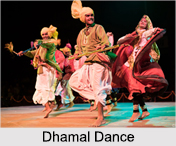
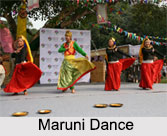
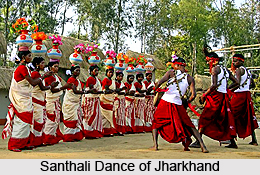
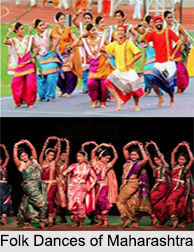
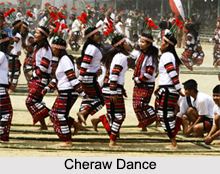
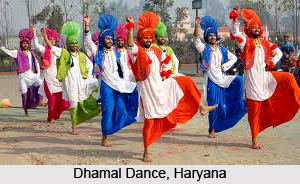
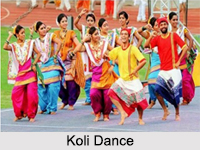
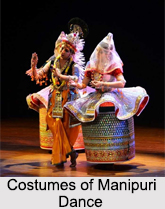
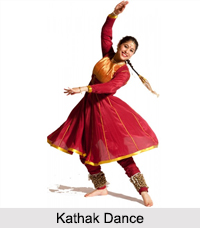
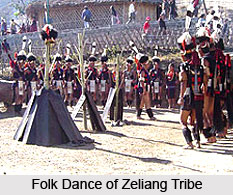
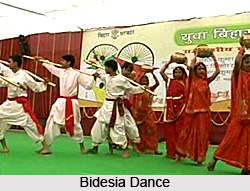
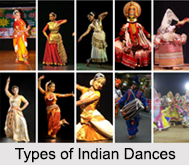
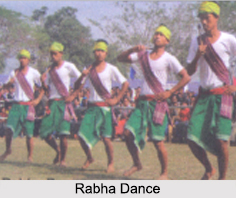
Dance in modern India started to experience multi-dimensional performances. The classical dances mentioned in the Natyashastra were augmented by various exponents searching for newer idioms. The creative niche of the dancers allowed them to explore the heights of dancing keeping the spiritual element intact. Indian Classical Dances such as Bharatnatyam, Kuchipudi, Kathak, Manipuri, Sattriya, Mohiniyattam and Kathakali were given new dimensions by the leading maestros. Moreover, the Indian folk dances as well as regional dances gained popularity as they were presented in the modern Indian stage and in other media of communication also. As dance is regarded as a form of communication, modern Indian movies played a vital role in making it popular means of avowal. Dance in contemporary India was admired in the social films of the 1930s and 1940s. All these films adopted a modern outlook of the society.
Modern Indian Dance is idealized as a series with true confluence of music. The growing interaction between dance practitioners all over the country and the world has rendered the feeling of communicating ideas besides entertaining. The realm of contemporary dance is, thus, an exploration of one or many dance styles. Modern dances thus developed whilst lending greater vigour and variety to the artistic expression.