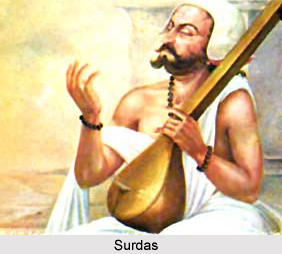
 The medieval Hindi literature and its sufficient maturation was marked by the influence of Bhakti Movement and compilation of lengthy, epic poems. Avadhi and Braj Bhasha were the primary dialects in which literature in Hindi was developed. The principal works in Avadhi include Malik Muhammad Jayasi`s Padmavat and Tulsidas`s Ramacharitamanas. The foremost works in Braj dialect are Tulsidas`s Vinaya Patrika and Surdas`s Sur Sagar. Sadhukaddi was also a language used for wide reasons, especially by Kabir in his poetry and dohas.
The Bhakti kal or devotional period in Hindi literature also was accentuated by great theoretical development in poetry forms, predominantly from a blend of older forms of poetry in Sanskrit School and the Persian School. These included Verse Patterns like Doha (two-liners), Sortha, Chaupaya (four-liners), etc. This was also the epoch when Poetry was differentiated under the various Rasas. Distinct from the Adi Kaal (also stated as the VirGatha Kaal), which was characterised by an overindulgence into Poetry in the Vir Rasa (Heroic Poetry), the Bhakti kal had marked a much more sundry and vibrant form of poetry, which spanned the whole ambit of rasas, from Shringara rasa (Beauty), Vatsalya Rasa (Love), Vir Rasa (Heroism), Prema Rasa (Romance) etc.
 Bhakti Kal or the Devotional Period in Hindi literature had extended within the time period of 14th and the 17th centuries. Coming basically under the medieval period in India, the country had by then been almost seized by Muslim rulers and their Islamic region. As such, the Bhakti kal had witnessed Islamic customs almost being upon thrust the common populace, and Hindus consequentially being quite demoralised at the outcome on their culture. Poets from the devotional period sensed that it was their moral duty to stimulate and stir a sense of devotion throughout religious poetry. These poets have since been classed into two groups, comprising: Nirguna and Saguna poets, depending upon their devotional attitude towards the Lord. Nirgunas have been further sub-divided into two classes, on the basis of the different sadhanas (disciplines) espoused by them.
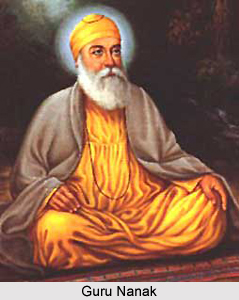
Those that laid emphasis on the importance of knowledge for the realisation of the Omnipresent, were referred to as the `Saint poets`. Kabir Das, Guru Nanak, Dharma Das, Maluk Das, Dadudayal, Sunder Das precisely belong to this genre in Hindi literature. The Saint poets through their Sakhis (couplets) and Padas (songs), had condemned rituals and had accentuated upon the theory of `Monotheism`. Poets who conceived that love was the sole path to realise God, were referred to as Sufi Poets, a significant development in the advancing Hindi literature. Jayasi, Manjhan, Kutuban and Usman were the pioneers of this school of writing and belief. Poets belonging to the Saguna style are also classed into two groups, including: the followers of Rama and those of Krishna.
Tulsidas is the leading poet of the former group together with Agra Das, Nabha Das and Pran Chand Chauhan. Tulsidas portrays Rama as the Ideal Man in his classical works Ramacharitamanas, Gitavali, Kavitavali and Vinay Patrika. The devotees of Krishna have, however, redrawn him according to his popular image, that of the playful Krishna. These poets like Surdas, Nand Das, Parmananda Das and Mirabai have voraciously penned about the Love and Beauty. The Devotional Period or Bhakti kal in Hindi literature indeed had given rise to `immortal literature` and is distinguished as the Golden Age of Hindi Poetry.
Bhakti kal in Hindi literature was also the age of remarkable integration between the Hindu and Islamic elements in Arts. This integration had been possible primarily with the arrival of umpteen Muslim Bhakti poets like Abdul Rahim Khan-I-Khana, who was a court poet to Mughal emperor Akbar and was an ardent devotee of Krishna. The Nirgun School of Bhakti Poetry was also enormously secular in nature and its propounders like Kabir and Guru Nanak attracted a large number of followers, regardless of caste or religion.
