


 Theatre personalities of Jammu and Kashmir have played an integral part in the Kashmiri culture. ‘Nilamata Purana’ and ‘Kalhana's’ Rajatarangini of the twelfth century have revealed that the theatre personalities of Jammu and Kashmir have already attained its glory when these texts were written. Royal palaces were the main centers of theatrical activity where theatre personalities of Jammu and Kashmir were always present to point out merits and flaws. This golden age of drama in Kashmir lasted for 1500 years. Theatre personalities of Jammu and Kashmir have played an integral part in the Kashmiri culture. ‘Nilamata Purana’ and ‘Kalhana's’ Rajatarangini of the twelfth century have revealed that the theatre personalities of Jammu and Kashmir have already attained its glory when these texts were written. Royal palaces were the main centers of theatrical activity where theatre personalities of Jammu and Kashmir were always present to point out merits and flaws. This golden age of drama in Kashmir lasted for 1500 years.
History of Kashmiri Theatre Theatre personalities of Jammu and Kashmir started to gain prominence from the beginning of the Christian era to the fifteenth century. However, very little of the dramatic literature has descended to the present generation of theatre personalities of Jammu and Kashmir, and that too only in Sanskrit language. Theatre was inseparably associated with royal glamour. The theatre personalities performed plays that were associated with celebrations and festivals of sowing, reaping, and threshing. They marked the occasions with song, dance, and music, and that a public performance was a form of religious obligation. In the earliest form of Kashmiri theatre, almost all the theatre personalities of Jammu and Kashmir could mimic for mere entertainment of a king, a saadhu, a soldier, a bridegroom, or other respectable social figures. They performed plays, equipped with simple musical instruments like a drum, dahri, and surnay. Such folk performers in Jammu and Kashmir wandered from house to house, exhibited their skill, and got their income from those whom they entertained. The theatre personalities gradually brought an improved form of Kashmiri folk theatre that was the Bandi Pethir. This is a satirical comedy in which several actors exaggeratedly represented individuals, classes, or supernatural beings with the intention of ridiculing human follies, frailties, and cruelties. The theatre personalities of Jammu and Kashmir mainly worked on Pethirs on social themes, with musical interludes and boisterous harlequins, are still known as Bandi Pethir. Bandi Pethir is the most proficient folk performing art form of Kashmir. It received a serious setback after independence, due to various factors thereby leading to its decline. The dying tradition has been revived and today there are more than thirty two theatre groups, which are committed to the upliftment and development of this most cherished folk form. 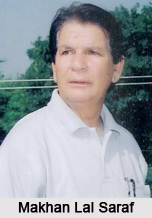
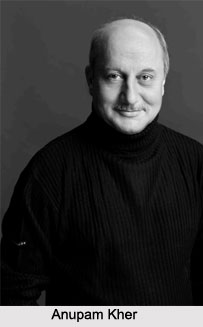
Theatre Personalities of Jammu & Kashmir With the establishment of the Jammu and Kashmir Cultural Front after India's independence, the theatre personalities of Jammu and Kashmir received serious attention. Several plays were written and staged by them to strengthen the Front's political viewpoint. However, with the passage of time, no serious or promising attempt is being made to the theatre personalities of Jammu and Kashmir, and their marvelous performances are now remembered as a thing of the past. Ghulam Nabi Baba, Pranna Shangloo and Pt. Kashi Nath Bhan are people who have contributed immensely to Kashmiri theatre. Bhan was the role model so far as theatre in Kashmir was concerned. Those were the days when theatre in Kashmir was still in its infancy, with not much professionalism involved in it. Many artists preferred it as a pastime, rather than making it a full time pursuit. Makhan Lal Saraf is the living legend of Theatre in Kashmir. He belongs to second generation of Theatre artists of Kashmir if Moti Lal Kemue, Naadim sahib, Mohan lal Aima, Pushker Bhan, Ali Mohd Lone, Noor Mohd Roshan and S N Sumbli and many other contemporaries are considered. Although Ramlila, Bhagtan and Haran folk theatre forms were prevalent in Jammu and Kashmir, the modern drama was in its infancy in the cities of Jammu and Srinagar till sixties. Modern Kashmiri theatre had its modest beginnings in 1920s, yet it emerged as a distinct entity only in 1940s. Two types of theatrical activity were witnessed in Kashmir simultaneously from 1944 onwards. One was Pandit community focused, carried on under the guidance of Samaj Sudhar Samiti. The other type of Theatre activity that gained impetus after 1947 was the one inspired by left oriented Indian Peoples' Theatre Association (IPTA). Balraj Sahni, the great actor, was a leading light of this movement and wanted a Kashmir Chapter of IPTA. This emerged in the form of Cultural Front and later became Cultural Congress. Anupam Kher (born 7 March 1955) is an Indian actor who has appeared in over 400 films and many plays. He has also appeared in international films such as ‘Bend It Like Beckham’, ‘Lust’, ‘Caution’, ‘Silver Linings Playbook’. Kher has won the Filmfare Award many times. He holds the post of chairman of Central Board of Film Certification and National School of Drama in India and currently the chairman at Actor Prepares. The Government of India honored him with the Padma Shri in 2004 and the Padma Bhushan in 2016. |
| |||



Home > Movies & Entertainment > Indian Drama & Theatre > Personalities in Indian Theatre > Theatre Personalities of Jammu & Kashmir
Theatre Personalities of Jammu & Kashmir
| Theatre personalities of Jammu and Kashmir have made the theatre of the state a perfect blend of culture and tradition. |
| ||||||||||||||||||||||||||||

