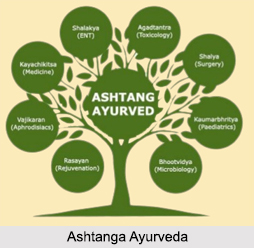
 Principles of Ayurveda aim at establishing such a state in which the function and structure of an individual operates optimally and that individual attains a state of mental, physical and spiritual equilibrium. In Ayurveda, there are several aspects of this traditional system of medicine, which discriminates it from other approaches to health care. The principle of Ayurveda is based on the Panchabhuta theory. The principle of Ayurveda perceives body, mind and spirit.
Ayurveda defines that the four basic aspects of life – "Atma" (the soul), "Manas" (the mind), "Indriyas" (the senses) and "Sharira" (the body) have their specific functions and that contribute to the completeness of life. Ayurveda mainly focuses on a balanced and integrated relationship among these four components. It also focuses on establishing and maintaining balance of the life energies within the individual. The principle of Ayurveda is based on the self healing process where the individual"s inherent tendency is to move from the diseased state towards the healthy state. In order to have a full knowledge and understanding of the functions of the body, understanding the senses of the body is very essential.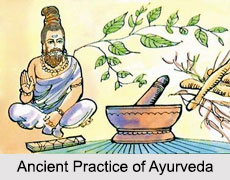
Atma: The Soul
Atma is defined as the motivating intelligence that guides the human mind and life. Though, it is also said that atma is actually the least tangible part of human life. Each and every aspect of life has inherent coordination with other parts of the body. The principle of atma is also defined as the governing principle that existed within as a part of human beings. Further, this guiding principle has two aspects, first one being the "Jiva Atma" where the intelligence is associated with entire concept of "soul". It guides as per the particular destiny of an individual"s life. The second aspect is the "Param Atma" or more commonly defined as the "universal soul". It is the very consciousness of the nature and it is the essence of the individual soul. Param atma is responsible for unifying all diversity of nature. In short, Jiva atma is an appearance of the Param atma.
Manas: The Mind
Ayurveda specifies that all the happiness or unhappiness, health or ill-health and all the feelings arise in human mind first. Soul or atma is defined as the director of life and manas or mind is actually the controller of all senses that determines the actions of the body. It is responsible for maintaining a balance or harmony between the universal intelligence and human life. In Ayurveda, manas or mind is given the central importance. It is believed that all the phenomena of life or the universe are directly influenced by the "gunas" or the three primary phases of life. The gunas govern the human existence and regulate the minds. These phases generate action, motivation, fascination and inspiration.
Indriya: The Five Senses
The Indriya or the five senses is the third major component of human life defined by the Ayurveda. It is believed that the Indriyas act as a bridge between the Atma and the Manas. The main work of the Indriyas is to gather information from the outer world. The incoming perceptions from the collected information get relayed to the mind in the form of touch, sound, light, colour, taste and smell, which are the five senses of human body. They have an uplifting influence on the mind. So, if the perceptual information gathered is not of proper quality or quantity, it will have a negative impact over the mind thus creating an imbalance in the body.
Sharira: The Body
The fourth fundamental part of life is the sharira or the body. In Ayurveda, sharira is not given much significance as compared to the subtler parts of the human life. Body is defined as the vehicle through which the connections of the other parts of the body can be established as a whole.
Ayurveda realizes the deep seated relationship between the nature of the disease as well as the disease process hence the principle of Ayurveda has developed a simultaneous approach to diagnosis and pathology and has termed it as "Rogi-Roga Pariksha". The principles of Ayurveda offer proper understanding of the fundamentals of human body and its surroundings.