Indian Natural History in Mauryan Period
|
Indian natural history in Mauryan period saw protection measures to be taken, for the first time.
|
|
|
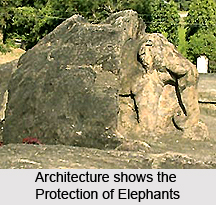 The Maurya period is considered to be one of the most important periods in the Indian natural history. The Indian natural history in Mauryan period saw the protection of animals to become a serious issue, for the first time. The Maurya dynasty ruled India during the fourth and third centuries B.C. and it was the first empire to provide a unified political entity in India. The Mauryan emperors had a positive and attitude towards the Indian forests, their denizens and the Indian fauna in general. The Maurya period is considered to be one of the most important periods in the Indian natural history. The Indian natural history in Mauryan period saw the protection of animals to become a serious issue, for the first time. The Maurya dynasty ruled India during the fourth and third centuries B.C. and it was the first empire to provide a unified political entity in India. The Mauryan emperors had a positive and attitude towards the Indian forests, their denizens and the Indian fauna in general.
Being the first dynasty to feel the need of protecting Indian wildlife, the Mauryan emperors for the first time looked at the Indian forests, as a resource. The Indian natural history in Mauryan period witnessed significant changes in the way the people and the administration looked on Indian wildlife. The Mauryan emperors considered the elephants to be the most important forest product, as the military power during that period was dependent not only upon horses and men but also on battle-elephants. The Mauryans successfully used the battle-elephants to beat Alexander's governor of Punjab, Seleucus. The main reason why they sought to preserve supplies of elephants was that it was more cost and time-effective to catch, tame and train wild elephants than to raise them. They appointed the officials like the Protector of the Elephant Forests and the world famous manuscript of that period, Kautilya's 'Arthashastra' unambiguously specifies the responsibilities of such officials.
The main responsibility of the Protector of the Elephant Forests was to establish a forest for elephants on the border of forests, and it should be guarded by foresters. The Superintendent was required to protect the elephants whether along on the mountain, along a river, along lakes or in marshy tracts, with the help of guards. They were also authorised to kill anyone slaying an elephant. With these measures taken, the Indian natural history in Mauryan period was heading towards proper preservation and protection of Indian wildlife. Apart from appointing the Protector of the Elephant Forests, the Mauryas also designated separate forests to protect supplies of timber, as well as lions and tigers, for skins. Apart from that, there were also the Protector of Animals, who worked for eliminating thieves, tigers and other predators to render the woods safe for grazing cattle.
In the Indian natural history in Mauryan period, certain forest tracts were valued in strategic or economic terms and the Mauryans instituted curbs and control measures over them. Though they regarded all the forest tribes with distrust, they employed some of them, mainly the food-gatherers or aranyaca to guard borders and trap animals. The eminent Mauryan emperor, Ashoka (304 - 232 BC) was one of the most notable preservers of Indian natural history in Mauryan period. He brought about significant changes in his style of governance to provide protection to fauna and he even relinquished the royal hunt. He is thought to be the first ruler in India to advocate conservation measures for wildlife. Ashoka had rules inscribed in stone edicts, as well and the edicts proclaim that many people followed the king's example in giving up the slaughter of animals. The other rulers of that period also had rules like penalising the poachers of deer in royal hunting preserves, with 100 'Panas' fine. There were legal restrictions to restrict the freedoms exercised by the common people in hunting, felling, fishing and setting fires in forests, as well.
|
|
|
|





