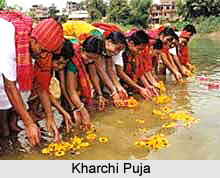
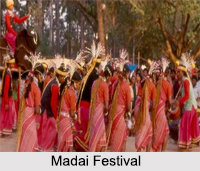
 Bihar Temple Festivals are enjoyable events celebrated especially in the months of Bhado and Ashwin. This is the special time of the year marked by many religious observances and ceremonies. Since this is the most critical season of the year to the cultivators of Bihar, when he must have rain, several festivities are followed to satisfy the Gods and Goddesses to bestow grace on them. In the end of the former month, the cultivators observe the fast of "Anant-vrat" in gratitude for the ingathering of the Bhadai harvest and in the hope of further prosperity.
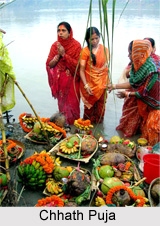
Chhath Puja at Bihar Temples
"Chhath Puja" is one of the primary Bihar Temple Festivals, celebrated with traditional dedication to worship the Sun god. It is celebrated on the 6th day after Deepavali, for one night and day. The people of Bihar especially married women; gather to the banks of River Ganga or to other nearby river ghats and ponds to offer a ritual prayer to Sun god for the prosperity, happiness and peaceful life of their family members as well as the long lives of their husbands. Offerings to the Lord include cow`s milk, coconut, banana and other fruits. Some ardent male devotees move slowly in the entire route from their house to the riverbanks as an offering. Devotees observe total fast from sunrise and visit the riverbanks in the afternoon to pay homage. More than one lakh people congregate on the banks of Ganga where prayers are offered in a tranquil atmosphere. People from other castes also celebrate Chhath Puja with equal importance.
 Navaratri at Bihar Temples
"Navaratri" is one of the major Bihar temple festivals connected with the autumnal equinox that begins on the first and ends on the 10th day of Navaratri. After the idol of Goddess Durga has been worshipped for nine continuous days, it is taken to the river and immersed into it. "Dussehra" celebrates the victory of Lord Rama over Ravana. This Bihar temple festival it is also called "Vijayadashami". Huge colourful paper and wooden effigies of Rama`s enemies, Ravana, Meghanada and Kumbhakarna are filled with fire works and burnt during Dussehra. However, the actual Puja takes place in temples of Lord Rama.
Other Festivals at Bihar Temples
"Holi" and "Diwali" are the other important Bihar temple festivals. Hindu women worship Lord Shiva at "Jeth Amavasya", thus ensuring the long life of their husband. At "Mauni Amavasya" they sit calmly under a pipal tree on the day of a new moon, provided it is a Monday. "Nag Panchami", is a festival observed in temples on the 5th day of the bright half of Sravana. This festival begins with a fast and bathing fairs are held on the banks of rivers. "Makar Sankranti" is also a significant Bihar temple festival. On this occasion, the participants and believers eat rice flakes, curd and sweets made of "Til" and make offerings to the deities in respective temples. "Janmashtami" Festival is observed on the eight day of the second fortnight in the month of Bhadrapada. Special meals are held and thousands of people visit the sacred places and temples of Lord Krishna.
 "Maha Shivaratri" is celebrated with great rejoicing and feasting in the Shiva Linga temples. Other Bihar temple festivals include "Saraswati Puja", which is celebrated in all educational institutions, and images of goddess of learning are worshipped; "Raksha Bandhan", "Ramnavami", "Godhan", "Chitragupta Puja" and so on. The Kayasthas and "Vishwakarma Puja" celebrate most of these festivals of Bihar.
Tribal Festivals at Bihar Temples
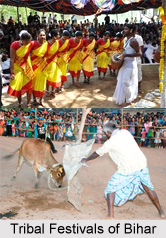
There are many tribal festivals celebrated in the temples of Bihar, there is a succession of festivals throughout the year, which are connected with agricultural activities. The important Bihar temple festivals of the tribal groups are "Sarhul", "Karam" and "Sohrai". Hindu tribes also celebrate Hindu festivals of "Holi" and "Durga Puja" with great enthusiasm.
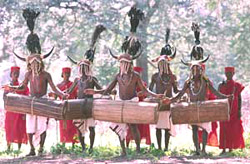
"Sarhul" is celebrated on the last day of Baisakh, which corresponds to the month of April and is an occasion of great festivity and enjoyment for people of all ages. All night maidens and youngsters sing and dance to the accompaniment of the drum, while the old sit and enjoy the enchanting dances. "Soharai" is another festival among the aboriginals and occurs in the month of Pous. On this occasion domestic animals are worshipped, after being washed and smeared with oil and vermilion. The tribals as well as non-tribals observe "Karam" festival. The songs sung on this occasion relate the legends of "Karma" and "Dharma". The Bihar temple festivals are popular celebrations and participated among all castes and sects.