


 Salt as a Seasoning Agent of Indian Food finds its reference in the ancient culinary. Though salt is not mentioned in the Rigveda, however its handling started occurring just after the Vedic era. Various great thinkers mentioned the value of salt as a product. Salt as a seasoning agent found its mention in the Indus Valley. It is regarded that certain pottery moulds with convolutions on the inside found were probably salt moulds of a kind still in use in India. Salt as a Seasoning Agent of Indian Food finds its reference in the ancient culinary. Though salt is not mentioned in the Rigveda, however its handling started occurring just after the Vedic era. Various great thinkers mentioned the value of salt as a product. Salt as a seasoning agent found its mention in the Indus Valley. It is regarded that certain pottery moulds with convolutions on the inside found were probably salt moulds of a kind still in use in India.
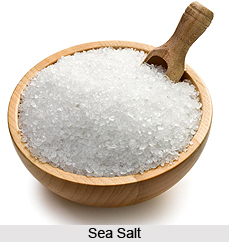
Types of Salt About five types of salt are cited in the Buddhist Vinaya Pitaka, and later by Charaka. The different salts comprise of rock salt (saindhava), sea salt (samudra), black salt (vida), earth salt (pansuja or ushasuta) and audvida (efflorescence salt). Sushrutha reveals about other mineral salts of both sodium and potassium. Kautilya in his Arthashastra referred to saindhava as 'salt from the Sindhu country'. Significance of Salt Since its origin, Salt has assumed ritual significance. However, the Sutra literature eliminates its use to students, widows and newly married couples for the first three days. Black or vida salt was interdicted at an ancestral Shraddha ceremony. Ordinary sea salt has to be replaced by rock salt. According to history, salt as a seasoning agent was specifically used in certain dishes such as rock salt for a dish of meat in the Mahabharata, and for a pork dish in the Manasollasa. Sea salt was of course used in cooking, and for salting and preserving fish and meat. 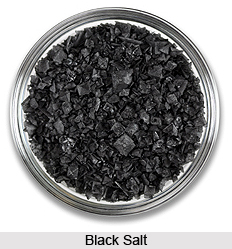 Benefits of Salt Benefits of Salt
Apart from being a seasoning agent for the Indian Food, medically too salt is considered to be vital. It is considered to be heavy, hot and pungent, moistening, emetic, salivatory and peristaltic. Salt is among the six Rasa of Indian Food that stimulates pitta and kapha, and reduces vata (see dosha). Salt as a seasoning agent also have certain added features. Sea salt is heavy and not heating, and does not cause a burning sensation on consumption. Rock salt has a superior therapeutic effect, calming all three doshas. Other forms of mineral salts, like vida, increase appetite to an exceptional degree and so are of value in digestive disorders and all vata diseases. Salt Beds in India In early south Indian literature, there have been frequent references about of the five salt beds found in India. The places include nannugupalam, alkkar, uvarkkalam, uvalagam and kazhi. The places where salt was manufactured were Markanam, Kanya-kumari, Variyur, Aythurai and Bapatla. |
| |||



Salt
| Salt is one of the rasa of Indian food, used for taste and seasoning in the Indian dishes. |
| ||||||||||||||||||||||||||||

