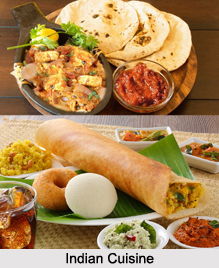
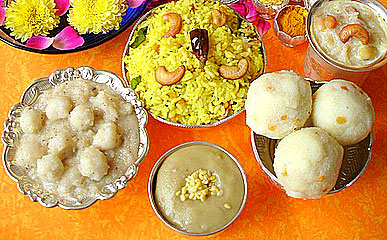
Religious Influence on Indian Food has spawned in generating diverse variety of food in various regions of the country. Indian cuisine reflects the culturen and tradition of the country which comprises of countless landscapes, different languages, magnificent festivals and multi-ethnicity. Indian food is as diverse and wonderful as the colourful country itself. From the northern tip of Kashmir to the southern state of Kerala, and from the Western Ghats of Gujarat to Nagaland in the east, India"s food habits are as varied as the people of India. The presence of diverse climatic condition has also helped to broaden the sets of ingredients present in the cuisines.
Religious Limitations on Indian Cuisine
In India, food has become a marker of different religious and social identity. Every religion is present with varying taboos and preferences, such as Hindus do not consume beef, Muslims do not eat pork but consume beef and Jain population do not eat roots or subterranean vegetables. This eating habit further supports the fact that Indian cuisine has witnessed a heavy influence of religion.

Hindu Influence on Indian Cuisine
The Hindu influence on Indian cuisine is immense. The Hindus are mostly vegetarians for ethical reasons and this has influenced their cuisine and eating habits. They consume a vast range of different vegetables like tomatoes, cauliflower, spinach, green beans and potatoes etc to make different vegetarian dishes. Brahmins are one of the highest castes in Hindu religion. They are strict vegetarians and do not consume meat, fish or egg. However, Brahmins of the eastern coastal regions are non-vegetarians.
Muslim Influence on Indian Cuisine
The Muslim influence on Indian cuisine contoured the Indian cuisine while offering it that desired shape with blessed aroma and flavour. The Muslim culture has introduced the lavish Mughlai cuisine to Indian culinary culture. Due to the Muslim influence on Indian food, these dishes are always served with almonds, pistachios cashews and raisins. Muslims introduced Biryani, Phirni and the famous Tandoor style of cooking.
Jain Influence on Indian Cuisine
Apart from Hindu and Muslim religion, Jainism community also has religious influence on Indian food. The Jain influence on Indian cuisine popularised the vegetarian items. In this community, people are influenced by the non-violence or ahimsa. Due to this they are strictly against consuming non-vegetarian food. They take the food that is not obtained by hurting any form of life and they do not consume root vegetables, alcohol, honey and meat and also do not waste any food items. Basically their food concept is based on eating after sunrise in the morning and eating before sunset in the evening. They believe in fasting on certain days and offering food to poor people. They eat only those vegetables and fruits which ripe on the tree.

Buddhist Influence on Indian Cuisine
Buddhism has also adequately influenced Indian cuisine. Followers of Buddhism are also generally vegetarians, as they too do not believe in hurting any form of life. But some Buddhists, to some extent do consume meat, only if the animal has died out of natural causes and not hunted. Here also, vegetarian dishes reign supreme as a variety of specifically created cuisines have been developed, which are mostly inspired by the Tibetan culture. Various forms of soups, steamed and boiled vegetables and the most popular, Momos have greatly influenced the food habits of Indian people.
Christian Influence on Indian Cuisine
Another important religious influence on Indian food is the Christian religion. Christian influence on Indian cuisine reshaped Indian food style to a great extent. Soups, salads and grilled meats are the famous recipes among Christians in India. Dishes like pudding, cutlets, roasted meats, baked foods and cakes, biscuits and jams are famous Christian food items.
Thus, Religious Influence on Indian Food has been profound and has resulted in the formation of a diverse range of cuisines and dishes. The magic of Indian cuisine lies not only in the taste but in its diverse pattern which marks Indian cuisine as the assortment of several traditions, as the potpourri of various religions.