


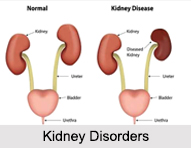
 Kidney Disorders, also known as ‘Renal Diseases’, are defective health conditions related to the function of kidney and the urinary system of a person. The kidneys are a pair of bean-shaped organs, located at the bottom of the ribcage in the right and left sides of the back. Kidney Disorders, also known as ‘Renal Diseases’, are defective health conditions related to the function of kidney and the urinary system of a person. The kidneys are a pair of bean-shaped organs, located at the bottom of the ribcage in the right and left sides of the back.
Functions of Kidney The kidneys receive blood from the aorta, filter it and send it back to heart with the right balance of chemicals and fluid. Kidneys also control the quantity and quality of fluids within the body. They produce hormones and vitamins and manage cell activities in many organs. If the kidneys do not work properly, the waste products and fluid may build up to dangerous levels. In case of kidney disorders, the kidneys attack the nephrons and cause them to lose their filtering capacity. Most kidney diseases destroy the nephrons slowly and the damage becomes apparent after several years. In most cases, both the kidneys are attacked simultaneously. Causes of Kidney Disorders The two most common causes of kidney disorders include diabetes and high blood pressure. Hardening of the arteries that damage blood vessels in the kidney is another cause for kidney diseases. The other factors that cause damage to kidney include an inflammation of the kidneys, called ‘Nephritis’; problems with the shape or size of the kidneys; certain medications that can be toxic to kidney tissue; blockages of the system that drains the kidneys; etc. Apart from these, the people having a family history of any kind of kidney problem also have a higher risk for kidney disease compared to the others. Symptoms of Kidney Disorders There are many signs and symptoms that indicate whether a person is suffering from kidney disorders. In case of a kidney disease caused by a bacterial infection, the person develops a high fever. A patient can have the symptoms like; passing too much or too little urine, or passing blood or abnormal levels of chemicals in the urine as well. Generally, the mild to moderate kidney diseases do not have any symptoms. However, when the kidney disease reaches the end-stage, known as ‘Uraemia’, the symptoms like puffy eyes, hands and feet called ‘edema’; high blood pressure; fatigue; loss of appetite; nausea and vomiting; thirst; a bad taste in the mouth or bad breath; weight loss; generalised, persistent itchy skin; muscle twitching or cramping; a yellowish-brown tint to the skin, etc. may be seen. The patients may sometimes feel a burning sensation or have difficulty during urination or a pain in the back just below the ribs as well. In rare cases like a kidney stone, the patients may feel severe cramping pain that spreads from the lower back into the groin. 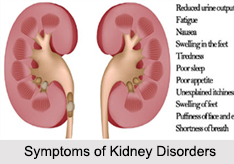
Diagnosis of Kidney Disorders The diagnosis of kidney disorders is usually done by performing various tests. At first, the physicians obtain a complete medical history of the patient and recommend certain blood and urine tests. The tests can provide detailed information about the kidney function of a person. The other tests used for diagnosis of kidney diseases include blood pressure measurement, a spot check for protein or albumin in the urine, a calculation of glomerular filtration rate (GFR) based on creatinine measurement, measuring blood urea nitrogen (BUN), etc. Apart from these, the physicians sometimes do kidney imaging and kidney biopsy too for detecting kidney disorders. Types of Kidney Disorders The types of kidney disorders usually vary according to their causes and they may have different signs and symptoms. The kidney diseases can be ‘acute’ or ‘chronic’. The common types of kidney diseases include; The other types of kidney disorders include Nephritis, Nephropathy, Hyperfiltration, Advanced clinical nephropathy, Chronic renal insufficiency, Diabetic nephropathy, etc. Treatment of Kidney Disorders There are several alternative medicinal methods followed for effective treatment of kidney disorders. Ayurveda, Homoeopathy, Naturopathy or nature care, etc. are some of the most popular medications for treating kidney diseases. The Ayurvedic treatment of kidney disorders includes treating the damaged kidneys, treating the kidney tissues and also treating the cause. On the other hand, Homoeopathy treatment can help in every stage of kidney disorders. Apart from these, certain dietary restrictions and lifestyle changes are also advised during treatment of kidney disorders. However, the diseases can be treated following alternative medicines and can also be avoided by taking various preventive measures. |
| |||



Kidney Disorders
| Kidney disorders mainly affect the functioning of the entire urinary system. The kidney disorders also affect the process of producing hormones and vitamins that direct cell activities in many organs. |
| ||||||||||||||||||||||||||||

