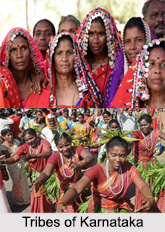
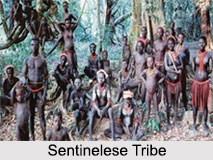
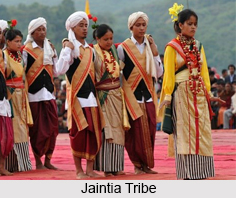
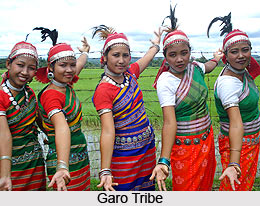
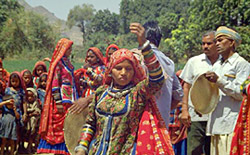
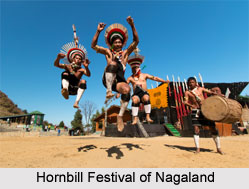
 Indian tribal festivals have been a part of the framework of tribal India for hundreds of years. Even today this tradition continues. In all, the 573 tribal groups prevailing in the country possess their individual kind of festival. Indian tribal festivals possess a distinctive quality of their own, standing out from the other regular city festivals happening each other day. The tribal mode of celebrating, their costumes, jewellery, dancing, singing, language or the quaint ceremonious atmosphere in some far-off jungle or mountain, makes it all the more interesting. Beginning from Jammu and Kashmir in the north, to Kerala in the south, to Gujarat in the west and Manipur in the east, tribal festivals exist in each corner of states and even in union territories of Andaman and Nicobar Islands, Daman and Diu and Lakshadweep Islands. It can also be noticed that tribal festivals in India are mostly meant to appease the presiding God, depending upon their religious importance.
Tribal Festivals of Central India
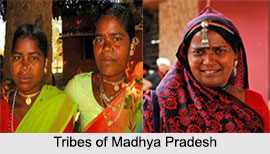
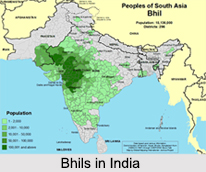
Tribal festivals in Madhya Pradesh consist of varied mood and modes, making the whole affair a happy and enchanting one. Some of the legendary tribal festivals in Madhya Pradesh include Madai festival, Bhagoriya festival, the tribal Dussehra of Bastar, the religious festival of Karma, festival of Nagaji. Musical and dancing festivals of this central Indian state include heavy and intoxicated episodes, with the sounding of drums, flutes, tables, ghungroos. The Gonds, the Bhils and several other tribes occupy centre-stage. The interesting factor that can be observed here is that, the above-mentioned tribal festivals from Madhya Pradesh are also enjoyably celebrated in Chhattisgarh as well.
Tribal Festivals of Northern India
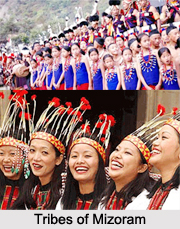
The states of Nagaland and Mizoram with its long list of tribes varying in lifestyle, celebrate festive occasions on several days and dates. Some of them include, the Mim kut festival by Kuki tribe, the Sekrenyi festival by Angami tribe, the Tsukhenyi festival by Chakasang tribe, the Aoling festival by Konayak tribe, the Monyu festival by Phom tribe, the Moatsu festival by Ao Naga tribe, the Miu festival by Khaimggan tribe, the Tulini festival by Sema Naga tribe, the Nyanyulum festival by Chang tribe, the Nazu festival by Pochury tribe, the Metemneo festival by Yimchunger tribe, the Amongmong festival by Sangtam tribe, the Tokhuemong festival by Lotha tribe, the Ngada festival by Rengma tribe, the renowned Hornbill festival by every Naga tribe and the Nga-Ngai festival by Zeliang tribe.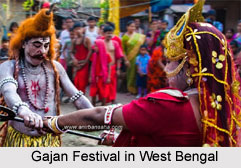
Tribal Festivals of Eastern India
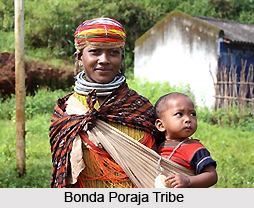
The annual Mansa festival in Jharkhand is a big affair for the tribal people in Panchparanga, wherein the tribals are seen to appease Goddess Manasa by piercing their body. Tribal festivals in Orissa are a lavish and magnanimous affair, with perhaps a significant mass of Indian population joining in the festivities. Some of the much talked-about tribal festivals include Bali Jatra by Koraput tribe, Karama festival observed by the Ho, Kisan, Kol, Bhumij, Oraon, Bhuiyan and Binjhal tribes, the Sume-Gelirak festival by Bonda tribe of Koraput, Bija Pandu festival, also known as Chaitra Parva, observed by Koya tribe of Orissa, the Kedu festival of the Kondhs of Phulbani, Chaita Parva festival observed by tribes of Koraput and Bhuiyans and the Mage Parab festival of the Ho, Oraon, Kisan and Kol tribes.The Bohaggiyo Bishu tribal festival from Assam, observed by the Deori tribe, one of the four divisions of the Chutiyas is legendary within the tribal festivals included both in the state and India, with sublime implications. Sarhul is a festival of flowers and the most popular of all the tribal festivals in the country. The festival is observed by Mundas, Oraon and Santhal tribal communities, inhabiting in regions of Orissa, Jharkhand and Bihar.
Tribal Festivals of Southern India
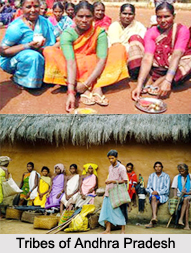
Tribal festivals of Andhra Pradesh have their own vitality and charm when the various Indian tribal festivals are viewed. The Banjaras of Andhra Pradesh celebrate Holi with a great spirit of fun and enjoyment playing pranks and staging mock-fights.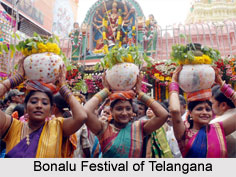 A remarkable ceremony is the Dhund ritual for all male off-springs born in that year which comprises honouring the god of love `Kama` and the Holika deity. Another tribal festival in Andhra Pradesh is the Samakka festival celebrated every two years in February at Medaram by the Koya and Waddar tribes people. Observed in the memory of the Koya queen Samakka who died fighting the Kakatiyas of Warangal, the festival is an opportunity for tribes from all over Andhra Pradesh, Orissa, Madhya Pradesh and Maharashtra to gather together. Lakshwadeep Islands has its own version of tribal festival in India, with its predominating Muslim population. The Islamic occasions of Eid Ul Fitr, Bakr-Id, Milad-Ul-Nabi and Muharram are celebrated which receive a tribal fresh look in the hands of such island-ish population.
Tribal Festivals of Western India
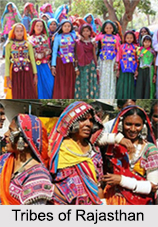
Rajasthan is exceedingly well-known and forever admired for its enormous and colossal beauties, with the legendary tribals celebrating festivals in their own manner. Amongst the several observed, tribal festival in India reaches high-flying heights with the Baneshwar fair of the Bhil tribe in Rajasthan.