
 Tribal Dances of India are performed firmly by tribal people of the country. These people, who are denominated as "adivasi", possess a culture, which is distinct from the pan Indian population. It may be noted that tribal dances of India are vastly dissimilar from Indian folk dances; there is no thread that binds the two. There are several tribal folks in India; each of the aboriginal tribes possesses their own distinguishable dance traditions and invariably all of them are interwoven with the life of the people who perform the same.
Tribal Dances of India
Tribal Dances of India account for noteworthy cultural output under Indian society, standing apart with innovation and creativity.
About Indian Tribal Dances
Tribal Dances of India are performed firmly by tribal people of the country. These people, who are denominated as "adivasi", possess a culture, which is distinct from the pan Indian population. It may be noted that tribal dances of India are vastly dissimilar from Indian folk dances; there is no thread that binds the two. There are several tribal folks in India; each of the aboriginal tribes possesses their own distinguishable dance traditions and invariably all of them are interwoven with the life of the people who perform the same.Tribal Dances of North East India
 Tribal Dances of North East India display its rich culture and traditions. Most of the dances are either correlated to agriculture, Buddhism or the beginning of a New Year. These dances also present a magnificent occasion for the people belonging to different tribes to acquaintance. North East India is acknowledged for its interesting culture and miscellaneous dance forms. The states of north eastern part of India including Assam, Meghalaya, Tripura, Mizoram, Manipur, Nagaland and Arunachal Pradesh have prosperous assortment in culture as well.
Different Tribal Dances of North East India
There are several tribal dance forms that reflect the rich heritage of northeast India. Following are the different Tribal Dances of North East India:
Laho Dance: The "Pnar" tribe of Meghalaya takes part in "Laho" dance with the colourful attire. Two men stand in both side of a woman and they link each other"s arms to present in particular steps. There is a comedian who can suddenly do entertaining performance with the dance to entertain the audience.

Chang Lo Dance: The "Chang" tribe of Nagaland perform the "chang lo" dance form. It is often called "sua lua" and presented throughout the three days of "Poanglem" festival. Male dancers put on a warrior costume of "naga" tribe presenting war ways of earliest Nagaland. Female dancers wear stunning and colourful costume in contrast.
Nongkrem Dance: `Nongkrem` is a significant dance of Meghalaya. The "Khasi" tribe of Meghalaya celebrates the ripening of paddy for threshing by dances and songs.
Wangala Dance: Wangala dance of "Garo" tribe is very much popular. "Garo" tribe is the second largest tribe of Meghalaya. Wangala dance is the harvest dance by "Garo" tribal people.
Dance of the Lotha Naga: The "Lotha Naga" is one of the main tribes of Nagaland. They are renowned for their bright dances and folk songs.
Khiamniungan Dance: "Khiamniungan" is one of the minor tribes found mostly in the Tuensang district of Nagaland. "Khiamniungan" Dance is vibrant and colourful.
Jamhang Tsouthong Dance: The "Jamhang Tsouthong" tribal dance is a dance of "Khiamniungan" tribe of Nagaland. It is also one of the major tribal dances of north east India.
Wancho Dance: This is also a festival tribal dance performed by the "Wancho" tribal people of Arunachal Pradesh.
Aji Lamu Dance: The "Aji Lamu" is a tribal dance of "Monpa" tribe of Arunachal Pradesh. This dance form is delightful regionally, nationally and internationally and is extremely acclaimed in the country.
 Chalo Dance: The "Chalo" is a tribal dance form of the "Nocte" tribe of Arunachal Pradesh. The "Chalo" dance is the dance form which is exceedingly appreciated and highly praised.
Hiirii Khaniing Dance: The Hiirii Khaniing dance of "Apatani" tribe and it is one of the major tribal dances of Arunachal Pradesh.
Ponung Dance: It is the tribal dance of the "Adi" tribe who are famous for their rich cultural way of living. Ponung dance is a tribal dance of Arunachal Pradesh.
Chawnglaizawn Dance: The "Pawi" tribal of Mizoram presents the special dance form of Chawnglaizawn Dance. The Chawnglaizawn dance is presented on an exceptional event. When a wife dies the husband performs the dance of Chawnglaizawn in Mizoram.
Zangtalam Dance: The Zangtalam dance is presented by the dancers of "Paite" tribe of Mizoram. Both men and women of the community join in the dance. This traditional dance form is very musical and elegant. The dancers wear colourful traditional dresses while performing this dance.
Hozagiri Dance: Hozagiri Dance is the dance form of the Reang community of Tripura. The dancers stand on a clay pitcher with a bottle on the head and a lighted lamp on it, when the Reang belle dance twisting musically the lower part of the body, the dance bewilders the viewers.
Bizu Dance: This dance form of Tripura is a feature of the "Chakma" tribe. The dance is magnificently organized with the rhythm playing of “Khenggarang†and dhukuk sorts of flutes.
Hai-Hak Dance: It is a dance of "Halam" community of Tripura. Rhythms of the dance replicate the tradition hereditary from the past.
Kabui Dance: It is a popular form of a dance of the "Hill" tribes. It is a very colourful dance performed by young girls and boys. While dancing the boys hold big Naga "Daos" meaning knives while the girl dancers accompany the boys. The females decorate themselves with heavy ornaments with their tribal peculiarities. The Kabui dance is performed with the accompaniment of a big drum which gives a regular and broad beating of time.
Tribal Dance in Southern India
 Tribal Dance in Southern India preoccupies itself with the tribal features and associated characteristics. Tribal dance forms of Southern India replicate the long drawn tradition and rituals of the land and reveal all its cultural glory. Certain tribal dances are accompanied by songs. Either the dancers themselves sing or the on-lookers sing and thus participating in the performances. Special musical instruments are sometimes used but drum is almost an indispensable feature of the tribal dance forms in Southern India. Following are the different Tribal Dance in Southern India:
Paniyar Kali Dance: Paniyar Kali is a very manly dance presented by the men of the Paniyar tribe. The old percussion instruments like "Karu", "Para" and "Udukku" are used in the dance presentation and dancers, numbering about 8 to 10; stand in a circle with their hands linked jointly. They move around musically and beat the ground in wonderful rhythm to the beats of the percussion instruments.
Meduva Kali Dance: "Meduva Kali" is a tribal dance performed by both men and women and it is an element of wedding ceremony in the community. Local percussions like drums go with the dance and the performers move in small circles rhythmically with the music instruments.
Mayura Dance: Practiced by "Kondh" tribe, this dance is performed in marriage. "Pirodi" is the flute that is used in this dance performance.
Kambara Dance: Kambara Dance is a different tribal dance that is general amongst the "Adiya" community of Wayanad district. The community has high respect for agriculture exercises and "Kambara Nritham" is their method to communicate it.
Naikkar Kali Dance: Naikkar Kali is a different tribal dance form common among the tribes of Wayanad and Malappuram districts.
 Mudiyattom Dance: Mudiyattom Dance is a tribal dance performed only by the women. Musical instruments like "karu", "maram", "para" and "kokkaro" come with the presentation and simple elegant movements of the head standing on small wooden boxes. In the opening the participants bend their heads very gradually which later end in fast graceful movements.
Kurumbar Nritham Dance: This dance performance is performed by the "Kurumba" tribe on marriage events. The relatives of the bride and groom execute this dance before marriage while the bride and the groom execute it following marriage. The dance is performed once more at the bridegroom"s house once the bride reaches there with the groom.
Tappetagullu Dance: It is a tribal dance of "Yadava", community and is performed by men. Believed as a devotional dance form, Tappeta Gullu is very popular in districts of Vizianagaram and Srikakulam.
Dollu Kunitha Dance: Dollu Kunitha is a well-liked drum dance of Karnataka accompanied by singing. It supplies both amazing variety and difficulty of skills in the process of display. This dance form is mostly performed by the men of the shepherd community known as the Kuruba community.
Gusadi Dance: Gusadi dance is performed by "Raj Gonds" in "Adilabad tribals". They carry out this dance on the celebration of "Diwali" festival, other "Gonds" groups also join with "Raj Gonds" and they are called "Dandari Dance groups". This festival begins on the full moon day and ends with 14th day of dark-night of Diwali.
Chindu Bhagavatam Dance: Earlier this dance form was not allowed to perform outside but things have changed now. "Chindu Bhagavatam" originated in "nizamabad", "adilabad", "karimnagar", "medak", "mahabubnagar" and "nalgonda".
Lambadi Dance: Lambadi dance is presented by Banjara Telangana Tribals. It mostly consists of Planting, Harvesting and sowing activities. Lambadi dance forms are performed by females only; males operate music instruments and drummers.
Kaadar Nritham Dance: It is one of the general tribal dance forms of Kerala where only women participate. This dance form is popular among the Kadar tribe of Kochi forests and is a primitive form. It is simple but very elegant dance form. The performers arrange themselves in a semicircle.
Karagam Dance: Karagam is another Indian tribal dance form of Tamil Nadu dedicated to Goddess Mariamman, the Goddess of health and rain. Men and women balance pots of uncooked rice on their heads to the accompaniment of pipes and drums.
Kunitha Dance: "Kunitha" is a generic term, emblematic of a ritualistic dance in Karnataka. In the "Punja Kunitha", a wooden structure is balanced on the head with a deity within it. The "Dollu Kunitha" is a much-admired drum dance of Karnataka. The men play on large drums decorated with coloured cloth, slung around their necks, beating on it as they dance.
Different Tribal Dances of India
Some Indian tribes pen down their songs to accompany their dances. Either the dancers sing themselves or the viewers sing and participate. Special musical instruments for the tribal dances are also utilised during the performances; but the drum is almost a requisite feature of each tribal dance. Following are some of the popular tribal dances of India:
Bagurumba Dance: "Bagurumba" is a tribal dance of native "Bodo tribe" in Assam and Northeast of India. It is a conventional dance which is traditionally inbuilt from one generation to other. The "Bodo" women carry out the "Bagurumba" dance with their colourful "dokhna", "jwmgra" (scarf) and "aronai" (muffler). The Bagurumba dance is believed to be the major traditional dance of "Bodo" tribe.
 Raut Nacha: Raut Nacha is one of the most popular tribal dances of India, which is generally done by "Yadava" community as a representation of worship to Krishna. The dance is closely similar to Krishna`s "Raas leela".
Dumhal Dance: "Dumhal" dance is performed by the people of "Rauf" tribe of Kashmir on precise events. The performers dress in long colourful robes and tall pointed caps are studded with beads and shells. The dancers move in a parade carrying a banner in a very traditional fashion. It is then dug into the ground and the men begin to dance, forming a circle around the banner. Dancers sing in chorus and drums are used to assist the music.
Tertali Dance: "Tertali" dance is performed by the "Kamar" tribe of Madhya Pradesh. It is generally performed by two or three women who sit on the ground. Manjiras or small metal cymbals are tied to different parts of the body, mostly with the legs. The head is covered with a veil and a small sword is clenched between the teeth and an ornamental pot balanced on the head.
Tarpha Nach: In the hilly regions of northwest India, Kokna tribal dance is accompanied by the Tarpha or Pavri, which is a wind instrument made of dried gourd. Hence, the Kokna dance is mostly known as Trapha Nach or Pavri Nach.
Chang Lo Dance: The Chang Lo which is also known as "Sua Lua" is a dance of the "Chang" tribe of Nagaland. It was presented to celebrate the triumph over enemies in the earlier times. Currently, it forms a part of all the community celebrations, such as "Poanglem", which is a three-day festival proceeding the harvest season.
Kalbelia Dance: "Kalbelia" is performed by the women`s group of the "Kalbelia" community of Rajasthan. Dancers, who are attired in traditional black swirling skirts, sway gracefully to the melancholic notes of the `been`, the wooden instrument of the snake charmers.
 Laho Dance: During the "Behdienkhlam" festival in Meghalaya, the "Pnar" Tribe takes part in "Laho" dance with bright garments. Two men stand on both side of a woman and they connect each other"s arms to execute particular steps.
Khiamniungan Dance: "Khiamniungan" dance is a tribal dance of Nagaland. It is vibrant and colourful.
Santhali Dance: The "Santhali" dance is measured to be one of the greatest tribal dances of India, which offers huge enthusiasm and cheerfulness. "Santhali" dance is usually performed by both the men and women of the "Santhali" tribe in Jharkhand and West Bengal states.
Brato Dance: The remarkable Indian tribal dance "Brato" of West Bengal is essentially an in-vocational dance, preferred by barren women, who are worshipping their presiding deity after entreaties for progeny are answered.
Goria Dance: Goria dance is performed by Tripuri people of Tripura state. This dance is performed to offer a prayer and thank to the god Goria for a satisfying cultivation; this happens in the month of April. It is a seven-day festival named Goria Puja.
Hozagiri Dance: Hozagiri is one of the popular tribal dances of India, which is performed by the Riang community of Tripura state. This dance is mainly famous for its unique moves and steps. The performers are not allowed to move the upper portion of their torso and so as the hands. This is a terrible belly dancing that is performed by the girls by standing on a pitcher and balancing a bottle and a lighted lamp on their heads.
Dhimsa Dance: Dhimsa dance is another famous tribal dance of India. It is performed by the Porja caste women of Odisha state. A group of 15-20 women form a circle and dance praising the deity for the welfare of their domestic life. They also perform this dance at the weddings since the women pray for a peaceful and happy married life. The performers of this dance wear tribal dresses and ornaments while the leading lady also carries a peacock feather in her hand during the performance.
 Cheraw Dance: Cheraw is one of the most popular tribal dances of India, performed in Mizoram. This spontaneous and rhythmic dance needs lot of practice to perform. Two men sitting face to face open and close two elongated bamboos by sitting on the ground. They do it with the beats and the girls jump in and out with the rhythm of the tune. The girls wear popular Mizo dance attires like Puanchei, Kawrchei, Vakiria during performance.
Other Tribal Dances of India
Bhavada tribal dance of India utilises masks and colourful costumes in the Dadra and Nagar Haveli region. The state of Tripura, with its large tribal population of "Riang", who venerates both tribal and Hindu Gods, survives on agriculture. To certify a good harvest, they mollify Goddess Lakshmi by a dance of young maidens named the "Hawaii". "Kummi" and "Kolattam" are the two most famous tribal dances of India, which are performed by the tribal women of Tamil Nadu. In "Kummi", claps maintain the beat, while in "Kollattam" beat is sustained by striking two sticks. In this form of Indian tribal dance, each dancer possesses two sticks, which are often painted in dazzling colours.
The Muslim community of Tamil Nadu possesses a monopoly over the dance called "Pulli Atam", where the men folk dress ornately like a stripped carnivore with tail, claws, whiskers and dance in the streets. Among several tribal dances of India "Karagam" is another dance form of Tamil Nadu, which is dedicated to Goddess Mariamma, the Goddess of health and rain. In this dance, men and women balance pots of uncooked rice on their heads to the accompaniment of pipes and drums.
Bagurumba Dance: "Bagurumba" is a tribal dance of native "Bodo tribe" in Assam and Northeast of India. It is a conventional dance which is traditionally inbuilt from one generation to other. The "Bodo" women carry out the "Bagurumba" dance with their colourful "dokhna", "jwmgra" (scarf) and "aronai" (muffler). The Bagurumba dance is believed to be the major traditional dance of "Bodo" tribe.
Raut Nacha: Raut Nacha is one of the most popular tribal dances of India, which is generally done by "Yadava" community as a representation of worship to Krishna. The dance is closely similar to Krishna`s "Raas leela".
Dumhal Dance: "Dumhal" dance is performed by the people of "Rauf" tribe of Kashmir on precise events. The performers dress in long colourful robes and tall pointed caps are studded with beads and shells. The dancers move in a parade carrying a banner in a very traditional fashion. It is then dug into the ground and the men begin to dance, forming a circle around the banner. Dancers sing in chorus and drums are used to assist the music.
Tertali Dance: "Tertali" dance is performed by the "Kamar" tribe of Madhya Pradesh. It is generally performed by two or three women who sit on the ground. Manjiras or small metal cymbals are tied to different parts of the body, mostly with the legs. The head is covered with a veil and a small sword is clenched between the teeth and an ornamental pot balanced on the head.
Tarpha Nach: In the hilly regions of northwest India, Kokna tribal dance is accompanied by the Tarpha or Pavri, which is a wind instrument made of dried gourd. Hence, the Kokna dance is mostly known as Trapha Nach or Pavri Nach.
Chang Lo Dance: The Chang Lo which is also known as "Sua Lua" is a dance of the "Chang" tribe of Nagaland. It was presented to celebrate the triumph over enemies in the earlier times. Currently, it forms a part of all the community celebrations, such as "Poanglem", which is a three-day festival proceeding the harvest season.
Kalbelia Dance: "Kalbelia" is performed by the women`s group of the "Kalbelia" community of Rajasthan. Dancers, who are attired in traditional black swirling skirts, sway gracefully to the melancholic notes of the `been`, the wooden instrument of the snake charmers.
Laho Dance: During the "Behdienkhlam" festival in Meghalaya, the "Pnar" Tribe takes part in "Laho" dance with bright garments. Two men stand on both side of a woman and they connect each other"s arms to execute particular steps.
Khiamniungan Dance: "Khiamniungan" dance is a tribal dance of Nagaland. It is vibrant and colourful.
Santhali Dance: The "Santhali" dance is measured to be one of the greatest tribal dances of India, which offers huge enthusiasm and cheerfulness. "Santhali" dance is usually performed by both the men and women of the "Santhali" tribe in Jharkhand and West Bengal states.
Brato Dance: The remarkable Indian tribal dance "Brato" of West Bengal is essentially an in-vocational dance, preferred by barren women, who are worshipping their presiding deity after entreaties for progeny are answered.
Goria Dance: Goria dance is performed by Tripuri people of Tripura state. This dance is performed to offer a prayer and thank to the god Goria for a satisfying cultivation; this happens in the month of April. It is a seven-day festival named Goria Puja.
Hozagiri Dance: Hozagiri is one of the popular tribal dances of India, which is performed by the Riang community of Tripura state. This dance is mainly famous for its unique moves and steps. The performers are not allowed to move the upper portion of their torso and so as the hands. This is a terrible belly dancing that is performed by the girls by standing on a pitcher and balancing a bottle and a lighted lamp on their heads.
Dhimsa Dance: Dhimsa dance is another famous tribal dance of India. It is performed by the Porja caste women of Odisha state. A group of 15-20 women form a circle and dance praising the deity for the welfare of their domestic life. They also perform this dance at the weddings since the women pray for a peaceful and happy married life. The performers of this dance wear tribal dresses and ornaments while the leading lady also carries a peacock feather in her hand during the performance.
Cheraw Dance: Cheraw is one of the most popular tribal dances of India, performed in Mizoram. This spontaneous and rhythmic dance needs lot of practice to perform. Two men sitting face to face open and close two elongated bamboos by sitting on the ground. They do it with the beats and the girls jump in and out with the rhythm of the tune. The girls wear popular Mizo dance attires like Puanchei, Kawrchei, Vakiria during performance.
Other Tribal Dances of India
Bhavada tribal dance of India utilises masks and colourful costumes in the Dadra and Nagar Haveli region. The state of Tripura, with its large tribal population of "Riang", who venerates both tribal and Hindu Gods, survives on agriculture. To certify a good harvest, they mollify Goddess Lakshmi by a dance of young maidens named the "Hawaii". "Kummi" and "Kolattam" are the two most famous tribal dances of India, which are performed by the tribal women of Tamil Nadu. In "Kummi", claps maintain the beat, while in "Kollattam" beat is sustained by striking two sticks. In this form of Indian tribal dance, each dancer possesses two sticks, which are often painted in dazzling colours.
The Muslim community of Tamil Nadu possesses a monopoly over the dance called "Pulli Atam", where the men folk dress ornately like a stripped carnivore with tail, claws, whiskers and dance in the streets. Among several tribal dances of India "Karagam" is another dance form of Tamil Nadu, which is dedicated to Goddess Mariamma, the Goddess of health and rain. In this dance, men and women balance pots of uncooked rice on their heads to the accompaniment of pipes and drums.
Recently updated articles in Indian Dances
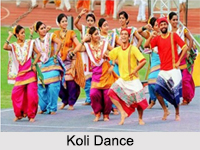
Koli Dance
A folk-dance form of Maharashtra, the Koli dance is mainly performance by the Koli community of the region. Known for their primary profession of fish...
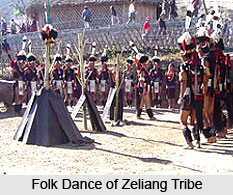
Folk Dances of Nagaland
Folk Dances of Nagaland reflects the naga tradition and culture of the local habitants. In most of the cases, naga dances are monopoly of men with som...
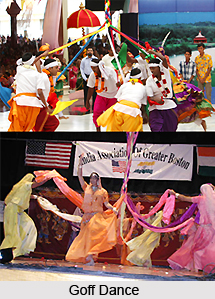
Goff Dance
Goff dance of Goa is performed during the Shigmo festival in the month of Phalgun in Hindu calendar. Goan peasants mainly practice this dance after th...
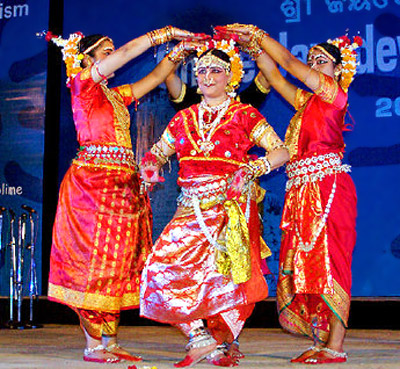
Abhinaya Chandrika
Abhinaya Chandrika is an ancient text on Odissi dance that explain every minute details of Odissi performance. The text explains about different mudra...
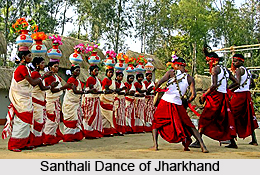
Santhali Dance
Santhali dance is a vibrant folk tradition of the Santhal tribe, reflecting the deep connection of the Santhal tribe with nature, community, and celeb...
Related articles in Indian Dances
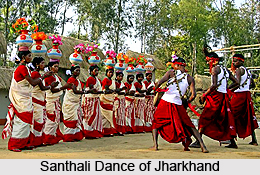
Santhali Dance
Santhali dance is a vibrant folk tradition of the Santhal tribe, reflecting the deep connection of the Santhal tribe with nature, community, and celeb...
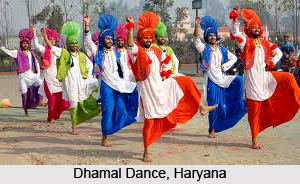
Dhamal Dance
A folk dance form of Haryana, the Dhamal Dance has its roots in the days of the Mahabharata. This dance form is primarily performed by men in the outd...
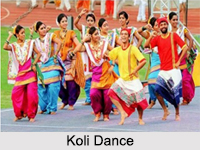
Koli Dance
A folk-dance form of Maharashtra, the Koli dance is mainly performance by the Koli community of the region. Known for their primary profession of fish...
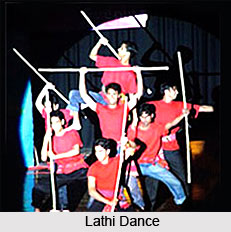
Lathi Dance
Lathi dance is a dance form of West Bengal performed on the occasion of Muharram.
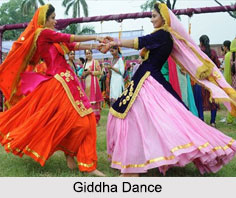
Giddha Dance
Giddha Dance of Punjab, performed only by the women, is a very popular folk art form in India. During Lohri, the Punjabi women reveal their joy throug...