Kashmir Crisis, 1948, Indian History - Informative & researched article on Kashmir Crisis, 1948, Indian History
 Indianetzone: Largest Free Encyclopedia of India with thousand of articlesHistory of India


in  
 Art & Culture|Entertainment|Health|Reference|Sports|Society|Travel
Forum  | Free E-magazine  | RSS Feeds  
History of India : Sources of History of India |Ancient History of India |Medieval History of India |Modern History of India |Indian Historical Dynasties |Indian Battles |Sepoy Mutiny 1857 |Indian Rulers |History of India |Indian Freedom Struggle |Indian Governor- Generals |British Indian Acts |Post Independence India |Iron Age in India
Home > Reference > History of India > Indian Freedom Struggle > Kashmir Crisis
Kashmir Crisis, 1948, Indian History
Kashmir crisis was a bottleneck situation, where no solution could be achieved at, despite intelligent minds.

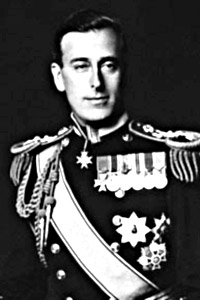
 Lord-Mountbatten - new ViceroyOn 20th February 1947, British Prime Minister Clement Atlee announced in the House of Commons the selection of Lord Mountbatten (1900-1979) as the new Viceroy and his mandate to affect the transfer of power to Indian officials not later than June 1948.

On 25th October, as its Chairman Lord Mountbatten convened an emergency meeting of the Indian Defence Committee in response to news that 5000 Mahsud and Wazir tribesmen were invading Kashmir. A sever crisis was thus looming in the pipeline. On October 26, V K Krishna Menon, High Commissioner to the United Kingdom, was sent to Srinagar to ascertain the situation. On the following day, he obtained the Prince`s accession to India. Hence on October 27, a battalion of 329 Sikhs were airlifted to Srinagar to secure the airport and begin operations against the invading tribesmen.

On 28th October, in Lahore, Field Marshal Auchinleck succeeded in persuading Muhammad Ali Jinnah to refrain from forwarding Pakistani troops to Kashmir.

On 8th November, Lord Mountbatten and General Sir Hastings Ismay went to Lahore to attend a conference over the Kashmir crisis with Jinnah and Liaqat Ali Khan. They discussed such issues as the removal of the tribesmen from Kashmir, a plebiscite to determine the future of Kashmir and the removal of Indian troops from Srinagar. In the end nothing was accomplished. After four additional fruitless meetings, deadlock was complete and the matter passed to the United Nations.

On 30th November, Field Marshal Auchinleck left his position as Supreme Commander of India and Pakistan and closed his headquarters. Thus the dismantlement of the Indian Army had been largely completed.

This article is a stub. You can enrich by adding more information to it. Send your Write Up to content@indianetzone.com

(Last Updated on : 07/02/2012)
 
 
Home Rule Movement in India Struggle in Kashmir Women in Indian Freedom Struggle
Non Cooperation Movement Civil Disobedience Movement Quit India Movement
Indian National Army Kashmir Crisis Cabinet Mission
Indian Independence Act 1947 Wavell Plan,1945 The Round Table Conference
Swadeshi Movement Swaraj Party Nehru Report
Jinnah and his 14 points Provincial elections Simla Conference
Lahore Resolution Provincial Elections of 1936-1937 Kakori Train Robbery
Partition of India Provincial Elections during British India, 1946 Lucknow Pact
Demand for Purna Swaraj Amery`s Proposal Royal Indian Navy Mutiny
Causes of Indian Nationalist Movement Satyagraha Dandi March
Champaran and Kheda Satyagraha Revolutionary Socialist Party of India Jamiat Ulema E Hind
Khaksar Movement Al Islah Newspaper  
Recently Updated Articles in History of India
National Investigation Agency
National Investigation Agency (NIA) was created by the Indian Parliament to enable the detection, prevention, investigation and prosecution of terrorism-related incidents in India on a national scale.
Battle of Malpura
The crisis that developed in the relationship of Jaipur and Sindhia`s Government, nurtured the battle of Malpura.
Seige of Panhala fort
Seige of Panhala fort was undertaken by the joint forces of the Adil Shahi kingdom. Shivaji managed to successfully escape from this fort while it was still under siege by the Adil Shahi forces thus rendering the siege useless.
Purandhar Fort
Battle for Purandhar Fort saw a rather strong defence being provided by the Maratha forces. The battle ended in peaceful negotiations as it was realised by the offenders that they were merely losing their men and were nowhere near capturing the fort.
Battle in Poona
Battle in Poona saw a crushing defeat of the Mughals by the Maratha leader Shivaji. After the battle, the defeated Shaista Khan was transferred to the Bengal as punishment for embarrassing the Mughals with this defeat.
E-mail this Article | Post a Comment
Forum
Forum on History of India
Free E-magazine
Subscribe to Free E-Magazine on Reference
 
 
Kashmir Crisis, 1948, Indian History - Informative & researched article on Kashmir Crisis, 1948, Indian History
Sitemap
Contact Us   |   RSS Feeds
Copyright © 2008 Jupiter Infomedia Ltd. All rights reserved including the right to reproduce the contents in whole or in part in any form or medium without the express written permission of
Jupiter Infomedia Ltd.
