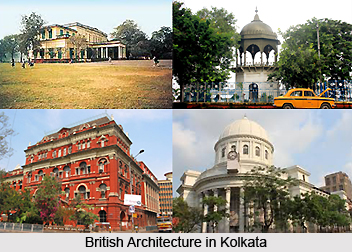
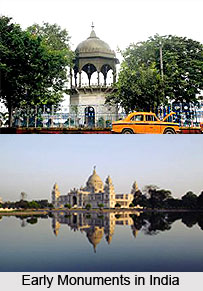
 Architecture during early British rule in India was primarily mastered under the East India Company, which had put in tremendous efforts to construct memorable and durable edifices. The coastal towns with broader facilities were the Company`s first targets for architectural beauties.
Surat Factory
In 1612, in Surat, the British East India Company erected its factory as probably the earliest British architecture in India. The building consisted first of clay and wood and then later of walls made of stone and brick. The facilities included a warehouse and dwellings for staff.
Fort St. George
In 1640, the Company erected Fort St. George on the Coromandel Coast. In 1687, it was chartered as Madraspatam or later Madras and became the first formal British municipality in India.
Mausoleum of Oxlden Family
In the 1660s, in Surat, the Oxlden Family erected a mausoleum representative of a distinctive piece of early English architecture in India. It embraced a hybrid design of British and Indian matures. The structure possessed two stories, had huge columns and two cupolas.
Cathedral of St. Thomas
Within the extensive period of 1672 to 1718, early British architecture in India received further encouragement, when Gerald Aungier (d.1677) promoted the erection of what became the Cathedral of St. Thomas in Bombay. Its acquired memorials and monuments form one of India`s finest sculptural collections. In 1826, a massive bell tower was added, which was later turned into a cathedral.
Anglican Church of St. Mary
In 1680, at Fort St. George, the Anglican Church of St. Mary`s received consecration. Streynsham Master (1640-1724) directed its building and William Dixon, the Fort`s Master Gunner, prepared the designs. Its simple construction embraced great strength as it successfully withstood French bombardment. Later in 1759, Robert Clive had the church largely rebuilt.
Fort William
Fort William is an old fort built by the early Britons in Kolkata, located on the eastern bank of Ganga River. The old building of Fort William was demolished by Siraj ud daullah, but after 1757 the fort was rebuilt which was completed in 1781 and became the "Lungs of Kolkata".
Prinsep Ghat
Now turned as a recreational site in the heart of Kolkata, Prinsep Ghat was built in the time of early British era. The Palladian porch of Princep Ghat was built in the memory of eminent orientalist James Prinsep, who was famous for deciphering the inscriptions of Ashoka. It was built in 1841 and named after James Prinsep, the Anglo-Indian scholar and antiquary.