Introduction
 Lord Kartikeya, also known as Murugan, Subrahmanya and Skanda, is a Hindu God who is ardently worshipped by the devotees. The alternate version, Murugan is particularly worshipped by Tamil Hindus. Other than India, Lord Kartikeya is also worshipped in many countries like Malaysia, Singapore, Mauritius and Reunion Island and Sri Lanka. Lord Kartikeya is the son of Goddess Parvati and Lord Shiva and is the brother of Lord Ganesha. His other names include Shadanana, Sanmuga, Saravana, Shantakumar, Senthil, Guha and Sanmukha, Swaminatha, Arumugam, Kumaran, Guruhuha and Velan. He indicates an individual of perfection. He is incredibly brutal and most masculine amongst all the gods. Lord Kartikeya, the god of war and victory, was formed by all the gods to guide the magnificent hosts and vanquish the demons. Lord Kartikeya is usually seen with a Peacock, his vahana, surrounded by serpents.
In India, the 6 most prominent shrines of Lord Kartikeya are the Arupadaiveedu temples, which are in Tamil Nadu. Lord Kartikeya is most worshipped in South India, particularly amongst Tamil populace, popularly identified as Thamizh Kaduvul, which means God of Tamils. In West Bengal, during Durga Puja, Kartikeya is worshipped along with his sisters Lakshmi and Saraswati and his brother Lord Ganesha.
Origin of Lord Kartikeya
The origin of Lord Kartikeya has been explained in various ancient texts and epics. Most of the versions are almost similar, with minor changes in the details. Lord Kartikeya, also known as Murugan, Skanda, Subrahmanya, Senthil etc, is a Hindu Deity. It is widely believed that Lord Kartikeya is the son of Lord Shiva and Goddess Parvati. Lord Ganesha is his younger brother and Saraswati and Lakshmi are his sisters. His other names are Sanmuga, Shadanana, Shantakumar, Saravana, Guha, Senthil, Sanmukha, Arumugam, Swaminatha, Kumaran, Guruhuha and Velan. Lord Kartikeya is the God of War and Victory, was created by all the gods, in order to vanquish the demons, particularly the cruel demon Taraka Asura. There are several accounts and legends related to the origin of Lord Kartikeya. These are discussed below-
Origin of Lord Kartikeya in Mahabharata : The origin of Lord Kartikeya is discussed in intricate details in Vyasa`s Mahabharata. It is described that Kartikeya was born to Agni and Svaha, after Svaha imitated the 6 of the 7 wives of Saptarishi. Following this, the real wives then became Pleiades or Seven Sisters, an open star cluster. The purpose of Kartikeya`s birth was to destroy the demon Mahisha Asura, nemesis of Goddess Durga. As Kartikeya appeared as a threat, Lord Indra attacked him. But upon the interference of Lord Shiva, he became the Commander-in-Chief of the Army of the Deities. He married Lord Indra`s daughter, Devasena.
Lord Kartikeya is mentioned in several places in the Mahabharata, like Shalya Parva and Vana Parva. The Vanaparva of Mahabharatha states another version. It states that Devasena was once put to course by a terrible demon of extraordinary powers, named Kesin. Kesin carried the Devasena, embodied as a woman. Devasena had a sister named Daitysena and both were daughters of Prajapati. After Devendra approached Lord Brahma for help, he declared Kartikeya was adequate to vanquish the demon and assured a gallant husband for Devasena. He would thus become War Lord of the Devas.
 Origin of Lord Kartikeya in Ramayana : The origin of Lord Kartikeya is described in an alternate version in Valmiki`s Ramayana. The Balakanda of Ramayana mentions that all the Gods requested Lord Shiva to conserve his energy for Denavasamhara. Although Shiva appreciated the request, he confessed that he had already released his seed. Then the Gods requested Earth, Vayu and Agni to obtain the seed and penetrate it. Agni immediately entered the seed and it transformed into a mountain from which Karthikeya originated. As he was part of Lord Shiva, so he inherited his powers and inherited. Eventually he became the God of War and destroyed the demon Taraka and the dynasty of Asuras.
Origin of Lord Kartikeya in Vedas : Lord Kartikeya is widely mentioned through out the Vedas. The Atharva Veda explains Kartikeya as Agnibhuh, the son of Agni (god of fire). He is mentioned as the son of Rudra and the 9th form of Agni in the Satapatha Brahmana. The Taittiriya Aranyaka includes the Gayatri Mantra for Lord Kartikeya. The Chandogya Upanishad portrays Murugan as the way which leads to wisdom. The Skanda Purana is dedicated to the accounts of Kartikeya. In Bhagavad Gita (Ch.10, Verse 24), Krishna, while describing his omnipresence, says, "Among generals, I am Skanda, the lord of war."
Origin of Lord Kartikeya in Puranas : The version of Origin of Lord Kartikeya mentioned in the Puranas is almost as same as the other versions. It was identified that Karthikeya was the son of Shiva. Karthikeya was born to banish the atrocities of the malicious demon Taraka, who tortured the Devas for several years. When whole Amarakula was entirely incapacitated, they approached Lord Srimannarayanan for help, who suggested that the son of Lord Shiva alone would slay the remorseless Taraka Asura. The Skanda Purana states that Shiva was first married to Sati or Dakshayani, the daughter of Daksha and granddaughter of Lord Brahma. As Shiva personified detachment and destruction, danced in a graveyard covered in ashes, begged for food and had no possessions, Daksha disliked him, and insulted Shiva in public in a Yagna ceremony. As a result of this, Sati conducted self-immolation. Shiva was engaged in penance as the Devas managed to get Shiva married to Parvati, who was the rebirth of Sati. The Devas asked Manmatha or Kama, the God of love, to awaken Lord Shiva from his penance.
But Manmatha faced Shiva`s wrath and was burnt to ashes, when Shiva opened his 3rd eye, as a punishment for disturbing him. Shiva decided to submit over his radiance of the 3rd eye to Agni, as only he was capable of handling it till it yielded the desired offspring. But Agni handed it to Ganga, as it was unbearable even for him. Ganga deposited it in a lake in a forest of reeds. Goddess Parvati had taken the form of the lake as she alone was able to tolerate the power of Lord Shiva. A child was born, with 6 faces, Eesanam, Sathpurusham, Vamadevam, Agoram, Sathyojatham and Adhomugam. The child was nurtured by 6 young and enchanting women, known as Kritika in Sanskrit. Thus he was named Karthikeya, who eventually annihilated Taraka.
Origin of Lord Kartikeya in Kanda-Puranam : In Kanda-Puranam, a Tamil equivalent of Skanda-Purana, an alternate version of origin of Lord Kartikeya, popularly known as Murugan, is provided.
 The Kanda-Puranam was constructed by Kacchiappa Sivachariyar (1350-1420 AD). Here also Kartikeya appears as the slayer of Taraka and his demonic siblings, Simha-Mukhan and Shoorapadman.
Lord Shiva released a beam of fire from his divine third eye that split into 6 separate streams. Each stream fell on a lotus flower in a lake named Saravana Poigai and transformed into 6 different children. Six young women, known as Karthigai Pengal, the Pleiades or Kritikas, found the babies and each took care of one child. On the day of Karthigai, Sati or Parvati unified the 6 babies into a six-headed child. Thus the name Arumugan or Shanmugan, was given to Kartikeya, which means "one who has six faces". Murugan is worshipped as a nature spirit, pleased with animal sacrifices.
Lord Kartikeya is married to Valli and Devayani. Valli is the daughter of a tribal leader, while Devayani is another form of Devasena. According to other legends, Kartikeya is a bachelor and remained unmarried. That is why he is also known as Kumara-Swami, where Kumara means Bachelor and Swami means God.
Attributes and Symbols of Lord Kartikeya
Being the God of War and Victory, Lord Kartikeya carries a number of weapons, like the Divine Spear or Lance, known as the Vel. His other weapons are a Mace, a Bow, a Sword, a Discus, a Javelin. But mostly he is portrayed using a Spear, known as Sakti. He is also seen riding a Peacock, which is his Vahana. He is the symbol of cleansing of all human evils. His spear indicates his long range of protection, the mace indicates strength, the discus expresses his knowledge of the truth and the bow demonstrates his capacity to defeat all evil. The peacock is the symbol of destruction of the ego. The 6 different heads indicate Lord Kartikeya`s 6 heads represent the six siddhis granted upon yogis for their spiritual development.
Worship of Lord Kartikeya
 The worship of Lord Kartikeya is carried on through out the country, particularly in South India, by Tamil Hindus, who popularly refer to him as Murugan. Tamil people also refer to him as, Thamizh Kaduvul, meaning God of Tamil. Moreover, Worship of Lord Kartikeya is carried on several parts of the world like, Malaysia, Singapore, Sri Lanka, Mauritius and Reunion Island. People in Penang and Kuala Lumpur, in Malaysia also worship Lord Kartikeya, during Thaipusam. Durga Puja in West Bengal, worship of Lord Kartikeya is conducted along with his mother Parvati and siblings Ganesha, Lakshmi and Saraswati.
Worship of Lord Kartikeya in History : According to Sanskrit literature, worship of Lord Kartikeya, dates back to the 1st millennium BCE. Accounts of the deity are given in Sanskrit works such as Kathasaritsagara and Kalidasa`s Kumaarasambhavam. The Kushanas, a republican clan of Punjab, utilised coins that beared images of Kartikeya. He was also venerated by the Ikshvakus and the Guptas. The worship of Kartikeya was amongst the 6 principal sects of Hinduism during the era of Adi Shankara. Presence of Lord Kartikeya was also prevalent during the Gupta age. Skandagupta and Kumaragupta, two kings of the Gupta Empire, were named after Kartikeya. He is also depicted in various Gupta sculptures and the caves of Ellora and Elephanta.
Moreover, there is extensive mention of Lord Kartikeya in Sangam Tamil literature. One of the earliest Sangam literary works, Tolkappiyam, created between 3rd century BCE and 5th century CE, also described Kartikeya with intrinsic details. According to the Tirumurugarruppatai, a deeply devotional poem, around 400-450 AD, Kartikeya was the dominating deity the Kurinci region. In most Lord Shiva and Parvati temples in Tamil Nadu, Lord Kartikeya is mounted on the left side of the central idol. Sangam Literature describes Kartikeya as a nature spirit, revered with animal sacrifices. The worship of Lord Kartikeya was generally conducted in forested areas or in open fields, with no specific associated structure. The various rituals were practiced like, Veriyaattu, a type of ritual-trance-dancing, which is still forms a part of worship of Lord Kartikeya in Tamil Nadu.
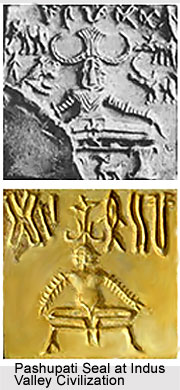
Archaeological evidence of relics and pottery in different regions in Tamil Nadu, such as Adichanallur, had ideographic inscriptions of him and indicate that worship of Lord Kartikeya was widespread even during 10th century B.C. Lord Kartikeya is also linked with the Indus Valley God Ahmuvan.
Worship of Lord Kartikeya in South India : In Tamil Nadu, Kartikeya has been most admired with all classes of society from the Sangam period. Here, he is known by many names like Senthil, Arumuga, Skanda, Maal-Marugan, Guha and the most popular Murugan. Worship of Lord Kartikeya takes all over the Tamil year. There is a six day stage of fast and prayer during Skanda Shasti, which is in the Tamil month of Aippasi. Murugan is venerated at Thaipusam, celebrated by Tamil communities during the full moon, in the Tamil month Thai. This honours the day when Kartikeya received a lance or Vel from his mother, to destroy the Asuras.
The full moon in the Tamil month of Karthigai, known as Thirukarthigai, denotes his birth.Every Tuesday, during the Tamil month of Adi, is also devoted to the worship of Lord Kartikeya. Lord Kartikeya is the chief deity of the Thiyyas in northern Kerala. Worship of Lord Kartikeya is done with highest dedication in Dakshina Kannada and Udupi, in Karnataka. The ritual of nagaradhane is exclusive to this region.
Worship of Lord Kartikeya in North India : From the ancient period, Kartikeya was very popular through out India. But worship of Lord Kartikeya recoiled, since the Middle Ages, in North India. Nowadays, veneration of the deity is almost non-existent, except for Haryana. The Kartikeya Temple in Pehowa of Haryana, is rather popular and devotees flock to the temple through out the year. But the temple is most renowned as women are not allowed in the premises of the temple as the shrine adores the Brahmachari form of Kartikeya.
Remnants of earlier worship of Lord Kartikeya can be evidenced at the temple of Achaleshwar, close to Batala city, in Punjab and Skanda temple in Pune, Maharashtra. The Kartik swami Temple in Chamoli district of Uttarakhand is also popular for worship of Lord Kartikeya. During the month of June, a Yagya is conducted for 11 days, to please the god.
Worship of Lord Kartikeya in East India : Lord Kartikeya is worshipped in full bloom duri ng the Durga Puja festival all throughout Kolkata and West Bengal. Kartikeya is revered along with Goddess Durga and Ganesha, Lakshmi and Saraswati. Detailed rituals are conducted during the month of "Kartik". The "Kartik Puja" is done in many households across the state. But recently the trend is fading and usually couples wishing to have a male new born bay worship Lord Kartikeya.
There is another tradition amongst the Bengalis that idols and images of Lord Kartikeya are secretly put in the premises of houses of people who are either recently married or are expecting a child. The deity is also linked with the Babu culture that dominated early Kolkata. Thus several traditional and old Bengali paintings portray Kartikeya dressed in traditional Bengali attire.
Lord Kartikeya, the God of War and Victory and the son of Lord Shiva and Parvati, is ardently worshipped by numerous devotees through out the nation, particularly in Tamil Nadu.
Temples of Lord Kartikeya
The most significant temples of Lord Kartikeya are present in Southern India, like Aru Padaiveedu, Thirupparangunram, Thiruthani, Swamimalai, Thiruchendur, Pazhamudircholai, Palani, Sikkal, Marudamalai, Vadapalani, Kandakottam, Kundrathur, Thirumalaikoil, Vallakottai, Pavalamalai, Thirumalaikoil and others. Temples in other regions include, Malai Mandir in Delhi, Pehowa temple in Haryana, Payyannur Subramanya Swamy temple in Payyanur, Kukke Subramanya Temple in karnataka, Kartik swami Temple in Kanachouri Chamoli district, Uttaranchal.
Mantra of Lord Kartikeya
The Mula Mantra of Lord Kartikeya is Om Saravana Bhava or Om Saravana Bhavaya Namah. Saravana Bhava, which literally means born of the forest of reeds, is formed out of six syllables denoting the spirit of the six-faced Kartikeya.