


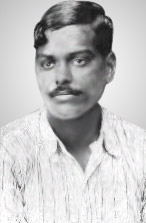
 The first major blow was struck by the valiant revolutionaries on 9th August 1925 when the government treasury was looted from a running train on Saharanpur-Lucknow route near Kakori railway station and the criminal case registered came to be known as Kakori Train Robbery, also glorified as the Kakori Conspiracy Case. The first major blow was struck by the valiant revolutionaries on 9th August 1925 when the government treasury was looted from a running train on Saharanpur-Lucknow route near Kakori railway station and the criminal case registered came to be known as Kakori Train Robbery, also glorified as the Kakori Conspiracy Case.
It was a well-planned operation in which Ram Prasad Bismil, Ashfaquallah, Rajan Lahiri, Sachindra Bakshi, Chandra Shekhar Azad, Mukund Lai, Murari Lai, Kundan Lai, Banwari Lai, Manmathnath, Keshab Chakravarthy, Thakur Roshan Singh and a few other revolutionaries participated. The chivalrous escapade with death and destiny has been brilliantly narrated by Manmathnath Gupta in his book They Lived Dangerously. They broke open the strong steel box with hammer blows and took possession of the entire cash. The adventure invigorated the revolutionaries. After a long hunt, it was on 26th September 1925 that large-scale arrests were made and houses were searched. Almost all the important revolutionaries wanted in Kakori case were arrested from different places and on different dates. The case started in the court of Syed Ainuddin, special magistrate on 4th January 1926, against twenty-five people. The case was withdrawn against two and another two had become approvers. The remaining were sent up for trial before the special sessions judge Lucknow, Mr. Hamilton. Ashfaqullah and Sachindra Nath Bakshi were arrested later and were challenged in a supplementary case. The judgement of the Kakori train robbery was announced on 6th April 1927 with the courtroom resounding with Maulana Hasrat Mohani's ghazal: Sarfaroshi ki tamanna aaj hamaray dil me hai, Dekhna hai zor kitna bazuay qatil mein hai (Our earnest desire is to be beheaded, let us test how much might the hand of the executioner possesses). Loudly recited by Bismil and his companions, it filled the whole atmosphere. The war cry of the Indian nationalism 'Vande Mataram' reverberated in the whole court complex. Ram Prasad Bismil, Roshan Singh, Ashfaqullah and Rajendera Nath Lahiri were sentenced to death. Sachindra Nath Bakshi, Sachindra Nath Sanyal, Govinda Charan Kar, Jogesh Chandra Chatterji and Mukund Lai were sentenced to transportation for life. Raj Kumar Sinha, Suresh Chandra Bhattacharya, Vishnu Saran Dublis and Ram Kishan Khatri were sentenced to rigorous imprisonment for ten years. Manmathnath Gupta was sentenced to rigorous imprisonment for fourteen years and five others were sentenced to term imprisonments. Ram Prasad Bismil in Gorakhpur jail, Ashfaquallah in Faizabad, Thakur Roshan Singh in Allahabad district jail kissed the gallows on 19th December 1927, while Rajendranath Lahiri got a martyr's death in Gonda jail on 17th December 1927. The other patriots convicted and sentenced for the Kakori Train Robbery were sent to different jails. Dublis was deported to the Andamans to undergo his sentence. |
| |||



Home > Reference > History of India > Modern History of India > Indian Freedom Struggle > Kakori Train Robbery
Kakori Train Robbery
| Kakori Train Robbery is a legendary act of defying against the oppressors by hot-blooded Indian crusaders. |
| ||||||||||||||||||||||||||||

