
Kapoteeswara Temple is located at Chezerla near Narasarapet, Guntur having this temple houses a deity of Lord Shiva - Kapoteswara. This is probably the only temple in the whole of India dedicated to Lord Siva as Kapooteswara.
History of Kapoteeswara Temple
In Kashmir, a king named Sibi Chakravarti, son of Mandhata and grandson of Yayati Maharaja, ruled the world peacefully and justly. He had two brothers named Mehadambara and Jeemutavahana. One day Mehadambara asked Sibi to give him permission to go on a pilgrimage to the shrines and rivers of South India. The king was pleased with the piety of this brother, gave him permission and made arrangements for a retinue of 1500 to accompany him. Mehadambara visited a number of holy places and at last came to Cherum Chorla where many yogis were performing penance in the caves of a hill called Devarakonda. Moved by the piety of the yogis, he stayed here and lost all interest in worldly affairs. He died and was buried on the summit of the hill. Due to his penance his body did not perish, but assumed the form of a linga.
Younger brother Jeemutavahana followed his brother`s footsteps. He dismissed his escort and sat as a yogi in penance. King Sibi on hearing the fate of the second brother handed over the kingdom to his ministers so that he might visit the place himself. The king ultimately reached the place, and decided to perform a hundred yagnas. The three Gods, Brahma, Rudra and Vishnu descended to Bhuloka. They transformed themselves, Lord Siva as a hunter, Lord Brahma as an arrow, and Lord Vishnu as the bird Kapotha pakshi. Lord Siva as a hunter ran after the bird. The bird flew and found refuge in the hands of the king Sibi, seeking his protection. At that time, Sibi was performing his hundredth yagna.
The king Sibi placed the bird on one scale and with his own bands tore off portions of his body, and placed them in the other scale. But no amount of flesh from the body would balance the weight. Thereupon Sibi got a long knife, and cut his body into two pieces and placed one half on the scale. Brahma, Rudra and Vishnu appeared before Sibi and restored his yagna and also his life. A temple was erected over Sibi`s linga under the name of Kapotheswara. The place is full of Sivalingas and these represent the escort of Sibi in ling form.
The legend is supported by a famous inscription supporting this by Satsabhamalla, the son of Avanitalantavati Mahadevi, the daughter of the king Kandara of the Ananda Gotra line of kings. The Kandara line of kings is a rare one, and they ruled round about the 4th or the 5th century AD. The provenance of this inscription shows that this temple was in existence from the 5th century. There are hoary legends about the temple.
Architecture of Kapoteeswara Temple
There was a boab tree outside the south wall of the temple. It was 56 feet in diameter and hollow inside. The tree collapsed in 1917. The deity is in ling form. In the linga there are large cavities as if scooped out, and these are the places where the Lord cut off his own flesh. Even today the smell of raw flesh and blood comes from this spot. The temple has three types of architecture - the Nagara, the Vesara and the Dravida, with distinguishing features seen in the Vimana over the main shrine of the temple.
The temple of Chezerla is a rare work of art as it one temple built on the apsidal model and barrel vaulted structure, and is classified in the Vastu Sastras as Hastiprasta or elephant back. These were originally Buddhist Chaityas and were readjusted for the purpose of Hindu worship. The end of the temple takes the form of an apse and in the centre is a white marble linga. The main shrine of the Lord is a long apsidal building with a barrel roof. The floor is below the level of the courtyard. There is only one small entrance in front, which faces the east.
The end of the building takes the form of an apse. In the centre of the apse is the idol, with the two holes on its crown. There is no hole on the north wall of the temple, which is found in every Saivite temple as an opening for Abhisheka. The two holes on the linga serve the purpose. There are a number of halls in front of the main shrine and one contains a large Nandi facing the entrance. There are a number of small shrines around the temple, containing lingas. On the northeast side there is Sahasra linga and on the other side a carved stone image representing the Saptha Matrikas or the seven mothers.
Festivals: The main festival is the Mahashivratri festival and the other festivals of the Saivite temples.
Kapoteeswara Temple
Kapoteeswara Temple is probably the only temple in the whole of India dedicated to Lord Shiva as Kapooteswara.
Recently updated articles in Temples of India
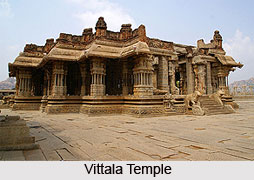
Vijaya Vittala Temple, An Architectural Masterpiece of Hampi
The Vittala Temple, located in Hampi, Karnataka, is a magnificent example of Vijayanagara architecture. Dedicated to Lord Vittala, a form of Lord Vish...
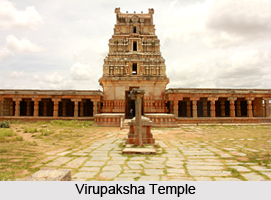
Virupaksha Temple
Virupaksha Temple, located in Hampi, Karnataka, is a historic Hindu temple dedicated to Lord Shiva. Dating back to the 7th century CE, it flourished u...
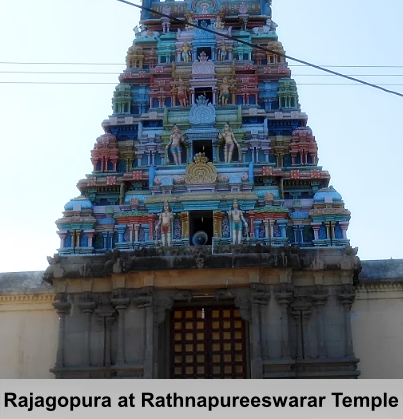
Rathnapureeswarar Temple
Rathnapureeswarar Temple in Tiruvarur district, Tamil Nadu, is a revered Shaivite shrine among the Paadal Petra Sthalams. Dedicated to Lord Shiva, it...
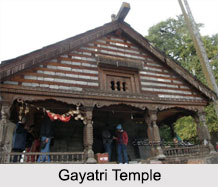
Gayatri Temple, Sirmaur
Gayatri Temple is located in Sirmaur district, Himachal Pradesh. Gayatri Temple is a sacred shrine that belongs to the medieval age.
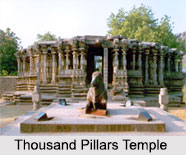
Thousand Pillars Temple
Thousand Pillars Temple, Andhra Pradesh possesses 1000 pillars built by the Kakatiya ruler Rudra Deva during 1163 AD and is adorned with beautiful scu...
Related articles in Temples of India
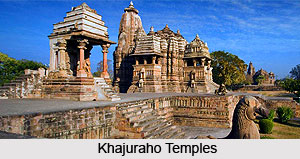
Khajuraho Temples
Khajuraho Temples are known the world over for their beauty and architectural construction. This group of temples is situated in the central Indian st...
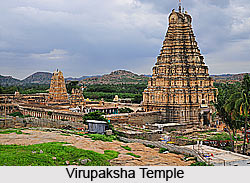
Temples In Hampi
Temples in Hampi are the manifestations of rich religious beliefs and architectural and sculptural abundance.
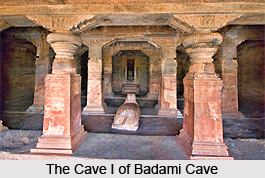
Badami Cave Temples
The Badami Cave Temples, an exemplary production of Indian architecture, are situated in the town of Badami.
Temple Architecture During Rajput Period
Temple architecture during the Rajput period was inclined to the aspect of Bhakti. Rajput kings encouraged this art which is reflected in the grandeur...
Medieval Temples of India
Medieval temples of India vary from each other due to the style and architecture. The impact of the prevalent kingdom is prominent in the style of bui...