


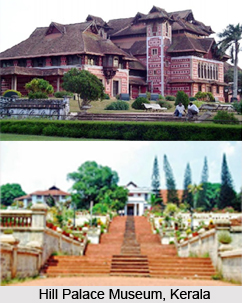
 Thripunithura Hill Palace, the largest archaeological museum in Kerala and the official residence of the Kochi royal family, is today the largest archaeological museum in Kerala. Built in 1865, the palace complex is situated at a distance of about 12kms from Kochi on Ernakulam- Chottanikkara route. It consists of 49 buildings in the traditional architectural style of Kerala, sprawled over 52 acres of beautifully landscaped terraced land, with ponds, fountains and lawns, which houses a deer park and facilities for horse riding. In 1980, the palace was taken over by the Department Of Archaeology and later converted into a Museum. It was opened to the public in 1986. This palace turned museum displays 14 categories of exhibits including paintings, murals, sculpture in stone and plaster of paris, manuscripts, inscriptions, carvings etc. Thripunithura Hill Palace, the largest archaeological museum in Kerala and the official residence of the Kochi royal family, is today the largest archaeological museum in Kerala. Built in 1865, the palace complex is situated at a distance of about 12kms from Kochi on Ernakulam- Chottanikkara route. It consists of 49 buildings in the traditional architectural style of Kerala, sprawled over 52 acres of beautifully landscaped terraced land, with ponds, fountains and lawns, which houses a deer park and facilities for horse riding. In 1980, the palace was taken over by the Department Of Archaeology and later converted into a Museum. It was opened to the public in 1986. This palace turned museum displays 14 categories of exhibits including paintings, murals, sculpture in stone and plaster of paris, manuscripts, inscriptions, carvings etc.
Site & Architecture The oldest building in the complex is a single storeyed Kerala style 'ettukettu' constructed around 1850 AD with an adjacent pond, temple and urappura. The other buildings are a combination of traditional and western architecture. The latest construction was a three storied western style building constructed in 1950 and the architecture style is more contemporary. The Department of Archaeology took responsibility of the building in the year 1980. The museum was open to the public in the year 1980. Museum & Galleries Paliam gallery in the museum contains the collections donated by the Paliyathachan's family. Paliyathachan's were hereditary Prime Ministers to the Cochin Maharaja's for a long period. This gallery was opened in 1991. Ethno-archaeological Museum displays many sculptures in stone and manuscripts, inscriptions, coins, belongings of the Kochi royal family and royal furniture including the simhasana (throne). The collections displayed in the museum are also mainly from the Travancore Royal House, Paliam Devaswom and from the department of Archaeology. It has a gold crown embedded with precious stones and many valuable coins, ornaments, majestic beds and samples of epigraphy. Also exhibited are over 200 antique pieces of pottery and ceramic vases from Japan and China, Kudakkallu (tomb stone), Thoppikkallu (hood stone), menhirs, granite, laterite memorials, rock cut weapons from the stone ages, wooden temple models, plaster cast models of objects from Mohanjodaro and Harappa of the Indus Valley Civilization of North India. The museum also houses a gallery of contemporary art. 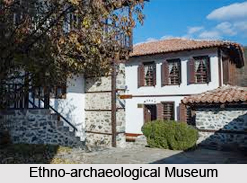 In the Portrait gallery, oil portrait of the Maharaja's of the Cochin State are exhibited. This gallery also contains certain Tanjavur paintings. Various woodcarvings, which are part of Enadimangalam Temple belonging to 14th century as well as unique ivory items, wooden sculptures etc, are displayed in Wood Carvings gallery. In the Portrait gallery, oil portrait of the Maharaja's of the Cochin State are exhibited. This gallery also contains certain Tanjavur paintings. Various woodcarvings, which are part of Enadimangalam Temple belonging to 14th century as well as unique ivory items, wooden sculptures etc, are displayed in Wood Carvings gallery.
Heritage Museum, which was opened in 1995, exhibits traditional household utensils, art effects and religious worship materials. In Weapon gallery and Sculpture gallery, old weapons collected from different places and stone sculpture s ranging from 10th century up to 18th century are displayed respectively. Rare bronze and silver items belonging to 14th - 16th century are displayed in Bronze and metal ware Gallery. Gallery of porcelain contains about 160 items. This includes porcelain or pots, Chinese dishes, cups etc. The exhibits of Epigraphy Gallery are stone inscriptions, copper plates, palm leaf records, grandhas, 'thora' in goat's skin in Hebrew language etc. Chariots Gallery displays horse Carts imported from England and belonged to Maharaja's of Travancore and Folklore and Folk Arts gallery contains some old musical instruments and clay models. The Crown and Jewellery Gallery was opened in 2001. This gallery contains about 197 items. Royal Crown and gold ornaments decorated with precious stones etc. are the exhibits of the jewellery gallery. Numerous species of flora including rare medicinal plants grow here. The museum premise has been converted into a botanical garden with exotic tropical trees from Central America to Australia. The huge area over which the museum is spread provides the facilities for recreation activities. There is a deer park in the palace complex, which was started in 1992, and facilities for horse riding. A Centre for Heritage Studies (CHS) set up by the dept. of Cultural Affairs, Govt. of Kerala here, offers post-graduate diploma courses and short-term certificate courses in Archaeology, Museology, Conservation & Archival Studies. |
| |||



Home > Art & Culture > Indian Monuments > Indian Regional Monuments > Monuments Of Kerala > Hill Palace Museum
Hill Palace Museum
| Set up in 1865, this museum is Kerala`s first heritage museum and an important tourist destination. |
| ||||||||||||||||||||||||||||

