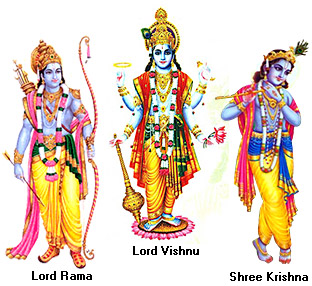
The origin of the Anavils can be traced to the period of Rama. According to the Skanda Purana, when Rama was returning from Lanka with Sita after killing Ravana, he came to the hermitage of Agastya. It was situated in a dense forest on the southern slopes of the Vindhya Hills. At the sage`s bidding, Rama decided to perform a solemn act of expiation at Anadisidha, for the slaying of Ravana. But as there were no Brahmins (without whom he could not perform the yajna) some Ajachak Brahmins were summoned from Gangakulgiri in the Himalayas. Rama offered them a handsome `dakshina` but they would not accept it and insisted that they had merely performed their duty. Displeased with their refusal, Rama deprived them of the privilege of teaching the Vedas and performing yajnas. Like the Vaisyas, their function in society became agricultural. It is said it was these Brahmins became the progenitors of the people of the Bhathela or the Anavil caste, the subdivisions of which are the Naik and the Vashi.
Another version of the story goes that after the performance of the sacrifice, Rama gave several villages as gifts to the Brahmins. The names of the villages were apparently being reminiscent of names associated with Rama - Sitapur, Hanumanbari, Lakshmanpur and Vanarvel. The Brahmins were advised by Rama to settle down there and the place came to be known as Anaval. Lord Rama himself established the deity of Anavils (Shukleshwer Mahadev} there. This place was also known as Anadipur, Anadipatan, Anaditirth and Anadikshetra. It is situated in the Bulsar district, eight miles from Mahuva near the Kala-Amba railway station and can be reached from the Bilimora station on the Western Railway.
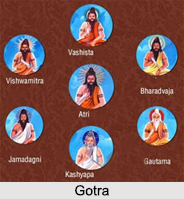
Brahmins, numbering 12 thousand belonging to twelve different gotras, came from the Himalayas and were married to daughters of the Sesha tribe.
Of the twelve clans, ten preferred to settle in Anavil or Anandi-pur, as it was then called. Two clans shifted to a place known as Kantarsvami, now called Katargaun (near Surat) and another to Varitapiya which came to be known as Vashis.
The Anavils claim that they are the descendants of the sages of the Yajur Veda period, such as, Vasishtha, Atri, Kashyapa, Bharadwaja, Kanva and Gautama.
The Anavil community was once upon a time a flourishing city. This community is mentioned in Abul Fazal`s Ain-i-Akbari which mentions that "Anaval had a stone fort".
Historical records show that Anavil Brahmanas were a ruling class and carried on administration from their city over an area of 1,280 square kilometres. The town had 90 temples dedicated to Shiva.
Their administrative acumen can be gauged by the fact that during the Mughal period 7 forts in south Gujarat were in their charge - Saler, Muller, Gambhirgadh, Suvarnagadh, Rupgadh and Anaval. Those in charge of these forts were called Naiks.
On the eleventh day of Vaisakha of Vikram Samvat, 1152, that Anaval was destroyed following a surprise attack by a Bhil warrior, Vanshia, when it was celebrating the marriage of seven hundred girls. In the massacre that followed hundreds perished and many brides committed sati, warning the people against settling in the town for another 900 years and no Anavil lives there now. Most of the survivors settled in the Surat district, twenty-eight families went to Abrikh Abram and the Anavil commander, Samdhar Vashi, settled in a village which he named Palsana, after his two sons, Pala and Sana.
With the help of Maharaja Siddharaj Solani, he succeeded in killing Vanshia but did not reoccupy Anaval because of the curse laid on it. He requested the maharaja to rule over the place and whenever a king was enthroned there, the Anavils from Palsana were invited to perform the coronation ceremony.
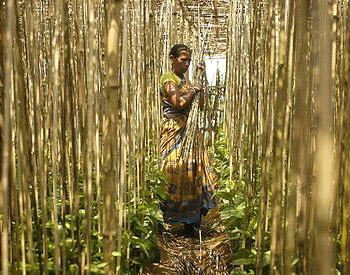
The Anavil Brahmanas are the earliest settlers in south Gujarat. Unlike other Brahmins, all Anavils are laymen or `grabasthas` and it was under their management that south Gujarat was brought under tillage. Being land-owning farmers, the Anavils enjoyed a dominant position in south Gujarat but did not exercise any priestly function or accept any dakshina.
They are normally known as Desais. Under the Mughals and the British they were given the work of collecting the revenue but the Surat Desais were more than mere government servants appointed to superintend the collection of land revenue.
They were so firmly established in position that in many cases a large group of villages was distributed among the members of one family, each of who styled himself `Desai`. As manager of a village or group of villages, the Desai was also called talukdar, a position in which he exercised the function of a village headman. He collected rent from different cultivators. The Anavils also played an important role in the development of Surat and many areas in the city were named after the Desais.
In the earlier part of the 20th century, many joined the railway and insurance companies. For years, what is now the Western Railway was called the Anavila Railway because most of the employees were Anavils.
The Anavils played a big part in India`s freedom struggle. During Mahatma Gandhi`s famous Dandi March, the Navsari district was the hub of the struggle when hundreds of people, young and old, laid down their lives.
There are several hundred thousand Anavils spread over hundreds of villages between the cities of Surat and Vapi in the state of Gujarat as also in cities like Mumbai, Ahmedabad, Surat and Navsari. Hundreds had settled in Africa but because of the ill-treatment of Asians in that continent many either returned to India or migrated to England.