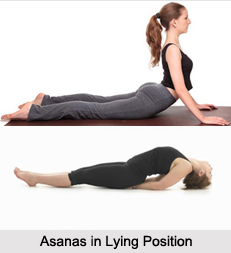
The thirtieth yoga sutra speaks about the fundamental seat of every perfect knowledge and the central administrator of the parasympathetic nervous system - the navel. By complete concentration on the navel, a yogi gains ideal knowledge of the physical body. There lies a fine distinguishing line between the sheaths of anatomy, physiology and psychology. And a true sadhaka is the one, who has turned a master of all the three.
Nabhi the navel
cakre mystical centres, `wheels`, energy centres
kaya the body
vyuha system, disposition, orderly arrangement
jnanam knowledge
By samyama on the navel, the yogi acquires perfect knowledge of the disposition of the human body.
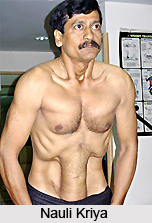
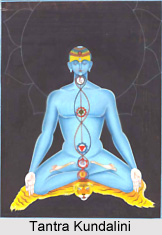
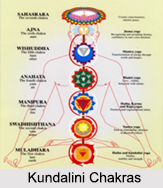
By samyama on the navel area or nabhi cakra, also called manipuraka cakra, a yogi can obtain perfect knowledge of the constitution of the human body. He knows the activities of his each and every cell and thus becomes a master of his own body.
According to yoga texts, the navel is known as kandasthana (kanda = egg or bulb; sthana = region). The root of all the nerves is in the navel. From the navel, 72,000 root nerves (in hathayoga terminology, nadis) branch out. Each root nerve is connected with another 72,000 nerves. These 72,000 multiplied by another 72,000 branch off into various directions, providing energy to the entire system. The navel is considered the pivot of the sympathetic, and the brain of the parasympathetic nervous system.
One can recollect the five kosas, or sheaths of the body.
The anatomical sheath consists of seven substances - skin, blood, flesh, sinew, bone, marrow and semen. They function in combination with 200 Light on the Yoga Sutras of Patanjali the three humours - wind (vata), bile (pitta) and phlegm (slesma or kapha).
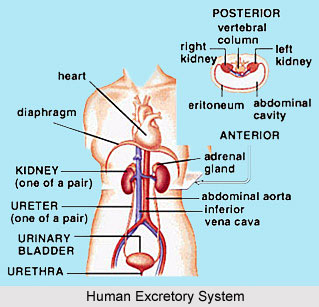
The physiological sheath consists of the circulatory, respiratory, digestive, excretory, endocrinal, lymphatic, nervous, and reproductive systems. The psychological sheath is the seat of motivation; the intellectual sheath reasons and judges. The spiritual sheath, body of bliss, is also called the causal body.
Only the yogi can know the fine demarcation between body and mind, mind and soul, and become master of himself.