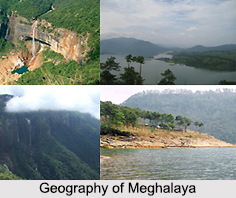
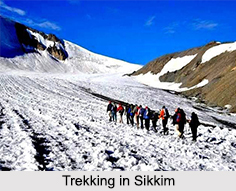
 Trekking in Sikkim can be a wonderful experience in the Himalayas. Sikkim is popular as one of the desired destinations for the trekkers. Braided with cryptic alleys and lush green forests, Sikkim has a lot to offer to the trekkers. Most of the trekking routes in Sikkim are few and around 10 kilometres from major towns. The best months to trek in Sikkim can be from March to May and from September to November. However, trekking at altitudes above 4,500 metres should be avoided in March and April, because the winter snow still persists on the ground and sometimes there is even heavy snowfall during these months. Most of the so called places on trekking routes in remote areas have just a herders" hut or a shed. While trekking, one can enjoy the exquisite beauty of identifying peaks, mountains, rivers and places around.
Trekking Routes in Sikkim
All the following routes are worth a mention. These routes encompass all the treks that have also been recently opened to tourists.
Some of the popular and recommended trekking routes in Sikkim are:
Monastic Trek: Pemayangtse-Sangacholing-Khecheopalri-Hongri-Sinon-Tashiding-Ralong Trekking in Sikkim
Rhododendron Trek: Hilley/ Soreng-Varsey-Dentam-Pemayangtse or Hilley-Varsey-Jorbutey-Kalijar-Chewabhabjang-Uttarey
Kanchenjunga Trek: Yuksom-Bakkhim-Tsoka-Dzongri-Thangsing/ Kokchurong-Lamuni/ Chaurigang-Goechala/ Rathong glacier and back
Coronation Trek: Rumtek-Sang-Yangyang-Ravang-Tashiding-Yuksom
Khedi Trek: Assam Lingzey-Pashing Teng Kha (Base Camp, 1425m)-Chauri Kharka-Do Bato-Khedi- Sela Pass (3150m)-Do Basti-Tal Kharka-Nugang-Passang Teng Kha.
Singalila Trek: Uttarey-Chewabhanjang-Dhor(Wahong)-Sikkim Megu-Dafey Bhir-Gomanthang/ Boktok or Pelling-Nambu-Chongri-Yambung-Dafeybhir- Gomathang-Tegyapla-Dzongri-Thanghshing-Lamuney-Kokchurong-Tsokha-Yuksom-Tegyapla-Bikbari-Dzongri Tsoka-Yuksom
Samartek Trek: Kodong-Dokshing-TsenKhong-Lenchok-Samartek-Pakchong-Kungo-Kuling Nae(Cave) Gungramgampo-Singhik-Dak Bungalow
Rinchenpong/ Soreng Trek: Kaluk-Rinchenpong Dak bunglalow-Rigsum Gumpa-Kalud-Sribadam Jhandi Dara-Soreng
Himalayan Trek (South Sikkim): Namchi(Base camp)-Tendong-Damthang-Ravangla-Maenam-Bhaley Dhunga-Yangyang-Sinchuthang-Bermoik-Parbing-Namchi
Tosar Lake Trek (North Sikkim): Mangan-Naksuk-Sohar Dhe-Soahar Antsok-Patam-Tosar Lake-Mayong Tar-Kalep Mangan
Maenam Hill Trek (South): Rabong-Meanam-Balleydunga-Ralong-Rabong
Tendong Hill Trek: Dentam-Tendong-Samdruptse-Namchi
There are some special routes in North Sikkim on which the mountaineers go to expeditions. Special permission from the Government of India is required to visit some of these places. The name of some of these routes srementioned below:
Lachen-Green Lake Trek
Thangu-Muguthang-Chorten-Nyimala-Green Lake Trek
Zadong-Donkiala pass-Cholamu Trek