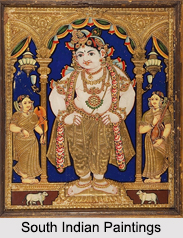
Tiruparuthikundram is a place of Tamil Nadu, where one can see several Jaina temples. It is a part of Kanchi and the paintings and images cut into rocks of the few caves here are very popular in the South India.
Origin of Tiruparuthikundram Paintings
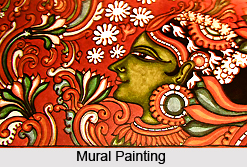
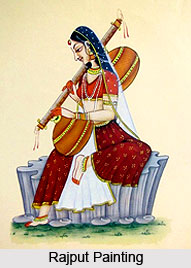
The last remnants of the mural tradition in Indian painting can be seen in a Jaina temple at Tiruparutikundram. The technique used in these paintings is known as `tempera`, which is done on lime plaster and the subject matter is both Jaina and Hindu. In the Satigita mandapam here, the outer paintings of the nearest the main shrine are said to be the earlier series of fragments. These depict the birth and anointing of Vardhamana Mahavira, which represents the earlier phase of the 14th century. There are mainly two technical details in this mural style, which were maintained for a long time in the history of Indian painting. Between these two styles one is the representation of trees in which the area of foliage is covered with a single greenish color and the leaves and branches are drawn over this in fine lines and filled in with white. Later, Central Indian painting used this method of painting of Tiruparuthikundram and which was afterwards passed on to Rajasthani painting. The second detail is the use of white dots of solid paint to represent the jewellery. This type of paintings can be seen also in Mewar, Bundi and Basohli paintings.
The paintings of Tiruparuthikundram had the figures mostly in profile and standing position. These were in a row just above the base line, without any attempt to create visual space. Only the bare facts are narrated. It is maintained by hereditary trustees.