Chavittunatakam is a Christian folk drama of Kerala. This dramatic form was initiated during the time of the Portuguese rule in Kerala in the 16th century A.D. The meaning of `Chavittu` is the rhythmic steps which accompany the recitation of lines in the performance. Chavittunatakam resembles the European Opera to a large extent. This dance form is known for the beautiful make-up of the characters, detailed costumes, and well-defined gestures and body movements. Chavittunatakam is mostly prevalent among the Christians of Kerala in Alappuzha district, Ernakulum district and Thrissur district of Kerala. It is believed that the chief guru known as Annavi or Asan gave the training in the art of Chavittunatakam. The artists were first trained in the basic martial and then he introduced them to the text.
History of Chavittunatakam
The folk drama Chavittunatakam was practiced by the Latin Christians in the beginning. Chavittunatakam emerged earlier in the 16th century. The Portuguese influence in Kerala helped the spread of Christianity along the southwest coast. As a result, a new type of community was slowly brought into existence, which being cut off from its original setup, had to look upon the Westerner for cultural sustenance. Out of this situation was born a new art form with songs, dialogues and dances, similar to the miracle plays of the West. They gradually came to be known as Chavittunatakam. The stage settings, introduction of curtains costumes, masks, etc., show an influence of the West.
Libretto of Chavittunatakam
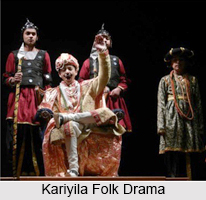
The librettos of Chavittunatakam are mostly the grand episodes of Bible or the great Christian warriors. Initially, the libretto of Chavittu Nadakam was by the Christian missionaries of the Portuguese days and their native colleagues. The stories were drawn from Christian legend, a favourite one being that of Charlemagne as it is narrated in the French medieval poem, Chanson de Roland. As in Kathakali, the narration and dialogues were in verse. But while the Kathakali actor only mimed and did not sing his tunes, here the actor sang and acted out his lines, like the performer in Thullal. Charlemagne`s imperial court, for instance, was presented with spectacular display, while Kathakali and Thullal had no stage sets or props for such performances. But, as in Kathakali, battles and duels were the episodic climaxes, in Chavittunatakam too that staged as many as forty or fifty men.
Performance of Chavittunatakam
The performance of Chavittunatakam involves energetic fighting scenes, which shows the influence of Kalaripayattu. The artists were needed to sing their dialogues. Hence, there were lots of opportunities to make use of the local Kalaripayattu both for the fighting scenes and total kinetic design. This art form was hugely influenced by the local Kalaripayattu. In the performance of Chavittunatakam, the actors often stamp the foot to represent the heroic mood. It is done in a very dramatic and effective way. As it is an opera, gestures are never used communicate ideas. The steps, stamping and the locomotion of the body continued along with the vocal singing. Chavittunatakam is generally performed on open stages. Interestingly, the performance was deemed a failure if, by the time the play ended, the platform had not been completely wrecked by the tremendous pounding of the actors` feet.
Popular Chavittunatakam Plays
Some of the most popular plays in Chavittunatakam are Carelman Charitham (Charlemagne the Great), Brijeena Charitham (Life of Queen Brijeena), Marthoma Sandhesam (Message of St. Thomas), St. Sebastian, Daveedhum Goliyathum (David and Goliath), Mahanaya Alexander (Alexander the Great) and Veerayodhakkalude Anthyam (Death of Great warriors).
The remoteness of the episodes represented the fact that the language of the libretto was Tamil or a blend of Tamil language and Malayalam language. The failure to develop into a full classical status like the Kathakali or acquire contemporaneity in social reference like the Thullal were some of the factors that contributed to the inability of Chavittunatakam to strike deep root in the soil and become a living tradition. Now, coming with new medium of entertainment, the popularity of Chavittunatakam has decreased a lot in Kerala.
Chavittunatakam
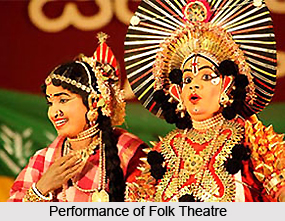
Chavittunatakam is a popular folk dance drama of Kerala. Chavittunatakam is particularly noted for its elaborate costumes, attractive make-up of the characters, well-defined and detailed body movements accompanied with rhythmic playback music.