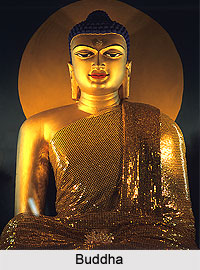
 After the Kannauj assembly was concluded, Hiuen Tsang was making preparations to go to his home but Harsha invited him to attend another assembly which he used to hold after every five years on the confluence of Ganga and Yumuna. Five such assemblies had already taken place and this was the sixth assembly in which Hiuen Tsang was invited. This ceremony was attended by the kings of eighteen kingdoms and about 5,00,000 people including Sramanas, Heretics, Nirgranthas, the poor, the orphans etc., attended this assembly. The ceremony started with the procession and thereafter the statue of Buddha was established and a lot of money was given in charity. On the second and the third day statues of Sun and Shiva were established respectively.
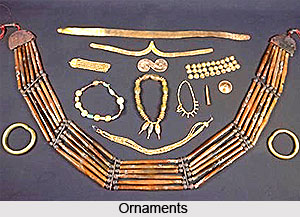
On the fourth day, precious articles and valuables were distributed to 10,000 monks. Each of the Buddhist monks was given hundred pieces of gold, one pearl, one cotton garment, various drinks, flowers and also perfumes. Thereafter, for ten days valuable articles and things were distributed to men of other region. Further, orphans and poor people were given charity for thirty days. This continued up to 75 days. According to Hiuen Tsang, "By the time the accumulation of five years was exhausted, except the horses, elephants, and military accoutrements which were necessary for maintaining order and protecting the royal estate, nothing remained. Besides these the king freely gave away his game and goods, his clothing and necklaces, ear-rings, bracelets, chaplets, neck jewel, and bright head jewel, all these he freely gave without and hesitation. All being given away, he begged from his sister Rajya sri, an ordinary second-hand garment and having put it on he paid worship to the Buddha of the ten religions and rejoiced that his treasures had been bestowed in the field of religious merits."
The Prayaga assembly is a glorious example of the generosity of Harshavardhan. The assemblies of Kannauj and Prayaga clearly indicate the victory of Mahayanism that forcibly proclaimed over religion. Yet the generosity of Harshavardhan, which is evident from the Prayaga assembly, is a matter of wonder for the whole world. Historians say. Harsha was more anxious to preach his personal faith of Mahayana Buddhism in a spirit of intolerance, which provoked open hostility. But the usual feature of his character was his unbounded generosity and charity beating all record.