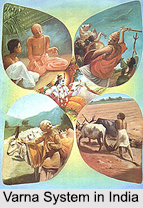
 Meaning of the term "Varna" is any one of the four traditional social classes of India. The literal meaning of the term "Varna" is colour. Varna, according to Hindu scriptures, refers to the classification of people based on their qualities.
Origin of Varna
The Hindu society has developed two co-ordinated systems of social organization. On the one side the whole human life is divided into four stages namely ashrams and on the other side the society is divided into four strata namely varnas. Both the systems are concerned with the organization and management of the individual as well as society. In Varna System, the role and status of an individual has been determined. Varna System was based on occupation in the Vedic Age.
Classification of Varna System
There is a division of society into four orders namely;
1. Brahmin,
2. Kshatriya,
3. Vaishya
4. Sudras
Duties of Varna
According to the popular belief that exists about Varna classification, Brahmins are considered the supreme, in which class priests and preachers reside; Kshatriyas are kings and warriors; Vaishyas are traders and agriculturists; and Sudras are considered labourers who provide service to those who belong to other types of Varna.
This article is a stub. You can enrich by adding more information to it. Send your Write Up to content@indianetzone.com