


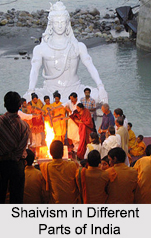
 Shaivism gradually spread far and wide in different parts of India. With an interesting history and with the copious tradition, Shaivism made its presence felt in South India, Kashmir and in other parts of India. Shaivism gradually spread far and wide in different parts of India. With an interesting history and with the copious tradition, Shaivism made its presence felt in South India, Kashmir and in other parts of India.
Shaivism in South India Tirumular’s ''Tirumandarim'' is a highly abstruse work on Shaivism. It elaborates the Shaiva doctrine. The author tried to compare the Agamas or Shaiva canon with the Vedas. According to him ''Becoming Shaiva is the Vedanta Siddhanta. Charya, Kriya, Yoga and Jnana are the four stages in the Sadhana. When the aspirant has reached the last stage, the grace of God descends on him and by that he is released''. The highly sectarian character of Shaivism in South India in the time of Tirumular may be inferred from one of his statements in which he says that ‘to feed a Shivajani once is more meritorious than to gift of a thousand temples or the feeding of a crore of Brahmins versed in the Veda’. He regards the Shiva canon as truly the word of God. 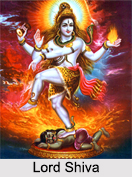 After Mahendra Pallava became a convert to Shaivism, Kochi became a center of Shaivism. This great upsurge in favour of Shaivism was due to devotional poetry that flows from the lips of the Shaiva saints who lived in this age. Appar in the timeframe of A.D. 602-639, Sambandhar or contemporary of Appar, Sundaradramurti and Manik Kavachakam all were inspired saints, who loaded the country with a great wave of devotional poetry and thus created in the minds of men a disposition for the pursuit of spirituality. These Nayanars or Shaiva saints set up Shaivism on a strong foundation in South India. After Mahendra Pallava became a convert to Shaivism, Kochi became a center of Shaivism. This great upsurge in favour of Shaivism was due to devotional poetry that flows from the lips of the Shaiva saints who lived in this age. Appar in the timeframe of A.D. 602-639, Sambandhar or contemporary of Appar, Sundaradramurti and Manik Kavachakam all were inspired saints, who loaded the country with a great wave of devotional poetry and thus created in the minds of men a disposition for the pursuit of spirituality. These Nayanars or Shaiva saints set up Shaivism on a strong foundation in South India.
Shaivism in Kashmir Shaivism in Kashmir kept clear of the wild and fantastic courses of discipline. It is followed by the other schools and created an honourable place for Shaivism among the different systems of religion. This changed aspect of Shaivism seems to be due, in no small measure, to the influence of Shankaracharya in the time of C. 788-820 A.D. Sankara met in argument several groups of pseudo-Shaivas who were responsible for left-handed practices and quelling them, freed the followers of Shaivism from their deadly influence. He cleansed the Hindu faiths of the prominences that had gathered round them due to accidents of history. He composed hymns in praise of the major Gods of Hinduism. Several of these glorify Lord Shiva as the ‘God of Gods’. Kashmir Shaivism is a kind of philosophy. It regards the individual soul and the world as essentially identical soul with Shiva. It recognizes a triple principle or ‘Trika’ in the form of Shivashakti Anu. It is called ‘Spanda Shastra’ because it believes in the principle of apparent movement or change from the state of absolute unity to the plurality of the world. ‘Pratyabhijna Shastra’, ‘Shiva Sutras’ and ‘Spandasarvasva’ are the famous literary sources of Shaivism in Kashmir. According to Abhinavagupta the ultimate reality is Shambhu or Shiva, the supreme God. Shiva is the Atman, the elf of all beings, immutable and ever perfect. This ultimate reality is beyond the reach of thought and language. Pure consciousness, which is the supreme reality is referred to as Shiva and is the material as well as the efficient cause of the universe. For Advaita Vedanta, the manifested world is unreal but for Kashmir Shaivism it is real. Objective of Shaivism The supreme aim of this system is to enable the individual to find salvation. The salvation consists in the soul's recognition of its identity with the Ultimate Reality. As bondage is the result of ignorance, release is to be attained through knowledge. Mere human effort will not be of much veil in the path of salvation. What really moves is the Divine Will, besides the three powers of creation. The other two are Sustenance and destruction of the universe. God has the power of concealed from the soul and after the soul has played out its part in Samsara. God's grace descends on the individual and the individual is released. According to this system, Moksha is return to the original state of perfection and purity of consciousness. The metaphysical conceptions of this school were characterized by bold originality, and the religious practices enjoined by it were healthy and conducive to the growth of spirituality. |
| |||



Home > Society > Indian Religion > Types of Religion in India > Hinduism Religion > Shaivism Religion > Shaivism in Different parts of India
Shaivism in Different parts of India
| Shaivism is spread in different parts of India, while mirroring the religious philosophy of the doctrine. |
| ||||||||||||||||||||||||||||

