 Indian nationalism was an effect of continuous deprivation and misrule by the British. The British ruled India to promote their own interests. The Indians realized gradually that their interests were being sacrificed to those of British interests. This clash of interests was the root cause of the rise of the nationalist movement. Eventually the peasants, the artisans and the workers discovered that they had no political rights and virtually nothing was being done for their intellectual and cultural development. The educated Indians discovered that economic exploitation by Britain was only increasing India`s poverty. Thus the anti-imperialist movement gradually arose and developed in India.
Nationalist sentiments grew up among the general people on account of the following major factors. And it did not take even much time. The factors were as follows.
The British Imperialist Policy
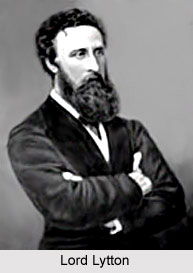
After the Great Revolt of 1857 the British Government followed a policy of Divide and Rule. First, it seeks the support of the Zamindars, rulers of Princely states and other conservative sections of Indian society. The English educated class considered itself the true representative of the Indian people. It, therefore, wanted more representation in the Legislative Councils and the same rights in public that the British nationals enjoyed in public services. The British rulers regarded India as a British colony. They wished to reserve the right of administration for themselves. Ripon wanted the educated class to support British rule in India while Lord Lytton sought the support of the conservative elements in society. Thus the imperialist policy of the government based on the principle of `Divide and Rule` of Indians led to the rise of anti-imperialist feelings in India.
English Education
Educated young men who know English were informed about the struggle of the people of Italy, and Greece against foreign domination in their countries. They got inspiration from the revolutions in France and America. When a uniform system of education was introduced in India it helped to evolve a common goal and uniform approach to the political leaders of the different regions. Although the English educated class was a minority of the whole population of India but its influence and leadership could mould public opinion as the newspapers, educational institutions and the advocates of the legal courts were all greatly influenced by the opinion of this group. English education up to the end of the 19th century was confined to the upper and middle classes of society. Their views had become popular. Thus English education helped in lessening the traditional obstacles in the progress of the country. Patriotism and the feeling for liberty were not the gifts of English education. They pervaded the whole country even before English education was introduced. But English education helped evolving a new direction in the form of establishing a parliamentary form of government, which had been in existence in England long before its introduction in India.
The Press
The newspapers contributed a good deal to the awakening of national consciousness in India. After the great Revolt of 1857 the government tried to control the newspapers. The government prepared a `Report on Native Newspapers`. But the number of newspapers continued to increase and they became a very good medium of spreading ideas about political rights among the common people. Both in West Bengal and Maharashtra these newspapers criticized the government policies. The government tried to put restrictions on these newspapers as they brought various problems such as injustice of the administration, racial discrimination, economic exploitation of Indians, etc. to the notice of the people. They expressed the opinion that the British rule in India was resulting in the moral, economic and intellectual degeneration of Indians. Lytton got Vernacular Press Act of 1878 passed to check the growing criticism of government measures. But the press and the newspapers became more active after 1878 and the people protested against this measure by organizing meetings and submitting memoranda to the government and the members of British Parliament.
Literature
Nationalist literature in the form of novels, essays and patriotic poetry also played an important role in arousing national consciousness. For example, the novel Ananda math by Bankim Chandra Chatterjee was a source of great inspiration to all the nationalist leaders. The national song `Vande-matram` was a great awakening for the society. Other prominent nationalist writers of the period were Rabindranath Tagore in Bengali, Vishnu Shastri Chiplukar in Marathi, Subramanya Bharati in Tamil, and Baratendu Harish Chandra in Hindi.
Political Associations
As early as 1830 the Zamindars of Bengal organized themselves into a Landholder`s Society. They protested against the Act that empowered government to take in its possession all rent-free lands. Soon after, three political associations namely British Indian Association in Calcutta (1851) Madras Native Association in Madras (1852) and Bombay Association in Bombay (1852) were established. These associations submitted memoranda to the government on contemporary political problems. But the government did not accept any of the suggestions of these Associations. In 1876 Surendra Nath Banerjee and Anand Mohan Bose organized the Indian Association. In Western India Poona Sarvajanik Sabha was organized in 1870. It contributed a good deal in creating national consciousness among the people in Maharashtra. As early as 1866 the East India Association was organized in London. It tried to let the people of England and the members of British Parliament know about the problems of Indians.
Poverty in India
All the farmers, artisans, craftsmen and later the factory workers were reduced to poverty on account of the economic policies of the British Government in India. Dadabhai Naoraji proved how British Rule had resulted in the `Drain of Wealth` from India to Britain and according to him this was the real cause of poverty of India. It was the result of Free Trade Policy followed by the British Government that failed to prove the interest of Indian artisans and craftsmen.