


 Monasteries in Ladakh are called Gompas. Buddhist monks and nuns live, study and practice their religion in these monasteries. They are situated on hills and mountains and have collections of Buddhist Thangka paintings, art and artefacts. The serenity and simplicity of the culture and religion is depicted in these monasteries which has influences the mind and soul of the inhabitants of Ladakh. These monasteries belong to both the sects of Buddhism - Hinayana and Mahayana.
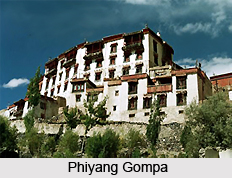
Sankar Gompa was built by King Tashi Namgyal and it dates back to the year 1430. This 'gompa' possesses a three-story high solid gold idol of Maitrieya Buddha which is also known as the laughing Buddha. Along with this there are statues of Avaloketesvara and Manjushri. This gompa is a subsidiary of the Spituk Gompa. The Spituk Gompa was founded in the fifteenth century and is perched on a high hill. Rinchen Zangpo had named this monastery. This monastery is known for its collection of Buddhist artifacts and for the Spituk festival. This was the first Ge-lugs-pa establishment in Ladakh The Phiyang Gompa of Ladakh is situated in a valley just off the main road down the River Indus. This was founded by King Tashi Namgyal in the third quarter of the sixteenth century. It is embellished with bright paintings and images. Shey Monastery has a huge copper-gilt image of Sakyamuni. This image is erected at the instance of Sengge Namgyal. There are bright paintings on the walls and they represent the sixteen 'arhats', Buddha's original disciples. There is another important monument at Shey which represents the five Buddhas of meditation and they are distinguished by their several hand gestures and by their animal vehicles which is shown beneath them. 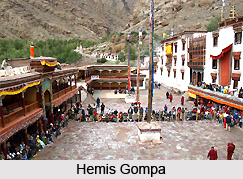 Thiksey Monastery is one of the largest and most impressive of the monasteries of Ladakh. This was established during the original period of Ge-lugs-pa expansion in Ladakh, about the middle of the fifteenth century. It many statues of Buddha and also a pillar inscribed with Buddhist teachings. This monastery is home to monks of the Gelukpa and also known for its annual festival.
Hemis Gompa was founded in the 1630s by Stag-tsang-ras-pa under the royal patronage of Sengge Namgyal. It is the largest and richest of the Ladakh 'Gompas'. It has the paintings of the Wheel of Life and the Lords of the Four Quarters which are executed in an unusual naive style. Alchi Monasterydates back to the year 1000 A.D. and was established by Rinchen Zangpo, the translator who referred to this monastery in his biographies. This monastery has a tint of Indian culture and three sacred temples are associated with this monastery. Images inside the monastery include that of Vairocana with the ones of the five Buddha Families, along with their attendant deities. There are many other well known monasteries in Ladakh which include Lekir Monastery, Rizong Monastery, Lamayuru Monastery, Stakna Monastery, Stok Gompa, Thonde Monastery, Trakthogk Monastery, Wanla Monastery, Zongkhul Monastery, Matho Monastery, Samstemling Gompa, Sani Monastery, Chimre Gompa, Deskit Monastery Gurphug monastery and many more to be mentioned. |
| |||



Home > Travel > Indian Cities > Cities of India > Cities of Jammu and Kashmir > Ladakh > Monasteries in Ladakh
Monasteries in Ladakh
| Monasteries in Ladakh carry the religious tradition of the region and display brilliant artisanship. |
| ||||||||||||||||||||||||||||

