The modern period in rdu literature, can be counted from the termination of the Mughal Empire with Bahadur Shah Zafar and his Urdu-penning genius, and the beginning of the prolonged colonial rule in India. The First War of Indian Independence, legendary as the Sepoy Mutiny, was crucial in the regard of producing several Urdu litterateurs, both in the arena of prose and poetry. Modern Urdu literature during the pre-independence period, also had given birth to several revolutionary thinkers, comprising fiery commentaries, Hindu writers in the Persian language and, birth of the short story. During the post-Mizra Ghalib period, Dagh (b. 1831) had emerged as a prominent poet, whose poetry was noted by its purity of idiom and minimalism of language and thought.
By the beginning of the 18th century, the modern period in Urdu literature, a more stylish and classy North Indian variation of the language began to move forward through the authorships of Shaikh Zahooruddin Hatim (1699-1781 AD), Mirza Mazhar Jan-e-Janan (1699-1781 AD) Khwaja Mir Dard (1719- 1785 AD), Mir Taqi Mir (1722-1810 AD), Mir Hasan (1727-1786 AD) and Mohammed Rafi Sauda (1713-1780 AD). Mir`s works, apart from his six Diwans, comprise Nikat-ush-Shora (Tazkira) and Zikr-se-Mir (Autobiography). Shaik Ghulam Hamdani Mushafi (1750-1824), Insha Allah Khan (Darya-e-Latafat and Rani Ketaki), Khwaja Haider Ali Atish, Daya Shankar Naseem (mathnavi: Gulzare-e-Naseem), Nawab Mirza Shauq (Bahr-e-Ishq, Zahr-e-Ishq and Lazzat-e-Ishq) and Shaik Imam Bakhsh Nasikh were the early poets in Urdu literature of Lucknow. Mir Babar Ali Anees (1802-1874) also had contributed to the fast escalating modern Urdu literature in India, excelling in the art of writing marsiyas.

The most illustrious poets in Urdu literature of the pre-modern period in India, were Muhammad Ibrahim Zauq (1789-1854) of Delhi and Nazmuddaulah Dabiru-i-Mulk. Modern period in Urdu literature spans the time from the last quarter of the 19th century, till the present day and can broadly be divided into two periods: the period of the Aligarh Movement started by Sir Sayyid Ahmad and the period influenced by Sir Muhammad Iqbal, followed by the Progressive movement and movements of Halqa-e-Arbab-e-Zouq, Modernism and Post modernism.
However, Altaf Husain Panipati (1837-1914), known as Hali or `the Modern One`, is the authentic trailblazer of the modern spirit in Urdu poetry. In the meantime, Hindu writers of the Urdu language also were not left far behind and among the earliest writers were Pandit Ratan Nath Sarshar (author of Fisana-e-Azad) and Brij Narain Chakbast (1882-1926). Prominent among the lot of Hindu Urdu writers are: Firaq Gorakhpuri, Pandit Ratan Nath Sarshar (Fasana-e-Azad) and Brij Narain Chakbast (1882 - 1926), who composed Subh-e-Watan and Tilok Chand Mahrum (1887-1966), who composed Andhi and Utra Hua Darya, Krishn Chander, Rajindar Singh Bedi, Kanhaiyalal Kapur, Upendar Nath Ashk, Jagan Nath Azad, Jogender Pal, Balraj Komal and Kumar Pashi. One of the most famous poets of modern Urdu is Sayyid Akbar Husain Razvi Allahabadi (1846-1921), who had possessed a flair for impromptu composition of satiric and comic verses. After 1936, Urdu literature picked up a progressive attitude and leaned more towards the problems of life.
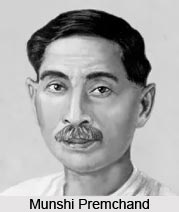
Poetry, novels, short stories and essays were the basic avenues of liberal expression in Urdu literature of the modern period. The main exponents of this new line of approach were the short story writers, comprising Muhammad Husain Askari, Miranji, Faiz Ahmad `Faiz`, Sardar Ali Jafari and Khwajah Ahmad Abbas. Munshi Premchand, the greatest novelist of Hindi literature, had, for a time period, begun writing in Urdu and later switched to Hindi. Shibli Nomani (b.1857) is esteemed as the father of modern history in Urdu literature. He virtually had yielded several works based on historical research, especially on Islamic history, like Seerat-un-Noman (1892) and Al Faruq (1899). Shibli Nomani also had produced substantial works like Swanih Umari Moulana Rum, Ilmul Kalam (1903), Muvazina-e-Anis-o-Dabir (1907) and Sher-ul-Ajam (1899).
Short story in Urdu literature of the modern period began with Munshi Premchand`s Soz-e-Vatan (1908). His short stories comprehend almost a dozen volumes, comprising Prem Pachisi, Prem Battisi, Prem Chalisi, Zad-e-Rah, Vardaat, Akhri Tuhfa and Khak-e-Parvana. Mohammed Hussan Askari and Khwaja Ahmed Abbas are counted among the leading luminaries of the Urdu Short story. The Progressive Movement in Urdu fiction had picked up momentum under Sajjad Zaheer (1905-1976), Ahmed Ali (1912-1994), Mahmood-uz-Zafar (1908-1994) and Rasheed Jahan (1905-1952). Urdu literature authors like Rajender Singh Bedi and Krishn Chander (1914-1977) had exhibited out-and-out dedication to the Marxist philosophy in their writings. Krishn Chander`s Adhe Ghante Ka Khuda is one of the most unforgettable stories in Urdu literature of modern era. His other renowned short stories comprise Zindagi Ke Mor Par, Kalu Bhangi and Mahalaxmi Ka Pul. Rajender Singh Bedi`s Garm Kot and Lajvanti are enlisted amongst the chefs-d`oeuvre of Urdu short story. Manto,
Ismat Chughtai and Mumtaz Mufti form an unlike sort of Urdu writers, who focused upon the "psychological story" as opposed to the "sociological story" of Bedi and Krishn Chander. Ahmad Nadeem Qasmi (b.1915) is one more foremost name in Urdu short story. His important short stories include Alhamd-o-Lillah, Savab, Nasib and others.
During the post-1936 period of modern Urdu literature, writers belonging to the Halqa-e-Arbab-e-Zauq dished out several good stories in the respective genre. Upender Nath Ashk (Dachi), Ghulam Abbas (Anandi), Intezar Hussain, Anwar Sajjad, Balraj Mainra, Surender Parkash and Qurratul-ain Haider (Sitaroun Se Aage, Mere Sanam Khane) are the other leaders of Urdu short story. Several stellar fiction writers emerged from the city of Hyderabad in the present times, comprising Jeelani Bano, Iqbal Mateen, Awaz Sayeed, Kadeer Zaman, Mazhr-uz-Zaman and others.
Novel writing in Urdu literature of the modern period can be traced to Nazir Ahmed, (1836 - 1912) who had penned several novels like Mirat-ul-Urus (1869), Banat-un-Nash (1873), Taubat-un-Nasuh (1877), Fasana-e-Mubtala (1885), Ibn-ul-Waqt (1888), Ayama (1891) and others. Pandit Ratan Nath Sarshar (1845 - 1903)`s Fasana-e-Azad, Abdul Halim Sharar (1860 - 1920)`s Badr-un-Nisa Ki Musibat and Agha Sadiq ki Shadi, Mirza Muhammed Hadi Ruswa`s Umrao Jan Ada (1899) are some of the stalwart instances of novels and novellas scripted during the period. However, it was
Munshi Premchand (1880-1936) who had endeavoured to introduce the trend of realism in Urdu novel of contemporary era. Premchand was a prolific writer who virtually had left his mark in Urdu literature too, producing numerous books. His important novels include Bazare-e-Husn (1917), Gosha-e-Afiat, Chaugan-e-Hasti, Maidan-e-Amal and Godan. Premchand`s realism received additional boost by the writers of Indian Progressive Writers` Association, like Sajjad Zaheer, Krishn Chander and Ismat Chughtai. Krishn Chander`s Jab Khet Jage (1952), Ek Gadhe Ki Sarguzasht (1957) and Shikast are ranked amongst the stupendous novels in Urdu literature. Ismat Chughtai`s novel Terhi Lakir (1947) and Qurratul-ain Haider`s novel Aag Ka Darya are measured as cardinal works in the history of Urdu novel.
In spite of Urdu literature being considered a little tilted towards Islamic lines, there still existed some great Hindu writers who embraced Urdu like their very own, like Krishan Chandar, Rajindar Singh Bedi and Kanhaiyalal Kapur. Unfortunately, the lyrical language of Urdu of the modern period no longer savors the same position that it used to in the Mughal courts of its golden blooming period. However, Urdu literature is still encouraged in states like
Jammu and Kashmir,
Punjab and
Hyderabad. Present day Standard Hindi borrows a lot from Urdu - in domains of grammar, diction and idiom.

 Urdu literature has, since its inception, attracted attention due to its long and vibrant history, that is perpetually tied to the evolution of that very language, Urdu, in which it is penned. While the language tends to be profoundly overshadowed by poetry, the array of expression attained in the copious annals of a few significant verse forms, especially the ghazal and nazm (an Urdu poetic form that is usually scripted in rhymed verse), has led to its continual development and growth into other styles of writing, including that of the short story, or afsana. Urdu literature today commands foremost popularity in the eastern countries of India and Pakistan, also generating interest in far-off lands overseas.
 Ancient period in Urdu literature was wholly the time of redefining and making Urdu language popular and well acceptable to both the Indian mass and class. Urdu literature by the time of advent in India, was already a declared rage and esteemed as a classy version in the erstwhile Persia and its development of literature. As such, with the ushering in of the Islamic rule and their kings in India, the dwellers of a predominantly Hindu India were welcomed with an almost culture shock, with complete overhaul of everything previous. Literary traditions, writing style, producing of work pieces by the ancient Hindu literature were shadowed by ancient Urdu literature, still then gladly inclined towards believing Persian Urdu as authentic, as opposed to Indian maturation of the Urdu dialect. However, the rest of development of history was yet to come.
 According to yet another historical view of ancient period of Urdu literature in India, the language`s umpteen primitive forms can be traced back to Muhammad Urfi (Tadhkirah - 1228 A.D.), Amir Khusro (1259-1325 A.D.) and, Kwaja Muhammad Husaini (1318-1422 A.D.). As Urdu started to witness its prospering in the kingdoms of Golconda and Bijapur, the earliest writings in this language were gradually established in the Dakhni (Deccani) dialect of south India. The Sufi saints were the earliest advocates of the Dakhni Urdu. Sufi-saint Hazrat Khwaja Banda Nawaz Gesudaraz is deemed to be the first prose writer of Dakhni Urdu and particular treatises like Merajul Ashiqin and Tilawatul Wajud are accredited to him, but his authorship is however open to fields of uncertainty. The first literary work in ancient Urdu literature is that of Bidar poet Fakhruddin Nizami`s mathnavi `Kadam Rao Padam Rao`, penned sometime within 1421 and 1434 A.D. Kamal Khan Rustami (Khawar Nama) and Nusrati (Gulshan-e-Ishq, Ali Nama and Tarikh-e-Iskandari) were the significant other two great poets of Bijapur. Muhammed Quli Qutb Shah, the greatest of the Golconda emperors, a distinguished poet, is accredited with introducing a secular content to the otherwise largely religious Urdu poetry. Quli Qutb Shah`s poetry was centred entirely upon love, nature and social life of the day.
 Medieval period in Urdu literature follows in close succession to its ancient counterpart, which can securely be stated as the period during which Urdu had gained its strong foothold in a predominant Hindu cultural India. However, after the language`s decisive and path-breaking initiation trial run, the time had come for Urdu to witness its further approval by the Indian cultural mass and class, who had started to take massive interest in the Arabic language. Medieval period of Urdu hence was flagged off by its tremendous spread to South India, by way of North India. The Sufi sages, with the help of Deccani rulers, were the prime motivators for the people of South to begin their fresh style of dialect and lexicon to call their own. As such, a new version of medieval Urdu literary period could be witnessed in the form of the Dakhini dialect, implying the `Southern speech`, spoken by people of north India migrating to the south.
 Shamsuddin Waliullah, a celebrated poet of the Dakhni dialect of
  Mughal culture as a variant of the international Islamic culture, which mainly focused on Persian language and Safavid culture as central elements in the Mughal nobility`s own identification. Indeed, command of Persian plays a large part in assessments of Urdu literature specially the poems. Even as recently as 1973 the critic Ahmed Ali praised Atish`s poetic diction in spite of an occasional vulgarized use of Persian idiom, and it was also noted earlier that Mohammad Azad indulgently overlooked Atish`s imperfect understanding of Persian in favour of his colloquial diction. Even though Nasikh was known for his erudition in Persian and Arabic language, Azad had cast aspersions on his knowledge of the two languages by writing that, of course since "Shaikh Sahib" had attended the Firangi Mahal he must have benefited somewhat from proximity to his revered and learned teachers.
 Quite a few numbers of works were the extraction & ornamentation of the chronicle personalities. "Al Farooq" deals with the life & achievements of formidable Farooq -i- Azam, the second Caliph of Islam. "Al- Mamoon" is the story of the achievements of Mamoon, the great, whose reign is known as the Golden Age of the Islam. "Al- Ghazali" deals with the teachings of Imam Ghazali, the greatest religious teacher.
 Short story in nineteenth century Urdu literature saw a major growth during the era. At the start of the nineteenth century, printing and publishing activities at the newly founded Fort William College of