


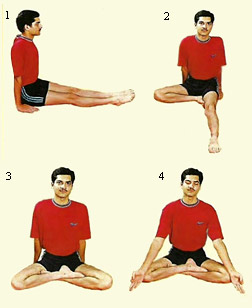
 Siddhasana is one of the most venerated Meditative Asanas in Yoga practice, with a history dating back at least a thousand years. Siddhasana is termed in the Hatha Yoga Pradipika (1400 AD) as the 'chief of Asanas'. The text claims that a yogi who practices the Siddhasana for twelve years attains Yoga Siddhi, or an exalted, intuitive knowledge of Yoga. Siddhasana is one of the most venerated Meditative Asanas in Yoga practice, with a history dating back at least a thousand years. Siddhasana is termed in the Hatha Yoga Pradipika (1400 AD) as the 'chief of Asanas'. The text claims that a yogi who practices the Siddhasana for twelve years attains Yoga Siddhi, or an exalted, intuitive knowledge of Yoga.
Meaning of Siddhasana Siddhasana means the posture of a Siddha, a demiurgic being possessing supernatural powers known as Siddhis. Many prophets, seers or saints have also been called Siddhas. Yoga Texts and Siddhasana The Siddhasana was first described in the Goraksha Samhita, composed around 900-1000 AD, after which it was mentioned regularly in all the Puranas. It was then described in detail in the Hatha Yoga Pradipika, (1400 AD) and mentioned in the Yogatattvupanisad and the Dhyanabindopanisad. It was subsequently mentioned in all Yogic texts influenced by the Hatha Yoga tradition. Practice of Siddhasana A sequential process for the practice of Siddhasana is given below. * Sit down with both legs outstretched. * Bend the left knee and place the sole of the left foot against the right thigh so that the heel touches the perineum. * Bend the right knee and put the right heel against the pubic bone. * Keep hands with palms open if done between sunrise and sunset; otherwise reverse the palms. * The spine should always be held erect. Siddhasana and padmasana or the "lotus posture" are the two Asanas used traditionally for Dhyana (meditation) along with various Pranayama exercises. The spine should be held erect in Siddhasana. A small meditation cushion may be used to help in proper back alignment. Effects of Siddhasanna Siddhasana is a highly important posture, considered special by both the major texts that described it in detail: the Goraksha Paddhati and the Hatha Yoga Pradipika. Both specify that of the Asanas taught by Lord Shiva, this one along with a few others is the most important. The Hatha Yoga Pradipika calls the Siddhasana 'the opener of the door to salvation'. The text also asserts that those who practice it for twelve years attain Yoga Siddha, or an esoteric insight into Yoga, and goes as far as saying that once Siddhasana is perfected, other Asanas are useless. The Siddhasana also exercises the abductors, flexors and external rotators of the hip, and the ankle planar flexors. It keeps the pubic region healthy, and the seated erect posture facilitates meditation and is one of the most comfortable Yogic postures. It also helps relax stiff knee and ankle joints, and tones the lower region of the spine and the abdominal muscles. This posture redirects blood circulation to the lower spine and abdomen, thus toning the lumbar region of the spine, the pelvis and the abdominal organs, and balancing the reproductive system and blood pressure. Siddhasana stabilises and sublimates sexual energy because of the location of the feet with respect to the genitals. Precautions in practice of Siddhasana The positions of the feet should be switched on alternate days or sittings. As a way of maintaining the balance, one should sit with the right foot on top at the beginning of the class and the left foot on top at the end. Siddhasana may be performed with either leg uppermost. To exit, one has to slide the right foot forward off the left foot, straighten the right leg and do the same with the left leg, and then return back into Dandasana. The position of the lower foot at the perineum presses Muladhara Chakara, thus stimulating Mulabandha. The pressure applied to the pubic bone presses the trigger point for Swadhisthana and automatically activates Vajroli or Sahajoli Mudra. These two psycho-muscular lock systems redirect sexual nervous impulses back up the spinal cord to the brain, thus establishing control over the reproductive hormones which is necessary to maintain Brahmacharya for spiritual purposes. If one does Siddhasana for prolonged periods, the result is noticeable. A tingling sensation is felt in the Muladhara region, which may last for fifteen to twenty minutes. This sensation is caused by a reduction in the blood supply to the area and by a rebalancing of the Pranic flow in the lower Chakras. There is a risk that this trauma to the nerves can lead to impotence in men if not done carefully. One must conveniently adjust the sitting position by using sitting supports to adjust the position of the genitals. Those with backache should not practice Siddhasana. Many people, while practicing Siddhasana, experience discomfort due to the pressure applied where the ankles cross each other. If necessary, one can place a folded cloth or piece of sponge in between the legs at this point. At first the pressure at the perineum may be uncomfortable to execute but with practice it will become much easier. Siddhasana benefits the circulatory system immensely and is hence advised to be practised by all. With its long history and strong connection with meditative and spiritual practices, Siddhasana continues to be a notable Asana, practiced and taught in almost all contemporary Yoga schools. |
| |||



Home > Health > Yoga > Yoga Asanas > Types of Yoga Asanas > Meditative Asanas > Siddhasana Yoga Asana
Siddhasana Yoga Asana
| Siddhasana is one of the most well known meditative postures, and is termed ‘the chief of all Asanas’ in the Hatha Yoga Pradipika. |
| ||||||||||||||||||||||||||||

