





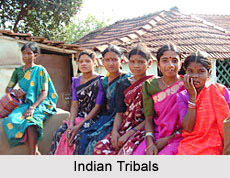
 Indian tribal women comprise almost half of the total population and are less literate than men. Moreover, they face several problems related to reproductive health. With primary and secondary subsistence activities taken into account, Indian tribal women work harder than men. Status of tribal women fluctuates in various tribal societies. To ascertain the status of Indian tribal women in the ecological regions, their position can be divided as daughter, unmarried woman, married woman, widow, divorcee and infertile woman. Function of women is important in economic, social and domestic activities. Gradual development and economic changes influence men and women in diverse ways. Despite the new wave of modernisation, Indian tribal women are essentially traditional in their language, dress, tools and resources. Indian tribal women comprise almost half of the total population and are less literate than men. Moreover, they face several problems related to reproductive health. With primary and secondary subsistence activities taken into account, Indian tribal women work harder than men. Status of tribal women fluctuates in various tribal societies. To ascertain the status of Indian tribal women in the ecological regions, their position can be divided as daughter, unmarried woman, married woman, widow, divorcee and infertile woman. Function of women is important in economic, social and domestic activities. Gradual development and economic changes influence men and women in diverse ways. Despite the new wave of modernisation, Indian tribal women are essentially traditional in their language, dress, tools and resources.
India has observed unequal distribution of resources and this is very apparent by the fact that a tribal mother is over 12 times less likely to be delivered by a medically trained person. A tribal woman is one and a half times more likely to suffer the consequences of chronic malnutrition as compared to women from other social categories. History of Indian Tribal Women In tribal society women are not treated as inferior to their male counterparts. This status of the tribal women is in existence from ancient times as can be seen from rock paintings found in India. These paintings were executed as early as 5 to 50 centuries BC. In the scenes that depict every day life, women are shown to be involved in food gathering, basket weaving, singing and dancing. Pregnant women, women giving birth, and nursing mothers are also depicted. This perhaps indicates that the women represented fertility, motherhood and were the progenitors of the tribe. 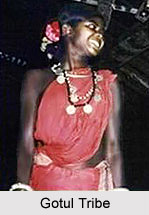 Types of Indian Tribal Women
The tribal people of India have been in contact with the urban society, for a very long time and have been greatly influenced by them. Tribes-people like the Gond, Bhil, and Halbi almost live like Hindus do in the outside world. There are still a few tribes in the Bastar district of Madhya Pradesh that are totally unaffected by developmental programs. The tribes of the Bastar District are mostly confined to Narayanpur tehsil (county). Their everyday activities are very well coordinated and inter-linked. Irrespective of one's gender, every person has a vital role to play in the welfare of the community. Indian Tribal Women in Bastar These women not only perform duties of a tribal housewife, but also assist their spouse in all agricultural activities. Material wealth and riches are not the indices of happiness to the Indian tribal woman. Fond of ornaments, a typical tribal woman has just a piece of coarse cloth to cover her womanhood. Poverty redefines her womanliness, her sheer existence. They usually contain some bangles, earrings and necklaces made of cheap metal. These women are rather cheerful and light-hearted, without much perturbed by the intricacies of life. Sheer poverty cannot keep them aloof from the minimum standard of living. They are much complacent with the life they have lived and are living irrespective of the hardships, the inhuman struggle they indulge in. Indian Tribal Women in Ghotul The female workers of the Ghotul are known as Motiyaris and they are assigned important administrative duties at the Ghotul. They are responsible for the general cleanliness of the building and premises, the punctual arrival of members, the taking of the attendance, the supervision of sitting arrangements, and the assurance of liberal supply of fire wood, mustard oil, tobacco and landra. Each girl has to attend to a male member of the Ghotul. The mother teaches the girl child all the rules so that she can enter the Ghotul. A woman has a free hand to select her groom and is never compelled to marry a man against her choice. Child marriage is not permissible either. At times the tribes also run into marital problems. If a husband turns out to be brutal, crude, insane, impotent, unfaithful, criminal or diseased, then the wife has every right to complain about him to the tribal head Manji (or Patel). He in turn assembles his advisory council and gives an opportunity to the couple to plead their cases. If the council is convinced of the husband’s guilt, the wife is allowed to get a separation and marry anybody she chooses. 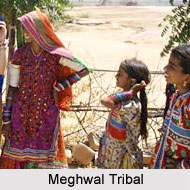 Indian Tribal Women in Meghwal
Besides the usual chores the Meghwal women find time for their avidly sought after embroidery work. Their work is distinguished by their primary use of red. This red colour comes from a local pigment produced from crushed insects. The Meghwal women artisans of Thar Desert in Sindh and Baluchistan, and in Gujarat are considered master of the traditional embroidery and Ralli making. Exotic hand-embroidered items form part of dowry of Meghwal woman. Indian Tribal Women in Lambani Lambani was once known as the bee-keeping tribe. The Lambani women are found in groups throughout the central and southern parts of India, selling cloth at markets and beaches. Their work contributes considerably to the income of their families. The Lambani women embroider bright rainbow-coloured fabrics covered with a mosaic of patchwork mirrors. The Lambani women commonly wear large, silver earrings laden with bells called Loila and a large silver torque around the neck to which two large silver pyramid forms are attached. BanjaraTribal Women Dedicated to their ancient mode of dressing which is perhaps the most colourful and elaborate of any tribal group in India, this dressing mode sets them apart from the rest of the tribes in India. Their full length skirt is blazing red with borders embroidered in mustard and green thread. The elaborately embroidered and mirror studded Cholis or blouses and the brightly coloured Odhni (mantle) which covers the head is long enough to drape down their backs almost touching the feet. The women wear pretty silver anklets which clink as they walk barefoot. Long silver earrings and patterned Cowrie shells decorate their hair, and are worn on their wrists and ankles. Silver, brass, some gold, cowries, ivory, animal bone and even plastic are some of the metals used for their ornaments. Mainly labourers, these women still wear all their attire even while doing heavy work. Migration of Indian Tribal Women Thousands of tribal women and girls migrate from their hinterlands in tribal areas to urban city centres mainly in search of employment. They are new to the city life style and environment and find it difficult to make adjustment with the changed situation and environment. Moreover, they are exploited, both financially and sexually. A large majority of migrant tribal women are in the age group of 24 to 47 years and the tribal girls in the age group of 16 to 23 years. They face problems like difficulty of communication in local language, residential accommodation, and employment, education of children, local contacts, and adjustment with city life and environment etc. Occupation of Indian Tribal Women 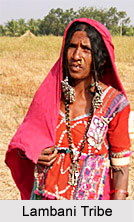 For the tribal of India, forests are considered as sacred and an important support system for their lives. Forest resources provide them with food, medicine, fodder and grass, fuel wood and water for irrigation. Women rely on the collection of forest products and also play a part in protecting forests. The tribal households depend almost entirely on forest products for their livelihoods. They collect non-timber products as Tendu Patta, Char and Sal Seeds, Palesh, Sarai, Mahua/Dori, Harra, Kusum, Sisal, Bamboo, Chhind, Mango, Jamun, Ber. From the products they collect, the women obtain foods such as fruit and oil, and medicines. Forest products also become raw materials for making a number of items for the home, such as bidi, brooms, baskets, mats, rope, homemade toothbrushes and leaf plates. Certain tribes collect forest products for their main occupations.
To a limited extent, women also participate in forest protection activities. 10 to 15 years before the Forest Department came up with the idea of forest protection, several village communities began to organise protection of the forests, as villagers saw outsiders come in and destroy the forests. The forest management committees have had a number of women representatives since then. Tribal forest economy is primarily a women’s economy and it is women who are most directly affected by the corporate exploitation of their traditional lands. |
| ||||||||||||||||||||||||||||

