Indian Literature in Various Ages has undergone tremendous transformations. Stark changes can be observed if the journey of Indian literature is traced from ancient times to contemporary age. Numerous great writers, who have emerged through ages, have enriched the
Indian culture with amazing literary works. These compositions have played a crucial role transforming the society also with the incorporation of new ideas and concepts. The rich socio-cultural heritage of India has been appropriately depicted in the Indian literature.
 Indian Literature in Ancient times
Ancient Indian literature comprised of poetries, narratives, songs, religious texts and many more. Even in ancient times, there were many elements in the literature besides religious aspects of the country. The most well known ancient literature of India includes the
Vedas which is composed of sacred texts for religious rituals and concepts. The texts are mythical where various interpretations of social and political structure of the society can also be found and the prose exhibit high literary value. Vedic poets, known as Rishi, had visualized the various aspects of life and the world which found brilliant expression through the poems of Vedas.
Yajur Veda relates to creative reality,
Rig Veda comprises of verses having archetypal meanings which have been moulded in different melodies in
Sama Veda and
Atharva Veda pertains to prosperity and peace in society. Literary works in ancient times also include the great epics namely
Mahabharata and
Ramayana. Ramayana, composed by poet Valmiki, has depicted the concept of the victory of good over evil whereas Mahabharata, written by Vyasa, describes the different layers of social and political life of ancient India. These highly acclaimed literary works have not only been translated to different regional languages but have also gained popularity across the world owing to their universal appeal.
Puranas
Puranas represent another phase of Indian literature where interpretations and explanations of the verses of Vedas can be found. The
Puranas are composed of mythological stories and legends. Social, cultural and religious history of the country is very accurately illustrated through the Puranas. These cover five subjects namely
(1) Sarga, pertaining to creation of Universe.
(2) Pratisarga, which depicts the cycle of creation and destruction.
(3) Manvantara, where illustrations of various eras and cosmic styles can be found.
(4) Surya Vamsha and Chandra Vamsa relates to the history of dynasties of Gods and saints.
(5) Vamshanucharita which describes the lineages of Kings.
These five subjects form the focus of the various aspects of the society including sacrifices, customs, festivals, ceremonies, and pilgrims, descriptions of temples and rituals and duties of various castes.
 Indian Literature in Sanskrit
Indian literature has also been enriched by many literary works in
Sanskrit language.
Sanskrit literature can be categorised as the Vedic and the Classical. The epics, Ramayana and Mahabharata, had acted as precursors of numerous poetries, dramas and many other compositions which covered many spheres like medicine, grammar, mathematics,
astrology etc. The most prominent name in Sanskrit literature is
Kalidasa who had written some of the greatest compositions.
Kumarasambhava and Raghuvamsa are the two great epics composed by Kalidasa. Lyrical poetry is another notable feature of Sanskrit literature which was usually combinations of religious and erotic sentiments.
Meghaduta is an excellent testament of lyrical poetry.
Panchatantra, written by Vishnu Sharma, and
Hitopadesha, written by Narayan Pandit, are other masterpieces of Sanskrit literature which deal with practical wisdom and politics.
Literature in Pali and Prakrit
After
Vedic period, Pali and Prakrit were the most prevalent languages in India. In ancient India, these languages were adopted by Buddhists and
Jains as sacred languages. The Jataka Kathas are one of the most famous Buddhist literary works which comprises of tales of formers births of
Lord Budha. Religious doctrines of
Buddhism are aptly propagated through these tales. Eminent literary works of Jains are also famous like the vast Katha written by Jain sages. Well known Jain poetesses are Mahavi, Roha, Pahai and Sasippaha.
 Early Dravidian Literature of India
Compositions in mainly four languages comprise the Dravidian literature, namely Malayalam,
Kannada, Telugu and
Tamil. Out of these languages, Tamil is the oldest and had most prominently retained the Dravidian characteristics. Ancient Tamil literature, also referred as
Sangam literature, consisted of two schools of poet namely `asham` and `puram`. Asham were basically love poems whereas puram were poetries related to public and heroes.
Vaishnava and
Bhakti literature are other prominent literary works of this era which were related to
Lord Vishnu and devotion respectively.
Indian Literature in Medieval Age
Modern languages started developing in India around 1000 A.D. Variations and deviations in ancient languages due to regional and ethnic influences led to this development. Devotional literature, also known as Bhakti literature, reached great heights during medieval era. Compositions in languages acceptable to common man became more and more popular. Different regional languages evolved and notable writers emerged offering some of the greatest literary works to the nation. In medieval period,
Hindi literature also gained popularity and attracted even the regional poets like
Guru Nanak (
Punjabi) and
Namdev (
Marathi). Hindi literature reached its zenith through some of the masterpieces of writing by
Tulsidas, Surdas and Meera Bai where Vaishnavite lyricism was most prominent. The religious and cultural aspects of Indian society were beautifully expressed through their works. Stupendous literary works in Bhakti literature have also been rendered by some women poets like
Lopamudra, Apala, Gargi, Romasha Brahmavadini etc. Apart from Bhakti literature, heroic narrations and love ballads also spanned the Indian literature of medieval era. Hir Ranjha is one of the most amazing compositions in Punjabi.
Urdu also started developing in this era and poets like Amir Khusro created some of the greatest works of
Urdu literature. Different types of compositions having Persian and Iranian origin also enriched this literature and added more vigour to it.
 Indian Literature in Modern Era
Indian literature in the modern era was influenced by a number of factors like
Indian freedom struggle, effect of western culture and political consciousness among people. These had a combined effect on
Indian literature which moulded it into different forms. Several ideologies were conveyed through writings by different poets who represented an amalgamation of Indian and Western culture. Concepts of writers took an arduous bent towards reformist, nationalistic and revivalist thinking.
Bankim Chandra Chatterjee, U.Ve. Swaminatha Iyer, K.V. Pantulu,
Vivekananda, Mahadev Govind Ranade, Narmada Shankar Lalshankar Dave and many other writers provided a new facet to the Indian literature. Composition in various modern as well as regional languages started to pave their way in the Indian society and with the advent of printing press, their propagation became easier. Evolution of journalism in the form of periodicals and newspapers played a crucial role in the development of prose for spreading new concepts and ideas in the society.
Rabindra Nath Tagore, the world famous poet and Nobel laureate of the country incorporated the concepts of federalism and unity in diversity in Indian literature. Political saints like
Kabir,
Guru Nanak and
Chaitanya also played important roles in spreading these concepts throughout the society.
Progressive Literature of India
During the India`s freedom struggle, many poets worked to bring about a new outlook in the society. They stirred the thought process of common man and evoked them to scrutinize their relationship with the society. Literary works in this era included compositions that threw light on the problems prevailing in the society like economic and social inequality and many more. Prominent writers and poets of this era are
Manik Bandyopadhyay, Samar Sen, Vaikkom Muhammed Basheer,
Shivaram Karanath etc. They composed masterpieces in different regional languages which included novels, poetries and fictional stories.
Contemporary Indian Literature
Post modern era comprised of contemporary literature. These works always tried to reach the common man. Contemporary literature has escaped from the traditional style of writing with social or philosophical teachings and created a new style which included simple narrations of tales and questioning any idea before accepting them. Eminent novelists of the contemporary age enlist
Jayamohan (Tamil), Shivprasad Singh (Hindi), Debesh Ray (Bengali) and many more. However these novelists faced a great difficulty during the transition that they tried to inculcate in the society. The journey from the rural and traditional values to the path of modernization required a lot of effort. Some other writers who portrayed the new facet of Indian society are Birendra Kumar Bhattacharya (
Assamese), Pannalal patel (Gujarati),
Samaresh Basu (
Bengali),
Sunil Gangopadhyay (Bengali), Moni Manikyam (Telugu), Rajam Krishnan (Tamil) etc. The literary works of modern India also included sketches of real India, demolition of myths and harmonization concepts.
Indian Literature in Various ages has witnessed drastic changes in terms of concepts, ideas, narrations and interpretations. Several facets of it have emerged over time and no single language has been able to assimilate them all. In fact, compositions in different languages are intertwined with each other which share common themes, forms and directions. These have helped in maintaining the dynamism of Indian literature. Several classics of Indian literature are highly acclaimed all over the world.

 History of Indian Literature caters the wide bifurcation between the ancient scriptures to the adapted colonial tongue, and the attempt of the empire writing back. Indian literature, through its umpteen legends and folklores in prehistoric times, is today unanimously recognised and acknowledged as one of the oldest in the world. India possesses twenty-two officially accredited languages and a colossal variety of literature has been produced and reproduced in these languages over the graduating years. It, thus, becomes evident that the history of Indian literature assimilates within itself an endless variety of untold stories and facts from ancient, medieval and comparatively modern times, which can be personified as a living entity.
 History of Indian literature comes about in a wholesome domain through the Hindu epics like Ramayana and Mahabharata, treatises such as Vaastu Shastra in architecture and town planning and Arthashastra by Kautilya (also admired as Chanakya), making political science and involvement in politics household in ancient India. Prehistoric devotional Hindu play, poetry and songs sweep the subcontinent, with almost distinct imagery noticed in the gradual evolvement of literature in India. Indeed, if looked into rather deeply, it can be noticed that history of literature in India can be smoothly divided into three periods, comprising of the ancient, the medieval and modern or contemporary. The period of the ancient Indian literature can be delineated by those very first orally transmitted (shruti) valuable treatises in the guru-shishya mode, which gradually were replaced and revived in the Vedic Period, denoting just the commencement of Golden Age in India, through Sanskrit literature. Second in line was to arrive the era of Medieval Indian literature, which witnessed a shift towards much more religious zealousness in regional divisions, although Sanskrit still was retained as the essential penmanship language. The Bhakti Movement was largely responsible for such a breakaway from the ancient `Golden Moments`. After considerable historical movements, inventions, discoveries, treatise-framing and near-wars concerning Indian literature, the time had come for indigene literature to witness its travel towards contemporary Indian literature. This phase was a significant time during the post-Christian era, which was to define the ideal metamorphosis of Indian rebellious writers and their fuming socialism in the umpteen Indian Independence movements and thereafter.

 Marxists always have stood by the faith that economic and social circumstances have been forever determining one`s religious beliefs, the nation`s legal systems and a society`s cultural frameworks. They are also of the view that `art` and the aesthetic world should not only exemplify such conditions truthfully, but also seek to make them better. Such Marxist view of aesthetics is not although quite prospering in today`s consumerist society, but stays on to enquire about responsible questions. Such high-flowing and ambitious thoughts, however was not just built in a day; it did take a lot more of the most historical brains to make Marxism what it is today. Marxism is the political doctrine and practice, that has been derived from the works of Karl Marx and Friedrich Engels. "Marxism" essentially represents an economic political theory, under which the eye of law is considered a tool of tyranny and dominance and which the "ruling class" - the heavyweights in power - utilises against the "proletariat" - the blue-collared servants. Marxism holds in its heart of hearts an analytical evaluation of `capitalism` and a theory of vast social metamorphosis. The potent, fierce and innovatory analytical methods Marx had inaugurated, have influenced down the line an all-embracing range of disciplines. The 20th and 21st centuries have had exerted sufficient influence and charm upon the erstwhile Marxist approaches, which further have made their theoretical presence felt in the Eastern and Western academic fields, comprising: archaeology/anthropology, media studies, political science, theatre, history, sociological theory, education, economics, literary criticism, aesthetics, critical psychology and philosophy. Indeed, with Karl Marx and Friedrich Engels being two men from the west, did not just stop India from being captivated and enamoured with the principles that have just been described above. Leaving out the socialist, economic and political fronts, Marxism is that domain which was tremendously propagated in India through the field of Indian literature. Truly, as can be witnessed later, Marxism in Indian literature has been quite profound and distinctive in the strong hands of master men.
 Marxism in Indian literature was first noticed during the Indian Independence Movement, when the theories of Communism and Socialism had entered the pre-Independent scenario in an overwhelming manner. The arrival of the 20th century in India, severely oppressed under the British, was also that period during which the concept of the "middle class" had arose, with every household including a man, who was fuelled with the principle to lash out against the tyrannical government and everything that was being imposed by such an administration. And the British Indian set-up was just perfect to have provided a platform thus. Even the higher section of society had joined in this crusade of the proletariat and this "brave, angry young man" image was mostly mirrored and manifest through the most-accepted field of literature. With the tremendous and passionate propagation of pamphlets, newspapers, evening dailies, essays, articles in the short literary section and drama, poetry and short stories in the broader and more extensive section, Indian literature was doused in Marxism at a point of time, during which Marathi, Urdu, Hindi and of course, Bengali literature had come to most view and mass light.
 Beyond the regional restriction of Marxism in the field of Indian literature, the later periodical and rather more instigated seeds of this political philosophy of the "brave new world" were next witnessed during the period of Second World War, when the exposure to Marxism was most profound. The political situation in Germany, the fact that they were, for the most part, students, and their aspiration to become writers - everything contributed in varying degrees to a sense among them that they should form some sort of literary association. Writing was under all likelihood, the only avenue left open to the young guns - "Most of the members of our small group wanted to become writers, What else could they do? We were incapable of manual labour. We had not learnt any craft and our minds revolted against serving the imperialist government. What other field was left?" Such was the statement given by Sayed Sajjad Zaheer, the most influential and capable a man, who was the recognised and venerated face behind the establishment of the All-India Progressive Writers` Association (AIPWA). Indeed, AIWPA was that daring and intimidating literary organisation, which had spearheaded almost all the Marxist-oriented literary activities in the Indian subcontinent.
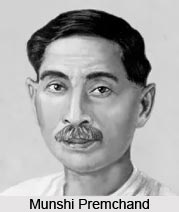
 Of all the 25 Uttar Pradesh delegates, not one had represented Hindi writers. Well-known Hindi writers - Babu Maithili Sharan Gupta, Pandit Banarsi Das Chaturvedi, Sumitra Nandan Pant, Subhadra Kumari Chouhan, Pandit Bal Krishnan Sharma - had indicated mild recognition of the new Marxist-adhering literary movement, but had declined to attend the conference. The absence of Hindi writers was handsomely compensated by the presence of Munshi Prem Chand, who had agreed to preside over the AIPWA Conference. No one however had considered Prem Chand as a Marxist. Munshi Prem Chand had nevertheless represented the life of the Indian peasant in his novels, with deep discernment and compassion for his poverty and suffering, his superstitions and weaknesses.
 Bengali literature, mostly Bangla poetry and poetic verses had come to light during this rather metamorphosing phase, with other literary forms also assisting the writers. Authors from this period had outlived and survived the Independence and had considered themselves unlucky and misplaced in such a time, when the country was mostly once again disintegrating. Yet, at a more mundane level, the narratives of political struggles had projected the possibilities of a new society and had generated hope and conviction. The Bengali poems of Subhash Mukhopadhay (Agni Kon, 1948) and of Sukanta Bhattacharya (Chad Patra, 1948), both Marxists, had articulated the determined voice of revolution. The silver lining of hope visible amidst this sinister grimness was the ideology inciting people to change the existing social order, i.e., indeed by the all-encompassing and accepted predominance of Marxist influence in Indian literature, precisely in Bengali literature and its poetry. The Marxist writers had extended their influence to a remarkable extent. Subhash Mukhopadhay although had made his mark on Bengali poetry in the early years of 1940s, he had matured into an artist in the 1950s. Sukanta Bhattacharya, who had expired in 1947, had turned into idol of the younger generation and had dominated Bengali poetry with his fresh approach and exuberance. The Marathi poets with pronounced Marxist inclination, Sharatchandra Muktibodh and Vinda Karandikar and the Malayalam poet Vayalar Rama Varma, the most admired poet of social revolution, whose Kontayum punulum had appeared in 1950, have one thing in common - "robust optimism". The finest and the most illustrious work of this period, demonstrating the hold of Marxism in Indian literature, a work that had articulated the voices of the oppressed and had projected the dream of a social order free of exploitation and tyranny is the epoch-making Telugu poem Mahaprasthanam (1950) by Sri Sri. Narrative literature too had fearlessly upheld the struggle of the oppressed. Kishan Chand had portrayed the heroic uprising in Telengana, in his Ajanta Ke Age (1948) and Jab Khet Jage (1952). Most of the writings of Yashpal, Nagarjun and Rahul Sankrityayan, all of them penning in Hindi, also had shared an optimism and vision of a new society. Hence, Marxism and its control upon Indian literature, with particular stress upon the post-Independent India was most profound, which with time, has gained its generic foothold, to be remembered for centuries to come.
 Indian Literature after Independence of the country witnessed some major changes in terms of literary writings. Indian independence may be a historic event for its socio-political significance. But according to some writers, this event has had an outstanding impact on the creative writing done in various regional languages of the writers. India`s nationalism at the point before independence was a nationalism of grief and mourning. Thus, most of the new age writers through their writings portrayed the terrible fake world that was based on the western modernism. However, in a country like India, the vast culture of the past does not go off completely. With the independence of the country the cultural rhythm of the past certainly broke down as a result of modernistic experimentations.
  The partition of India did sear a poignant scar in the souls of many writers, particularly in Punjabi literature, Urdu literature, Hindi literature, and Bengali literature. Many moving short stories and poems have been written on this subject by authors like