 Gujarat is located in the western region with neighbouring states as Rajasthan, Madhya Pradesh and Maharashtra. This state gets its name from the word `Gujaratta` which means the land belonging to the Gurjars. The Gurjars/Gujjars are descended from Suryavanshi Kshatriyas that is the Sun Dynasty. According to the historians, the Gurjars were sun-worshipers and their copper-plate grants and seals also bear an insignia of the Sun.
Gujrat is located alongside the Arabian Sea, with a coastline of 1596 kilometers long. It also includes the union territory of Daman and Diu, it is bordered by Pakistan and Dadra and Nagar Haveli union territory. Gandhinagar is its capital. It is located in west-central India along the banks of the Sabarmati River. The city is structured in thirty residential sectors, in a style similar to that by the work of Le Corbusier, who planned the construction of Chandigarh.
History of Gujarat
The history of Gujarat is steeped in mythology. As per the Hindu epics, Lord Krishna, along with his elder brother Balarama deserted Mathura and settled at Kushasthali, which is presently known as Dwarka and thus, flourished the Yadava dynasty. Dwarka afterwards became one among the four seats or mathas established by Adi Shankaracharya.
Geography of Gujarat
Gujarat has an area of 75,686 square miles or 196,077 sq kilometres. Gujarat shares its border in the northwest with Pakistan and the Arabian Sea forms the western coast of the state. It is also the seventh largest state of India in terms of population as well as area. It is situated on the western coastal region of peninsular India.
Gujarat experiences varied climatic conditions. During winter the day is mild, dry and pleasant having average temperature of about 29 degree Celsius and at night the temperature drops to a minimum of about 12 degree Celsius. During day about 41 degree Celsius is experienced. While during night the temperature gets down to about 29 degree Celsius. Monsoon comes during the middle part of the month of June with temperatures during day getting lowered to around 35 degree Celsius and the night temperature gets around 27 degree Celsius. Humidity is very high and maximum rain is experienced in this season at times causing severe floods.
 Demography of Gujarat
The population in Gujarat was 60,383,628 according to the census data of the year 2011. The concentration of population is just 308 persons per square kilometre. The primary language of this state is Gujarati and it is also the official language. There are several tribal communities residing in the state of Gujarat. Agriculture is the major occupation for most of the people living in Gujarat. The Male population according to census 2011 is 31,482,282. The female population is 28,901,306.
People of Gujarat .
A lion`s proportion of Gujrat people in the state speaks Gujarati, while people from Kutch region of Gujarat also speak in the Kutchi language. Other native languages spoken in low proportions are Bhili and Gamit. As of the 2001 Census, a total of 84.5% of the population reported Gujarati as their first language. 5% were speakers of native tribal languages, 4.7% Hindi, 2% Sindhi, 1.5% Marathi and 1% were speakers of Urdu language.
Culture of Gujarat
Gujarati culture witnesses the co-mingling of varied ethnic folks. Almost one-fifth of the population of the state comprises aboriginal and tribal communities. The effect of foreign invaders like the Chalukyas , the Mahmud of Ghazni scarcely influenced the Gujarati culture. The individual ethnical character of the tribal population namely Dubla, Gujjars, Koli, Naikda, Bhangi are nicely fused in the Gujarati culture.
Food is an essential to Gujarati culture. The Gujaratis are mostly vegetarians and "Khichdi", salad and "chhaas" are their staple food. Dishes, like, Thepla, Dhokla are quite popular in this state.
Education of Gujarat
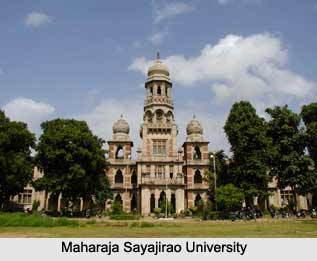
Elementary education is given special attention by Gujarat`s educational department. Primary education has been made free and compulsory for all children up to a specific age limit in Gujarat. Government of Gujarat as well as private schools both function in Gujarat. There are also schools run by various trusts and municipal corporations in Ahmedabad. The private schools in Gujarat are affiliated to Council for the Indian School Certificate Examination (CISCE) board or the Central Board of Secondary Education (CBSE) board. Several universities are there in Gujarat for higher education where undergraduate and masters` programmes in various disciplines are offered.
Administration in Gujarat
Gujarat is divided into 25 districts. They are Ahmedabad, Mehsana, Porbander, Surat, Amreli, Gandhinagar, Narmada, Surendranagar, Anand, Bhavnagar, Navsari, Dangs, BanasKantha, Panch Mahal, Vadodara, SabarKantha, Bharauch, Patan, Rajkot, Valsh, Kutch, Junagadh, Dahod, Kheda and Jamnagar. 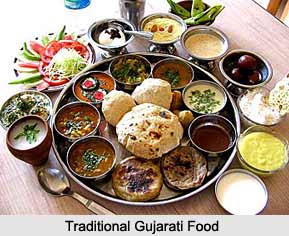
Economy of Gujarat
The most affluent state economy of India is the Gujarat economy. If Gujarat will be considered as an independent nation then its economic rank will be much higher than most of the European Union`s developed economies. Gujarat economy is largely industrialized. The output from agriculture is very poor in Gujarat because of the less fertile soil, insufficient rainfall, floods and regular droughts, poor drainage and outdated irrigation facilities. The major part of revenue is generated from cotton (cash crop) and the Cotton Textile industries are flourished in Gujarat.
Tourism in Gujarat
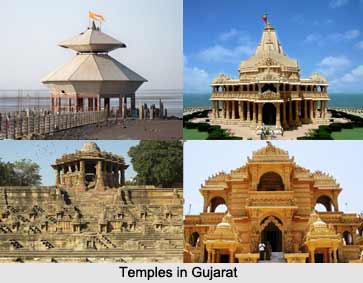
Tourists in Gujarat have many things to see and enjoy including several museums, forts, mosques, temples, wildlife sanctuaries and a number of other interesting destinations. Sightseeing is one of the luxuries of tourism in Gujrat. There are several palaces and forts which till today stand as a spectator to the golden age in the Indian history. Some of the palaces and forts are Pawagadh Fort, Nazar Bagh Palace, Dabhoi Fort, Uparkot Fort, Kusum Vilas Palace, etc.
There are 21 wildlife sanctuaries and 4 national parks in Gujarat. The most important tourist attraction in Gujrat is Gir National Park. Some of the religious places to visit in Gujarat are Dwarkanath Temple, Narayan Temple, Palitana JainTemples, Takhteshwar Temple and so on.
The International airport at Ahmedabad has flights to and from Delhi, Mumbai and other Indian metro cities. Regular flights to New York, Dubai, Chicago and London are available here. Trains to and from New Delhi and Mumbai connect the cities of Surat, Vadodara and Ahmedabad.
Gujarat
Gujarat is recognised as one of the most affluent states in western part of India.