Sriranga III
|
Sriranga III was also a great grandson of Aliya Rama Raya.
|
|
|
 Sriranga III 1642-1652 CE came to power in 1642 following the death of his uncle Venkata III. Sriranga III 1642-1652 CE came to power in 1642 following the death of his uncle Venkata III.
Early Rebellions: Before his accession to the throne, Sriranga III was in rebellion against his uncle Venkata III. He sought help from the Bijapur Sultan and attacked Venkata III in Chandragiri - Vellore in 1638. Another invasion of these two in 1642 was defeated by Venkata III's army, who were also facing Golkonda armies near Madras. Under this troublesome circumstances Venkata III passed away, and Sriranga third who was with the Bijapur army deserted them and returned to Vellore and made himself the King of Vijayanagara.
Reign: Several nobles like the Nayak of Gingee and Darmala Venkatapati, the chieftain of Madras, disliked him for his mischief in rebelling against the former King. Quarrel among the Sultans of Bijapur and Golkonda helped Sriranga III for a while. In 1644 the Golkonda appeared with a vast army and defeated by Sriranga III.
Sriranga III, now feeling strong enough to demand money from the Southern Nayaks, marched south. Another Golkonda campaign nearing his capital was defeated with help from the Dutch in Pulicat.
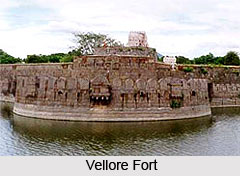
Battle of Virichipuram: In 1646 Sriranga III gathered a huge army with help from Mysore, Gingee and Tanjore and met the Mughal forces. The Muslim forces were trailing, but later advanced, when consolidated by additional armies from Deccan. The war sustained until 1652. In 1649 Thirumalai Nayak sent his forces supporting the Bijapur ruler, but upon converging at the Gingee Fort, the Madurai forces created bedlam and took sides with the Gingee army, when the Bijapur and Golkonda entered into their agreements. This led to the banishment of Gingee Nayak rule in 1649. By 1652, Sriranga III was left with only Vellore Fort, which was ultimately seized by the Golkonda forces. By now he had only the support of Mysore Ruler, while Tanjore surrendered to the Muslim Forces and the Madurai Nayak ended up paying massive sums to Muslim forces, but all three maintaining their kingdom.
|
|
|
|





