 Sat karmani aligns the body in its most balanced and healthy form, and prepares it for the higher levels of Yoga. The procedure prepares those with excessive phlegm and fatty deposits for the challenging discipline of pranayama. If the three Ayurvedic dosas (humours) namely vata, pitta and kapha are already well balanced then these six preliminary cleansing techniques are unnecessary.
Respectively called Agnisara Dhauti, Vasti, Neti, Trataka, Nauli, and Kapalabhati, the sat-karmani procedure is described in the first chapter of the Gheranda-Samhita and in the second chapter of the Hath Yoga Pradipika, although the most descriptive accounts are available in Gharendra Samhita.
1. Dhauti means `washing` or `cleansing`, and refers to a number of bodily purification techniques, of which four principal types are: Antar-dhauti, Vamana- Dhauti, Vaso-Dhauti, Mula-Dhauti.
2. Vasti literally means `bladder`. The name is derived from the fact that an animals` bladder was originally used to administer an enema. The procedure is very much on the similar notes. Squatting on the heels in navel-depth water with a tube inserted into the rectum, and then drawing water up the tube by contracting the anus perform Vasti. The Gheranda-Samhita calls this jala-vasti (water vasti). It also mentions a `dry` version (shushka vasti), in which the practitioner sits in Paschimottanasana and draws air into the rectum by contracting and dilating the anal sphincter.
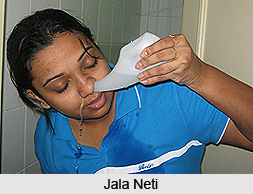
 3. Neti is the practice of cleaning the nasal passages with a fine thread (Sukshma-sutra). The practitioner keeps hold of one end of the thread while passing the other up through one nostril at a time and pulling it out through the mouth. The variation of the procedure is Jala-Neti, in which water is poured into one nostril and ejected through the other nostril or through the mouth.
4. Trataka involves gazing intently at a small or `subtle` object without blinking until tears well up in the eyes. The object can be most likely a candle (or diya`s) flame. The purpose of this procedure is to cleanse the eyes and improve the ability to concentrate. This in turn enhances the ability for practices such as Sambhavi-mudra. It is also said to facilitate divya-drishti. Divya drishti is referred to either `clear vision` or `clairvoyance`.
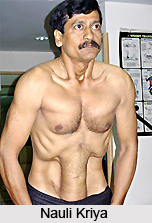
5. Nauli is the act of drawing in the abdomen, projecting the rectus abdominis muscles forward and expanding and contracting them in such a way as to resemble the waves of the sea. The procedure is called lauliki in the Gheranda-Samhita. The technique provides a powerful massage to the intestines and digestive organs. It also increases the `bodily fire`. In scientific observations made, Nauli has been shown to be extremely effective at producing sub-atmospheric pressure in various internal cavities. This all affects the uptake of fluid into the colon and bladder required for both vasti.
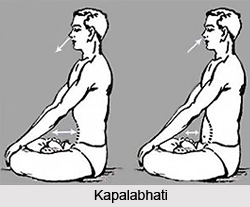
6. Kapalabhati is described as breathing in and out rapidly like a bellows, a technique also employed in Bhastrika Kumbhaka. There are three alternative varieties of Kapalabhati as per "Gharendra Samhita": namely Vama-krama, Vyut-krama and sit-krama. All versions of kapalabhati are said to relieve the symptoms of diseases caused by an excess of kapha-dosa (excessive phlegm). When all the procedures of Sat Karmini has restored the body in a healthy, clean, pure and balanced state, the body is easy to fall in alignment with an even more exalted state. And it is from here that a sacred journey of mind soul and body begins to meet "Paramatman."