Architecture in Western Chalukya Dynasty
|
The supremacy of Western Chalukya Empire was a significant epoch in the development of Deccan architecture.
|
|
|
 The architectureoin Western Chalukya Dynasty was designed during this time served as a conceptual link between the Badami Chalukya Architecture of the eighth century and the Hoysala architecture popularized in the thirteenth century. The art of the Western Chalukyas is sometimes called the "Gadag style" after the number of metaphorical temples they built in the Tungabhadra River-Krishna River doab province of present day Gadag district in Karnataka. The architectureoin Western Chalukya Dynasty was designed during this time served as a conceptual link between the Badami Chalukya Architecture of the eighth century and the Hoysala architecture popularized in the thirteenth century. The art of the Western Chalukyas is sometimes called the "Gadag style" after the number of metaphorical temples they built in the Tungabhadra River-Krishna River doab province of present day Gadag district in Karnataka.
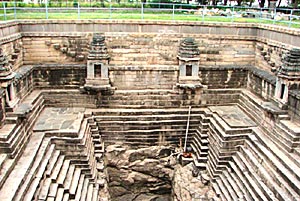
The dynasty's shrine construction reached its peak and culmination in the 12th century with over a hundred temples built across the Deccan, more then half of them in present day Karnataka. Apart from shrines, the dynasty's architecture is well known for the elaborate stepped wells (Pushkarni), which served as ritual bathing places, many of which are well preserved in Lakkundi. The Hoysalas and the Vijayanagara Empire later incorporated these stepped well designs in the coming centuries.
The Kasi Vishveshvara Temple at Lakkundi, Mallikarjuna Temple at Kuruvatii, Kalleshwara Temple at Bagali and Mahadeva Temple at Itagi are the finest examples produced by the later Chalukya architects. The twelveth century Mahadeva Temple with its well-executed sculptures is an exquisite example of decorative detail. The intricate, finely crafted carvings on walls, pillars and towers speak volumes about Chalukya taste and culture. An inscription outside the temple calls it "Emperor of Temples" and relates that Mahadeva built a  commander in the army of king Vikramaditya VI it. The Kedareswara Temple (1060) at Balligavi is an example of an early transitional Chalukya-Hoysala style. The Western Chalukyas built temples in Badami and Aihole during its second phase of temple building activity such as Mallikarjuna Temple and Yellamma Temple and Bhutanatha group of Temples. commander in the army of king Vikramaditya VI it. The Kedareswara Temple (1060) at Balligavi is an example of an early transitional Chalukya-Hoysala style. The Western Chalukyas built temples in Badami and Aihole during its second phase of temple building activity such as Mallikarjuna Temple and Yellamma Temple and Bhutanatha group of Temples.
The Vimana of their temples (tower over the shrine) is a compromise in detail between the plain stepped style of the early Chalukyas and the decorative finish of the Hoysalas. To the credit of the Western Chalukya architects is the development of the lathe turned (tuned) pillars and use of Soapstone (Chloritic Schist) as basic building and sculptural material, a very popular idiom in later Hoysala temples. They popularised the use of decorative Kirthimukha (demon faces) in their sculptures. Many of the famous architects in the Hoysala kingdom were Chalukya architects native to places such as Balligavi. The artistic wall decor and the general sculptural idiom was dravidian architecture. This method is occasionally termed Karnata Dravida, one of the richest traditions in Indian architecture.
|
|
|
|





