


 Temples in Nagpur, which is located in the western Indian state of Maharashtra are important pilgrimage spots which comprise a majority of Hindu and other temples. These temples are dedicated to various Hindu deities and saints, and are regularly visited by innumerable pilgrims throughout the year. Some of these temples are quite ancient and boast of marvellous architectural features. Temples in Nagpur, which is located in the western Indian state of Maharashtra are important pilgrimage spots which comprise a majority of Hindu and other temples. These temples are dedicated to various Hindu deities and saints, and are regularly visited by innumerable pilgrims throughout the year. Some of these temples are quite ancient and boast of marvellous architectural features.
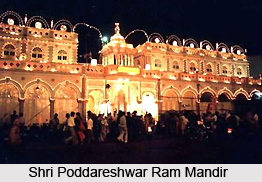
Shri Poddareshwar Ram Mandir Shri Poddareshwar Ram Mandir is the very site of Hindu religious worship, with the three chief Hindu Gods of Ramayana residing side-by-side. It was erected in 1923 and was constructed with the aide of sandstone and marble. This temple is referred to as the most famous pilgrimage centre in Nagpur, and numerous religious festivals are organised in Shri Poddareshwar Ram Mandir. Balaji Temple Located in the beautiful Seminary Hills, Shri Balaji has architectural influences of both north and south India. Balaji Temple is dedicated to Lord Balaji, an avatar of Lord Shiva and yet another Hindu deity known as Lord Kartikeya. The tranquillity and calm natural surroundings of the nearby hills enhance the divinity of the temple. Shri Vyankatesh Temple Shri Vyankatesh Temple in Itwari has the idol adorned in pure gold, brought from Chennai and Swamiji Shri Dharacharyaji had offered the central concept of this temple. 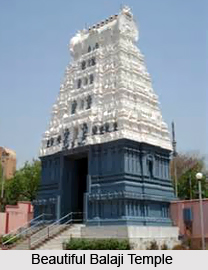 During 1968, its construction was complete and Lord Vyankatesh is the presiding deity of this temple. The idol is composed of black stone, adorned with gold jewelleries. The other festival statues here are also made of gold. During 1968, its construction was complete and Lord Vyankatesh is the presiding deity of this temple. The idol is composed of black stone, adorned with gold jewelleries. The other festival statues here are also made of gold.
Tekdi Ganapati Temple Tekdi Ganapati Temple is 250 years old and its idol of Lord Ganesha is believed to be self-existent. The current-day structure of Tekdi Ganapati Temple was modelled in the year 1984. Devotees are of the view that previously the idol was comparatively smaller but its size enhanced gradually with time. Beautiful silver and gold jewels decorate the idol, along with fresh flowers and during 'Ekadashi' and 'Ganesh Chaturthi', the idol is adorned with a crown. Sati Anusuya Mata Temple Sati Anusuya Mata Temple in Nagpur is a revered spiritual place where Vaidehi Sati Anusuya Mata is believed to have exhibited her holy powers and divine charismatic grace. The 'dharmasala' as well as the temple are visited by thousands of pilgrims throughout the year, which are famous for their unique beauty. Shree Mahalakshmi Jagdamba Mata Temple Situated on the banks of Koradi Lake, Shree Mahalaxmi Jagdamba Mata Temple is dedicated to Goddess Mahalakshmi. It is existent at a distance of nearly 15 kms away from the northern portion of Nagpur. During 'Navaratri', large quantity of visitors crowds the temple. The temple grounds are illuminated with over 50, 000 lamps during festive events. Dragon Palace Temple The Dragon Palace Temple is an abode of redefined whiteness, constructed by the Ogawa society, Japan which had declared this temple as the 'International Monument Dragon Palace Temple'. 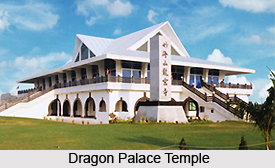 It is dedicated to Lord Buddha, and has been the recipient of national and international awards for its architectural excellence and unique landscape. Dragon Palace Temple was inaugurated during 1999. It is dedicated to Lord Buddha, and has been the recipient of national and international awards for its architectural excellence and unique landscape. Dragon Palace Temple was inaugurated during 1999.
Hazrat Tajuddin Baba Dargah Hazrat Tajuddin Baba was a famous Sufi saint who had experienced a close connection with 'Adwaita' or 'oneness', before which he lost all worldly desires. He had been shifted to a mental asylum by the British, where he became popular as a sage. Devotees often visited the hospital for his 'darshan'. Eventually he was granted escape from here by Maharaja Raghuji Bhosale and his palace was offered to the saint. Thereafter, Hindus and Muslims greatly respect and worship Tajuddin Baba. |
| |||



Temples in Nagpur
| Temples in Nagpur are the various religious centres spread across this Indian city which are existent since several generations and are visited by several tourists and devotees from different parts of the country and also abroad. |
| ||||||||||||||||||||||||||||

