
Vishnu Purana, also known as the Puranratna, or the gems of Puranas, is one among the eighteen major Indian Puranas. It is the sacred text of the Vaishnava branch of Hinduism. In this work Vishnu is praised and glorified as the highest being, as the one and only god, with whom Brahma and Lord Shiva are one, and as the creator and preserver of the world. Similar to the other Puranas, the Vishnu Purana also narrates the story of the creation of Cosmos to its destruction at the end. The text of Vishnu Purana opens with the introduction of the four Yugas at the beginning of the text. In addition to these, there are widespread sections on lineage of the celebrated kings, heroes and demigods of ancient India, including those from the epics of Ramayana and Mahabharata. It has been enumerated in the text of Vishnu Purana, if a man gives as a gift a book of Vishnu Purana on the full-moon day in the month of Asadha (July) with Jaladhenu he will attain the sacred Vishnupada.
Vishnu Purana
Vishnu Purana is the most ancient of all the Puranas and a sacred text of the Vaishnava branch of Hinduism. Lord Vishnu is worshipped as the most important God of all things in this Purana.
Introduction
Composition of Vishnu Purana
Content of Vishnu Purana
The ultimate note of the Vishnu Purana is that the forfeiture in the feet of Lord Vishnu will lead a man to get rid of all mortal bondages and sufferings. As a result the man will attain salvation. The Vishnu Purana thereby touches the keynote of the entire Puranas.
Khandas of Vishnu Purana
 Khandas of Vishnu Purana are the various chapters into which the text has been divided. The Vishnu Purana deals with the events of Varahakalpa and contains 23,000 Shlokas. The work begins with a dialogue between Parasara, the grandson of Vasistha, and his pupil Maitreya. The latter asks his teacher about the origin and nature of the universe. To this Parasara replies that this question reminds him of that which he had once heard from his grandfather Vasistha, and he prepares to repeat that which he had heard. Contrary to the tradition which ascribes all the Puranas to Vyasa, Parasara is here directly called the author of the work.
Book I of Vishnu Purana
The first part or Khanda of the Vishnu Purana narrates the creation of the universe, Pralay and the churning of the sea. After he has first glorified Lord Vishnu in a hymn, he gives an account of the creation of the world as it is seen occurring in almost all of the Puranas. Philosophical views, essentially belonging to the Samkhya Philosophy, are here in a remarkable manner mingled with popular mythical ideas. Along with the accounts of the creation of the gods and demons, of the heroes and the primal ancestors of the human race, are numerous mythological narratives, allegories and legends of ancient kings and sages of primeval times.
Many of these narratives can already be seen occurring in the Mahabharata, like that of the twirling of the ocean. There is here a particularly poetical description of the goddess of Fortune and Beauty, Sri, arising in radiant beauty out of the twirled milk-ocean. In a splendid hymn she is glorified and invoked by Indra as the mother of all beings, as the source of all that is good and beautiful, and as the giver of all happiness. Just as this piece serves, above all, for the glorification of Vishnu, whose wife Sri is, so it is in all the other narratives always Vishnu, whose praise is sung in an extravagant manner.
Book II of Vishnu Purana
Book II of the Vishnu Purana first gives (Chapter 1-12) a description of the world. The seven continents and the seven oceans are described, in the midst of which situated Jambudvipa with the golden mountain Meru, the dwelling of the gods. In Jambudwipa is Bharatavarsa, i.e. "India," whose lands, mountains and rivers are enumerated. After this description of the earth follows a description of Patala, the nether world in which the snake-gods dwell; next follows an enumeration and description of the still deeper-situated Narakas or hells. As a contrast there follows a description of the heavenly spheres, the sun, the chariot of the sun and the sun-horses with astronomical expositions on the sun`s course, the planetary system and the sun as giver of rain and preserver of beings. Next follows a description of the moon, of its car, its horses, its course, and its relation to the sun and planets. The section concludes with the statement that the whole world is but Vishnu, and that he alone is the only reality.
In connection with the name Bharatavarsa there is then related (Chapter 13-16) a legend of king Bharata of old, which, however, only serves as an introduction to a philosophical dialogue in which the ancient doctrine of the Unity of All, familiar from the Upanishads, is presented from the Vishnuite standpoint. The style of the whole section recalls that of the Upanishads in many respects.
Book III of Vishnu Purana
Book III of the Vishnu Purana begins with an account of the Manus (primal ancestors of the human race) and the ages (manvantaras) over which they ruled. This is followed by a discussion on the four Vedas, on their division by Vyasa and his pupils and on the origin of the various Vedic schools. Then follows an enumeration of the eighteen Puranas and a list of all sciences.
Then the question is raised and discussed, how one may attain to liberation as a devout Vishnu-worshipper. In a beautiful dialogue (Chapter 7) between Lord Yama, the god of death, and one of his servants, it is explained that he who is pure in heart and leads a virtuous life and has directed his mind to Vishnu, is a true Vishnu-worshipper and therefore is free from the bonds of the god of death. This is followed by an exposition on the duties of the castes and Asramas, on birth and marriage ceremonies, ritual ablutions, the daily sacrifices, the duties of hospitality, conduct at meals and so on.
A long treatise (Chapter 13-17) on the funeral oblations and ceremonies for the worshipping of spirits of ancestors (Shraddhas) concludes this section, in which the Vedic-Brahmanical religious customs are represented as the right kind of Vishnu-worship. The last two chapters of the` book describe the origin of the heretical sects hostile to the Veda, whose adherents, especially the Jains, called Digambara, and the Buddhists known as "Red mantles" (Raktambaras)." are represented as the worst evil-doers. In order to show how sinful it is to have any sort of intercourse with such heretics, the story of the ancient king Satadhanu is told. He was a devout worshipper of Vishnu, but once, out of mere politeness, exchanged a few words with a heretic, and in consequence was re-born consecutively as a dog, jackal, wolf, vulture, crow and peacock. This went on till at last-thanks to the constant faithfulness and piety of his wife Saibya- he again came into the world as a king.
Book IV of Vishnu Purana
Book IV of the Vishnu Purana contains chiefly genealogical lists of the ancient royal races, of the solar dynasty, which traces its origin back to the sun-god, and the lunar dynasty, which traces its origin to the moon-god. Long lists of ancient kings- many of them purely mythical, some probably historical- are only occasionally interrupted in order to relate some legend about one or other of them. The legends related here are full of marvel and wonder. There is Daksha, who is born out of Brahma`s right thumb; Manu`s daughter Ila, who becomes transformed into a man; Iksvaku, who owes his existence to the sneezing of Manu; King Raivata, who, with his daughter Revali, goes to heaven, in order to have a husband for his daughter recommended to him by god Brahman ; or indeed King Yuvanasva, who becomes pregnant and brings a son into the world, whom Indra suckles with the drink of immortality, the child putting his finger into the mouth of the god and then sucking it. The child received the name Mandhatr. The latter became a powerful king and the father of three sons and fifty daughters.
In this book we meet with many legends already familiar from the epics, for example, those of Pururavas and Urvasi, of Yayati and others. There is also here a short summary of the legend of Lord Rama. There is an account of the birth of the Pandavas and of Lord Krishna and the story of the Mahabharata is briefly touched upon. The conclusion of this extensive genealogical book is formed by prophecies concerning the "future" kings of Magadha, the Saisungas, Nandas, Mauryas, Sungas, Kanvayanas and Andhrabhrtyas concerning the foreign barbarian rulers who will succeed them, and the terrible age brought about by them, an age without religion and without morality, which will only be ended by Vishnu in his incarnation as Kalki.
Book V of Vishnu Purana
Book V is a complete whole in itself. It contains a detailed biography of the divine cowherd Lord Krishna in which practically the same adventures are told in the same order as in the Harivamsa Parva of the Mahabharata.
Book VI of Vishnu Purana
Book VI is quite short. Once again the four consecutive ages of the world (yugas)- Krta, Treta, Dvapara and Kali- are recalled, and the evil Kaliyuga is described in the form of a prophecy, to which is attached a presentation of the various kinds of dissolution (Pralaya) of the universe. Next are described in a pessimistic manner (Chapter 5) the evils of existence, the pain of being born, of childhood; of manhood, old age and death, the torments of hell and the imperfection of the bliss of heaven, and from this the conclusion is drawn that only liberation from existence, freedom from re-birth, is the highest happiness, But for this it is necessary to know the nature of God; for only that wisdom is perfect by which God is seen, all else is ignorance. The medium for obtaining this wisdom is Yoga, meditation upon Vishnu. The two penultimate chapters of the work give information on this medium. The last chapter recapitulates briefly the contents of the whole Purana and ends with a praise of Vishnu and a final prayer.
Characters of Vishnu Purana
 Airavata
Airavata is a white elephant and the carrier of Lord Indra. As per Ramayana, he is the son of Iravat. Airavata is made the king of elephants by an avatar of Vishnu, Prithu. Airavata was milk white with seven trunks and four tusks.
Prachinaverhis .
Eldest son of Havirdhana is Prachinaverhis. He is married to the daughter of ocean Savarna.
Satrajit
Satrajit is the son of Nighna. As per Vishnu Purana, Satrajit had said some verses in praise of the Sun God, Surya for which the Sun God appeared before him and had shown him his real form. Surya indeed had a dwarfish structure with a burnished copper body and slightly red eyes. Surya had also presented him his jewel, Syamantaka. Satrajit was killed by Satadhanwan who tried to posses his Syamantaka.
Sanku .
According to Vishnu Purana, Ugrasena had nine sons among which one was Sanku. He had five sisters namely Kansavati, Rashtrapali, Kansa, Sutanu and Kanki.
Maru
Maru is the descendent Lord Rama and was the son of Sighra. Vishnu Purana says that Maru through immense Yoga and devotion had acquired a distinct power and is still living in a village known as Kalapa. The name of the king of Mithila, Hariyasw, is also Maru.
Mohini
Mohini was the female avatar of Vishnu. During the conflict between the Gods and Demons in the search of Amrita, Mohini diverted the Demons with her alluring beauty and distributed it among the Gods.
Bala Chakravarti
Bala Chakravarti was the famous giant. He was killed along with Naraksura by Lord Vishnu, in a conflict.
Syeni
Syeni was the daughter of Tamra and Kasyapa. Syeni had five sisters namely Bhasi, Suchi, Gridhrika, Suki and Sugrivi. Syeni was the mother of hawks.
Yashoda
Yashoda brought up Lord Krishna, the son of Vasudeva and Devaki, as her own child. However, Yashoda later came to know that Krishna was not his own child and he had to leave for Mathura for killing Kamsa. But even after knowing this fact, Yashoda adored him as her own child.
Vithoba
Vithoba is a famous saint who is worshipped mainly in Andhra Pradesh, Karnataka and Maharashtra. Vithoba is known by different names such as Panduranga, Pandhari and Vitthala. Several stories have been narrated regarding the origin and interpretations of the names of Vithoba. During the Maratha and Vijaynagara rule, Lord Vithoba was introduced to South India in 15th century. Popular Vithoba temples in India are Vijaya-Vittala Temple and Vitthaleshwara Temple.
Others
Apart from these, other important characters of Vishnu Purana are Mitraya, Shanaischara, Sankara, Suyasas, Savala, Suvrata, Sangata, Bahula, Merubhutas, Dharmaketu, Rukmakavacha, Kuvalayaswa, Patumitra, Rukmisha, Jyotishmat and many more.
Vishnu Purana illustrates Lord Vishnu as supreme God who creates infinite universes and enters each universe as the Lord. It is believed that Vishnu creates 14 worlds within the universes as Brahma. The sustenance, maintenance and preservation of universes are also done by the Lord himself.
Lokas in Vishnu Purana
It has been narrated in Vishnu Purana that the region above Dhruva is the region known by the name Maharloka. Maharloka is at distance of koti (one crore) yoyonas from the region of Dhruva. Maharloka is the region of saints the inhabitants of which live for a Kalpa. Above the Maharloka is Jana Loka which is at a distance of two koti yoyonas. In Janaloka reside the pure-minded sons of Lord Brahma, Sananda and others.
The region of Tapa-Loka is the region where the celestials reside. The name of the celestials residing in the Tapa loka is Baibhrajas and they are inconsumable by fire. At six times the distance from Tapa loka is situated Satya loka, wherein the inhabitants do not know death and it is also known as Brahma loka. The region that extends from the earth to the sun is called Bhur loka and it is inhabited by the Siddhas. The distance, between the Swar Loka and Dhruva which extends over fourteen hundred thousands leagues, is called Swar loka.
Vishnu Purana mentions that the three lokas that is the Jana loka, the Tapa loka and Satya loka are transitory. The Mahar loka, which is situated between the Bhur loka and the Swar loka has the nature of both the lokas and though it becomes devoid of all beings at the end of Kalpa it is finally not destroyed and hence it carries on its existence.
Concept of Naraka in Vishnu Purana
Vishnu Purana elaborates that those who give false evidence, those who act as mediators through partiality, those who speak untruth, are thrown into the Raurava or the dreadful hell. He, who causes abortion, devastates a town, kills a cow, or strangles a man to death, goes to the Rodha hell or to the hell of obstruction. He, who drinks intoxicating liquors, destroys a Brahmana, steals gold or associates with them who perpetrate these crimes, goes to the Sukara (swine) hell. He, who murders or commits adultery with the wife of his preceptor, is despatched to the Tala hell. And one, who has an incestuous relationship, goes to Taptakumbha hell. One, who sells his chaste wife, one who deals in horses and forsakes his followers, is sent to Taptaloha hell. An individual who maintains an incestuous relationship with his daughter-in-law or daughter is sent to the Mahajwala hell. A man who disrespects spiritual guide or his betters, who reviles the Vedas or sells them and who associates with women to whom they should not go, is sent into Lavana hell.
A thief and a hater of prescribed rites will end up in Vimohana hell. He who disrespects his father, the Brahmanas and the gods, or one who spoils gems falls into the Krimibhoksha hell. He, who practises rites to injure others, falls into Krimisa hell. A man who takes his meals before offering food to the gods, to the manes and guests is despatched into Lalabhoksha hell. One who makes arrows is sent into the Vidhaka hell. He, who makes lances, swords and other weapons, is sent into the dreadful hell of Visashana. He who takes bribes is sent into Adhomukha hell as well as he who offers sacrifices to improper objects and predicts the movements of stars and planets. One who eats alone sweetmeats, a Brahmana who deals in lac, flesh, liquors, sesamum, or salt, one who commits violence, and those who rear up cats, cocks goats, dogs, hogs and birds are dispatched into hell Puyavaha is where matter flows.
The Brahman who leads the life of an actor, fisherman, who depends up in a person born in adultery, who is a prisoner, an informer, one who lives by his wife`s immoral habits, who looks to secular affairs on Parva days, who is an. incendiary, a faithless friend, a soothsayer who vends birds, performs religious rites for the rustics, who sells the juice of some trees is thrown into Rudhirandha hell. He, who spoils honey or devastates a village, is sent into Vaitarani hell. He, who causes impotence, trespasses into others lands, is impure and lives on magic rites, is sent into the Krishna hell. He who uselessly cuts down trees goes to Asipatravana hell.
Those who tend on sheep, those who haunt deer and those who give fire to unbacked vessels are sent to Vahnijwala hell or of fiery flame. One, who violates his own vow or transgresses the rules of his own order, goes into the Sandansana. The religious student who sleeps in the day and becomes defiled and those who receive instruction from their children go to the hell called Swabhojana.
Vishnu Purana narrates besides these there are hundreds and thousands of other hells, where persons, perpetrating diverse iniquities, are visited with various punishments. There are thousands of hells like the numberless crimes committed by men, in which they are punished according to the nature of their offences. It has been said that there are as many inhabitants in hell as are in heaven because those who commit sin and do not make an, expiation of guilt proceed to hell.
It has been said that the person who meditates upon Lord Vishnu day and night does not go to hell after death. That which gives delight to mind is heaven, and that which gives pain is hell, hence vice is denominated as hell and Virtue as heaven.
It has been stated in the Vishnu Purana that true wisdom consists only in the knowledge of Brahma, which brings confinement to the world. Vishnu Purana says that hell is the place below the earth and it is that place into which the sinners fall.
Origin of Vedas in Vishnu Purana
It has been said that in the Vaivaswata Manwantara in the Dwapara age, the Rishis had divided the Vedas twenty-eight times and accordingly twenty-eight Vyasas have passed away who divided the Vedas in their respective periods into four. In the Dwapara age the distribution was made by Swayambhuva or Lord Brahma himself; in the second period Veda-vyasa was the Manu ; in the third Usanas ; in the fourth Vrihaspati, in the fifth Savitri; in the sixth Mrityu ; in the seventh Indra; in the eighth Vasishtha ; in the ninth Saraswata; in the tenth Tridhaman ; in the eleventh Trivreshan ; in the twelfth Bharadwaja ; in the thirteenth Antariksha, in the fourteenth Vapra; in the fifteenth Trayyaruna ; in the sixteenth Dhananjaya ; in the seventeenth Kritanjaya ; in eighteenth Rina ; in the nineteenth Bharadwaja ; in the twentieth Goutama ; in the twenty-first Uttama who was also known as Haryatma; in the twenty-second Vena, who is otherwise Rajasravas, in the twenty-third, Somasushmapana also known as Trina-Vindiu; in the twenty-fourth Riksha, the descendant of Bhrigu, who is known by the name Valmiki, the twenty-fifth Vyasa was Sakti. All together twenty eight Vyasas had divided the Vedas into four in the preceding Dwarpa Ages.
Vishnu Purana narrates that it is Lord Brahma who had composed the Rik, Shama and Yajur Vedas. At the same time He is the ultimate essence as He is the soul of all embodied spirits. He, though at one with the Vedas, creates them and divides them into various branches. He is author of these divisions. He is those branches collectively for that eternal lord is the essence of true knowledge.
Brahma is the cause of creation and destruction. He is great and mysterious cause of the intellectual principle (Mahat). He is devoid of limit in time and space and is freed from diminution and decay. He is the invisible and imperishable Brahma, assuming various forms but invariable in substance and the chief self-create principle. He lightens recesses of heart, is indivisible, radiant, undecaying and multiform.
It has been described in the Vishnu Purana that the original Veda, divided into four branches, consists of one hundred thousand Stanzas-and from it originated sacrifice of ten kinds, the fulfiller of all desires.
Hence it can be concluded saying that the huge Veda tree was divided into four stems which had soon spread out into an extensive forest. Rather it can be said that various divisions and sub divisions of the Vedas sprang up gradually with the creation of the Vedas.
Recently updated articles in Indian Puranas
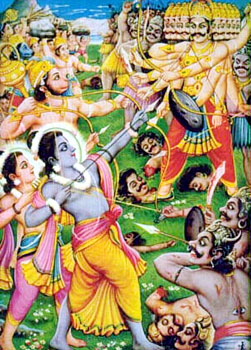
Ketumati
Ketumati was a Gandharva princess and the wife of the Rakshasa king Sumali in Hindu mythology. She was the mother of fourteen children, including Kaik...
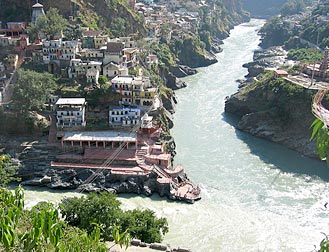
Mandakini, Holy River
Mandakini River is a significant Himalayan river in Uttarakhand, renowned for its ecological, cultural, and religious importance. Originating near the...
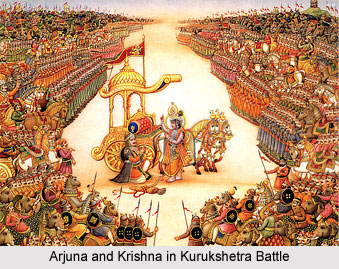
Kausika, Son of Vasudeva
Kausika is a minor figure in Hindu mythology and is identified in the Vishnu Purana as the only son of Vasudeva and his wife Vaishali. He is recognize...
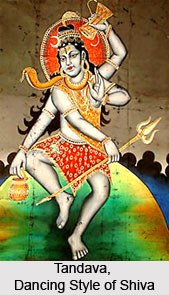
Tandu, Attendant of Lord Shiva
Tandu is revered as the divine attendant of Lord Shiva and the foremost exponent of the Tandava dance. According to the Natya Shastra, he instructed S...
Niramitra, Mahabharata
Niramitra was a son of Nakula and Kareṇumati in the Mahabharata. A descendant of the Pandavas and the Kuru dynasty, he fought on the Pandava side duri...
Related articles in Indian Puranas
Adhyayas in Agni Purana
Adhyayas in Agni Purana are all encompassing. The chapters have dealt with a variety of subjects related to human lives. A large number of chapters ha...
Indian Puranic Tribes
The existence of Indian Puranic tribes is often mixed with mythology and fiction that depict them as superhuman or sub.
Puranic Texts
Puranic Texts are vital according to Hindu, Jain or Buddhist religion; they describe the history of the Universe.

Puranic Shaivism
Puranic Shaivism established during the Gupta Dynasty. This puranic religion developed and expanded, and was accompanied by the development of Brahman...
Nilamata Purana
Nilamata Purana is a Kashmiri Purana that is referred by Kalhana. It is considered as one of the sources of ancient history of Kashmir.