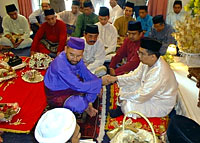
 It is on day four the actual Muslim Nikaah or wedding ceremony takes place. Nikah can be conducted at the home of the bride or the groom, or at any other convenient venue. The nikaah ceremony is presided over by the qazi or law officer. The qazi appoints two men as witnesses (Gawah) on the groom`s behalf, to receive orders for the nikah from the bride`s family. In addition to the presence of two witnesses, the presence of the two `Walis` (the bride`s and the bridegroom`s father) is also necessary. The bride`s father is required to care for and protect her rights and the groom`s father to endorse his rights.
On the day of the Nikaah the elder members of the two families decide the amount of Mehar (nuptial gift). Refreshingly, unlike dowry custom in India, in Muslim Nikah, Mehar is a compulsory amount of money given by the groom`s family to the bride. The qazi personally asks the bride if she has agreed to marry the groom and whether she accepts the quantum of mehar. Once the bride gives her consent the qazi reads the marriage contract to the groom. After the groom gives his consent, the Nikaah-Nama or marriage contract must be signed by the bride, the bridegroom, their Walis, the witnesses and the Qazi. The Nikaah-Nama also contains certain terms and conditions, which are in accordance with the religion and agreeable to both parties. A noteworthy condition is that in case of a disagreement between the two partners, the girl has a right to divorce her husband.
After the Nikaah-Nama is signed, the Qazi delivers a sermon called Khutba, consisting of verses from the Quran which were recited by the prophet and which lay particular emphasis on obligations toward women. The Qazi explains the meaning of these verses to the audience with an explanation of the mutual rights and duties of the spouses.
The Nikah Ceremony: According to Shariah, the wife-to-be says, "I have given away myself in Nikah to you, on the agreed Mahr."
Immediately, the bridegroom says, "I have accepted the Nikah."
With these pronouncements, they become husband and wife.
More on Muslim Wedding Rituals
More on Indian Wedding Accessories
More on Indian Religious Weddings
More on Types of Marriages
See also