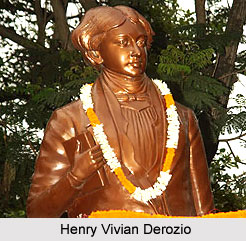
 Young Bengal was a group of Bengali free thinkers from Hindu College in Calcutta, who were also known as Derozians. These Bengali young people were inspired by free though to revolt against all social and religious structures and stigmas of the Hindu society. In their later lives, the Derozians were also attracted to the Brahmo Samaj movement. The Derozians or the members of Young Bengal failed in continuing the movement. Derozio was removed from Hindu College in the year 1829 because of radicalism. The main reason for their limited success was social conditions prevailing at that time which were not ready to adopt the ideas of radicalism.
Members of Young Bengal Movement
Prominent Young Bengal group members who left a distinct mark in Calcutta society of the 1830s and 1840s were:
•Krishna Mohan Banerjee
•Tarachand Chakraborti
•Sib Chandra Deb
•Hara Chandra Ghosh
•Ramgopal Ghosh
•Ramtanu Lahiri
•Rasik Krishna Mallick
•Peary Chand Mitra
•Dakshinaranjan Mukherjee
•Radhanath Sikdar
This article is a stub. You can enrich by adding more information to it. Send your Write Up to content@indianetzone.com.