
 Khasi Tribes live in Khasi and Jaintia hill districts of Meghalaya and its northern slope reaches up to Brahmaputra valley and the southern slope rolls to the Surma valley. The Khasi is a broad term which includes the Jaintia, the Pnar in the east and the Lyngam in the west, the Bhoi and the Khynriam. The Khasi call themselves "Rilum".
Khasi Tribe
Khasi Tribes are known all over the world as an example of a matriarchal society. The major concentration of the Khasi tribal community is in the north and eastern regions of Meghalaya.
Introduction
Khasi Tribes live in Khasi and Jaintia hill districts of Meghalaya and its northern slope reaches up to Brahmaputra valley and the southern slope rolls to the Surma valley. The Khasi is a broad term which includes the Jaintia, the Pnar in the east and the Lyngam in the west, the Bhoi and the Khynriam. The Khasi call themselves "Rilum".
History of Khasi Tribe
 Before the arrival of the British, from the thirteenth to the eighteenth centuries, the Jaintia dominated a large number of kingdoms. At the beginning of the sixteenth century Jaintia rule was extended to Sylhet and this marked the beginning of Brahman influence on the Jaintia. By 1860, the British had annexed all of theJaintia Hills region and imposed taxes on it as a part of British India.
The Khasi states had limited cultural relations before the arrival of the British, characterized in large part by internal warfare between villages and states. The incorporation of the markets at Sylhet into the British colonial economy in 1765 marked the beginning of Khasi subjugation. In 1837 the construction of a road through Nongkhaw State linking Calcutta to the Brahmaputra Valley led to the eventual cessation of Khasi-British hostilities, and by 1862 treaties between the British and all of the Khasi states (allowing Khasi autonomy and freedom from British taxation) were signed. This showed a significant amount of cultural change like an increase in wealth, decline of traditional culture, rise in educational standards, and frequent intermarriage. The Khasis now have their own state, Meghalaya, in which they predominate.
Khasi villages are built a little below the tops of hills in small depressions to protect against storms and high winds. Their houses are built in close proximity to one another. In addition to individual houses, family tombs and memorial stones called mawbynna are located within their territory. There is no internal division of the village based on wealth; rich and poor live side by side. Sacred groves are located near the Village between the brow of the hill and the leeward side, where the village`s tutelary deity is worshiped. Pigs wander freely through a village, and some villages (e.g., those of the high plateau) also feature potato gardens protected by dry dikes and hedges. Narrow streets connect houses and stone steps lead up to individual houses. The upper portion of a Khasi Village may be as much as 100 meters higher in elevation than the lower portion.
The typical Khasi house is a shell-shaped building with three rooms: the shynghup is a porch for storage; the nengpei is the center room for cooking and sitting ; and the rumpei is the inner room for sleeping . The homes of wealthy Khasi are more modern, having iron roofs, chimneys, glass windows, and doors. Some have European-style homes and furniture. A marketplace is located outside a Khasi village (close to memorial stones, by a river or under a group of trees, depending on the region). Within Khasi villages one may find a number of public buildings, Christian churches, and schools.
Society of Khasi Tribes
The Khasis are an endogamous tribe who are divided into exogamous clans which are again subdivided into exogamous matrilocal families. The exogamous clans are Lyngoh, Kharkongor, Diengdoh, Sohkhler, Marbaniang and syiemlich who trace their descent from respective female ancestress. Inheritance of property takes place only through the female line. The Khasi clans provide a good example of social organisation which is based on clans.
Marriage has both a religious and a social aspect among the Khasi tribes. Monogamy is the common form of marriage. Inter marriage between them is allowed. As their society is matriarchal, all the earning of males and females are owned jointly and administered by the head woman. Property is inherited from mother to daughter. Khasi family life is woven into religious rituals and ceremonies. In some cases it has seen that women act as religious and secular chiefs.
Marriage has both a religious and a social aspect among the Khasi tribes. Monogamy is the common form of marriage. Inter marriage between them is allowed. As their society is matriarchal, all the earning of males and females are owned jointly and administered by the head woman. Property is inherited from mother to daughter. Khasi family life is woven into religious rituals and ceremonies. In some cases it has seen that women act as religious and secular chiefs.
Economic Life of Khasi Tribes
The economic life of the Khasi is characterized by division of labour based on gender. It is a market oriented one in which women has an important role to play. They are the producers and sellers. Rearing of live stock is still in practice. Child labour also exists in the community. The Khasis also engage in other subsistence activities such as fishing, bird snaring, hunting and the raising of goats, cattle, pigs, dogs, hens, chickens and ducks, and bees. Cottage industries and industrial arts include cane and bamboo work, blacksmithing, tailoring, handloom weaving and spinning, cocoon rearing, lac production, stonecutting, brick making, jewellery making, pottery, iron smelting and beekeeping.
Religion of Khasi Tribes
As far as religion is considered the Khasis are monotheistic. They do, however, invoke God by various names according to the need of the moment. Besides adapting to the indigenous practices of the Khasi religion, these people are Presbyterians. Majority of the Khasi have adopted Christianity though they are rooted in their traditional religion too. Besides Hinduism, Islam and Jainism are also practiced respectively. A small number of them are Buddhists and Sikhs also.
Festivals of Khasi Tribes
The Khasi tribes of Meghalaya, India celebrate a host of festivals throughout the year. Whilst it is a visual treat to watch some of these festivals, the other origin of the others intertwined with the history of the tribe and myths.
The different types of Khasi Festivals are: -
•Ka Shad Suk Mynsiem
•Ka Pom-Blang Nongkrem
•Ka-Shad Shyngwiang-Thangiap
•Ka-Shad-Kynjoh Khaskain
•Ka Bam Khana Shnong
•Umsan Nongkharai
•Shad Beh Sier
Ka Shad Suk Mynsiem is the annual spring dance, performed to celebrate harvesting and sowing. The participants are both male and female dancers, where the female dancers have to be unmarried. The female dancers wear a cloth draped from waist to ankle (Ka Jingpim Shad), full sleeve blouse with lacework at the neck (Ka Sopti Mukmor), two rectangular pieces of gold-thread embroidered cloth, pinned crosswise at the shoulders, overlapping each other (Ka Dhara Rong Ksiar), necklace made of red coral and foil-covered beads in parallel strings (U Kpieng Paila), golden ear-rings (Ki Sohshkor Ksier).
The male dancers wear beautiful golden silk turban (Ka Jain spong Khor). Semi-circular collar of gold/silver plate tied round the neck (U Shanryndang). An 18-inch long `plume `stuck in the turban (U Thuia), a richly embroidered sleeveless jacket (Ka Jympang), silver chain worn across the shoulders (U Taban), silver `quiver` with silver `arrows` tied to the waist and an animal tail dangling from the end (Ka Ryngkap), a silver-mesh belt at the waist to cover the cord of the quiver (U Parnpoh Syngkai), maroon silk cloth worn like a `dhoti` (Ka Jainboh), a whisk (U Symphiah) and a ceremonial sword (Ka Waitlam).
Ka Pom-Blang Nongkrem is another festival that continues for five-days. It is celebrated to thank to Almighty for a good harvest and the participants pray for peace and prosperity of the community. It is celebrated during October or November every year. "Smit", the capital of the Khyrim Syiemship near Shillong, is today the official venue for this very ancient festival. Once the religious rituals by the administrative heads are over, the dancers begin their rituals. Unmarried girls in very fine costumes, bedecked with gold and silver crowns on which they place lovely yellow flowers, dance, once again within a circle, shifting forward and backward, moving barefoot in the dust. Men dance, with open swords in one hand and a white yak-hair whisk in the other, in a wide circle. They advance and parry and feint and retreat to the rhythmic beats of the drums and the brassy sounds of cymbals with flutes. Ka-Shad Shyngwiang-Thangiap is a ceremonial dance to express sorrow, performed on the occasion of a death in the family. Male musicians play music on the flute, drum and bamboo pole. The dance begins on the day of death, at a place next to the kitchen of the house and continues till the last rites are performed on the cremation grounds. Ka-Shad-Kynjoh Khaskain is the dance performed to commemorate "house-warming" or when a family moves into a new-built home. Once the ritual ceremonies are over, the dance is performed in three stages - Ka Shad Kyuntui, Ka Shad Khalai Miaw and Ka Shad Brap - and lasts through the night till dawn of the next day.
Ka Bam Khana Shnong is an event to thank the Lord for the old year past and seek his blessings for the New Year, which is to come. Everyone - men, women and children - look forward to this festival. The entire village participates with each home contributing either in cash or in kind. And then is the time for the Big Feast! Khasi feasts are rich with succulent "pork" preparations. And the lovely colorful ceremony of bringing wholesome pigs by pony cart decorated with colorful paper streamers and escorted by a group of musicians playing drums and pipes and brought up in the rear by a group of dancers who perform the "Ka-Shad-Lymmuh". When the feast begins, women, children and the elderly are served first. Meanwhile, the men enjoy a draught of rice-beer.
Umsan Nongkharai is held during the month of April or May that is the springtime. It commences on Sugi Lyngka with a ceremonial sacrifice of a goat and two cocks before the supreme deity of the Khasis - Lei Shyllong. It ends on Sugi-Shillong, with prayers offered at midnight to establish person-to-person contact between the finite and the infinite.
Shad Beh Sier is a deer-hunting dance dedicated to occupational merry-making. A kill or two, usually made with bow and arrow, becomes a local celebration.
The different types of Khasi Festivals are: -
•Ka Shad Suk Mynsiem
•Ka Pom-Blang Nongkrem
•Ka-Shad Shyngwiang-Thangiap
•Ka-Shad-Kynjoh Khaskain
•Ka Bam Khana Shnong
•Umsan Nongkharai
•Shad Beh Sier
Ka Shad Suk Mynsiem is the annual spring dance, performed to celebrate harvesting and sowing. The participants are both male and female dancers, where the female dancers have to be unmarried. The female dancers wear a cloth draped from waist to ankle (Ka Jingpim Shad), full sleeve blouse with lacework at the neck (Ka Sopti Mukmor), two rectangular pieces of gold-thread embroidered cloth, pinned crosswise at the shoulders, overlapping each other (Ka Dhara Rong Ksiar), necklace made of red coral and foil-covered beads in parallel strings (U Kpieng Paila), golden ear-rings (Ki Sohshkor Ksier).
The male dancers wear beautiful golden silk turban (Ka Jain spong Khor). Semi-circular collar of gold/silver plate tied round the neck (U Shanryndang). An 18-inch long `plume `stuck in the turban (U Thuia), a richly embroidered sleeveless jacket (Ka Jympang), silver chain worn across the shoulders (U Taban), silver `quiver` with silver `arrows` tied to the waist and an animal tail dangling from the end (Ka Ryngkap), a silver-mesh belt at the waist to cover the cord of the quiver (U Parnpoh Syngkai), maroon silk cloth worn like a `dhoti` (Ka Jainboh), a whisk (U Symphiah) and a ceremonial sword (Ka Waitlam).
Ka Pom-Blang Nongkrem is another festival that continues for five-days. It is celebrated to thank to Almighty for a good harvest and the participants pray for peace and prosperity of the community. It is celebrated during October or November every year. "Smit", the capital of the Khyrim Syiemship near Shillong, is today the official venue for this very ancient festival. Once the religious rituals by the administrative heads are over, the dancers begin their rituals. Unmarried girls in very fine costumes, bedecked with gold and silver crowns on which they place lovely yellow flowers, dance, once again within a circle, shifting forward and backward, moving barefoot in the dust. Men dance, with open swords in one hand and a white yak-hair whisk in the other, in a wide circle. They advance and parry and feint and retreat to the rhythmic beats of the drums and the brassy sounds of cymbals with flutes. Ka-Shad Shyngwiang-Thangiap is a ceremonial dance to express sorrow, performed on the occasion of a death in the family. Male musicians play music on the flute, drum and bamboo pole. The dance begins on the day of death, at a place next to the kitchen of the house and continues till the last rites are performed on the cremation grounds. Ka-Shad-Kynjoh Khaskain is the dance performed to commemorate "house-warming" or when a family moves into a new-built home. Once the ritual ceremonies are over, the dance is performed in three stages - Ka Shad Kyuntui, Ka Shad Khalai Miaw and Ka Shad Brap - and lasts through the night till dawn of the next day.
Ka Bam Khana Shnong is an event to thank the Lord for the old year past and seek his blessings for the New Year, which is to come. Everyone - men, women and children - look forward to this festival. The entire village participates with each home contributing either in cash or in kind. And then is the time for the Big Feast! Khasi feasts are rich with succulent "pork" preparations. And the lovely colorful ceremony of bringing wholesome pigs by pony cart decorated with colorful paper streamers and escorted by a group of musicians playing drums and pipes and brought up in the rear by a group of dancers who perform the "Ka-Shad-Lymmuh". When the feast begins, women, children and the elderly are served first. Meanwhile, the men enjoy a draught of rice-beer.
Umsan Nongkharai is held during the month of April or May that is the springtime. It commences on Sugi Lyngka with a ceremonial sacrifice of a goat and two cocks before the supreme deity of the Khasis - Lei Shyllong. It ends on Sugi-Shillong, with prayers offered at midnight to establish person-to-person contact between the finite and the infinite.
Shad Beh Sier is a deer-hunting dance dedicated to occupational merry-making. A kill or two, usually made with bow and arrow, becomes a local celebration.
People of Khasi Tribe
 The Khasi speak of a family of great-grandchildren of one great-grandmother (thus, four generations) as shi kpoh (one womb). Clans trace descent from ancestress or kiaw (grandmothers) who are called ki lawbei-tynrai (grandmothers of the root, i.e., of the clan tree). She is revered greatly and her descendants are called shi kur (one clan). Below this division are the sub clan or kpoh and the iing (house or family), usually made up of a grandmother, her daughters, and her daughters` children. Together these are said to be shi iing (one house). The descent of a Khasi family is traced through the mother, but the father plays an important role in the material and mental life of the family.
Marriage is a purely civil contract. Males are between the ages of 18 and 35 when they marry, while women`s ages range from 13 to 18. Although parentally arranged marriages do occur, this does not appear to be the preferred form. Young men and women are permitted considerable freedom in the choice of mates and in premarital Sexual relations. According to Khasi laws, a woman cannot be forced into marriage, she owns the children and properties. A woman may end a marriage at her will with no objection from her husband.
Although the youngest daughter is the custodian of the family property, she can make no decision regarding property and other major issues without the consent of her maternal uncles. When the mother has no daughters, the inheritance goes to her sister`s youngest daughter. If the sister has no daughters, then the mother`s sisters and their female kin receive the inheritance. Men are prohibited from inheriting real property. All property acquired by a man before marriage belongs to his mother. Property acquired by him after marriage belongs to his wife and children. In his wife`s house the man is `U Kpa uba lah ba iai` (a father who is able and steadfast). He is the progenitor, God`s instrument to increase his tribe and the clan of his wife and prevent it from extinction. Women are respected and are far from subservient. The woman`s husband`s family, her children`s paternal relations are the` Kha` and always very highly respected. Kha literally means to "give birth".
 The Jymphong is the traditional Khasi dress worn by the males of the tribe. It is a longish sleeveless coat without collar, fastened by thongs in front. Nowadays, the Khasis have adopted the western dress. On ceremonial occasions, they appear in `Jymphong` and dhoti with an ornamental waist-band.
The Khasi traditional female dress is extremely elaborate with several pieces of cloth, giving the body a cylindrical shape. On ceremonial occasions, they wear a crown of silver or gold on the head. A spike or peak is fixed to the back of the crown, corresponding to the feathers worn by the menfolk.
The Khasi are monotheistic. They do, however, invoke God by various names according to the need of the moment, as God has all the attributes of goodness and all the power to do well. So they call him "`lei long spah ".
Cultivation is the major Khasi subsistence activity and the family farm (managed by a single family with or without the assistance of outside labor) is the basic operating unit in crop production. The Khasi are multioccupational and their economy is market-based. Marketing societies exist to facilitate trade and to provide aid in times of personal need. Crops are produced for consumption and trade. There are four types of land utilized for cultivation: forest; wet paddy land (hali or pynthor) ; homestead land (ka `dew kyper); and high grass land (ka ri lum or ka ri phlang).
The Khasi also engage in other subsistence activities such as fishing (by poisoning or with rod and line), bird snaring (quail, partridge, lapwings, coots, and wild geese), hunting (deer, wild dogs, wolves, bears, leopards, and tigers), and the raising of goats (for sacrifice), cattle (cows and oxen for manure, field cultivation, and dairy products), pigs, dogs, and hens (for sacrifice), chickens and ducks (largely for eggs), and bees (for larvae, wax, and honey).
Physical features and variation of Khasi Tribe
 Racially, the Khasis are very similar to the Indo-Chinese tribes but are by no means pure Mongoloid. At some early period they must have intermarried with another race predominantly the Austric race. Intermarriage with people of Aryan descent is a recent phenomenon. Generally, they are descendants of Mon-Khmer speakers who migrated from Yunnan to Meghalaya, and thus they are of East Asian origin. The skin color of most Khasi varies from light brown to light yellow. They have high nasal bridges and aquiline noses. Their looks ranges from those of typical East Asians to Central Asians or even Persians are not uncommon. The Khasi have preserved features common to Nicobarese and Yunnanese. They are similar in appearance to their northern Mon-Khmer relatives, most notably the Palaung and Wa.
The Khasi, who call themselves `Ki Khasi`, live in two districts of Meghalaya State in India. The Khasi designation for the Khasi Hills section is Ka Ri Khásà and that of the Jaintia Hills section is Ka Ri Synten. They are also found in parts of Bangladesh where they call themselves `Hynniew`, which means `the seven huts` in the Khasi language. According to a popular legend of Khasi-Pnars there was a time when all sixteen families, dwelt in heaven. People used to descend daily by the jingkieng ksiar (which literally means the` golden. ladaer ` but is actually meant to refer to a celestial pathway connecting heaven and earth) to come down to the earth and cultivate. This continued until one day it was irretrievably destroyed. The seven families or Seven Huts who were on earth thus remained here forever and from them the race multiplied. Most Khasi are Presbyterian or Roman Catholic, although there is a tiny Unitarian presence, as well. Some Khasi reside in the hilly areas of Sylhet, Bangladesh.
Ki Hynniew Trep were the original settlers of KG Ri Hynniew Trep, known since the advent of the British as the Khasi and Jaintia Hills. Prior to its occupation by the British, in the third decade of the nineteenth century, this country extended towards the Brahmaputra on the north, the Cachar Hills on the east, the Surma on the south and the Garo Hills on the west. The people called now the Khasis or Khyriams, Jaintias or Pnars or Syntengs, War, Bhois and Lyngngams according to the region they inhabit are ethnically one and the same, being the descendants of Ki Hynniew Trep.
Language of Khasi Tribe
The Khasi speak a Mon-Khmer Language. Khasi is believed to form a link between related languages in central India and the Mon-Khmer languages of Southeast Asia. While dialectal variation may be noted within different Villages, the major Khasi dialects are Khasi, Jaintia, Lyngngam, and War.
There is a distinct similarity between the Khasi language and the Mon Khmer-Palaung dialects prevailing in Burma and Indo-China. The earliest written literary reference to the Khasis is to be found in Sankardeva`s Assamese paraphrase of Bhagavata Purana composed around A.D. 1500. However, in various Sanskrit sources notably the chronicle of Kashmir i.e. Rajatarangini, reference is made to a hill people called .he Khasis. Those people dwelt chiefly in the mountains of Southern Kashmir where the descendants are to be found to this day.
There is a distinct similarity between the Khasi language and the Mon Khmer-Palaung dialects prevailing in Burma and Indo-China. The earliest written literary reference to the Khasis is to be found in Sankardeva`s Assamese paraphrase of Bhagavata Purana composed around A.D. 1500. However, in various Sanskrit sources notably the chronicle of Kashmir i.e. Rajatarangini, reference is made to a hill people called .he Khasis. Those people dwelt chiefly in the mountains of Southern Kashmir where the descendants are to be found to this day.
Arts of Khasi Tribe
 Cottage industries and industrial arts include cane and bamboo work, blacksmithing, tailoring, handloom weaving and spinning, cocoon rearing, lac production, stonecutting, brick making, jewelry making, pottery making, iron smelting, and beekeeping. Manufactured goods include: woven cloth, coarse cotton, randia cloth, quilts (made of beaten and woven tree bark), hoes, plowshares, billhooks, axes, silver work, miscellaneous implements of husbandry, netted bags (of pineapple fiber), pottery (made without the use of the potter`s wheel), mats, baskets, rope and string, gunpowder, brass cooking utensils, bows, arrows, swords, spears, and shields. Examples of decorative art include metal gongs (with animal engravings), implements of warfare (arrows, spears, bows, and shields), and memorial slabs (with engravings).
 Every festival and ceremony from birth to death is enriched with music and dance in Khasi life. The `phawar` is one of the basic forms of Khasi music. It is more of a "chant" than a song, and is often composed on the spot, impromptu, to suit the occasion. Other forms of song include ballads & verses on the past, the exploits of legendary heroes, laments for martyrs. Khasi musical instruments like the Ksing Shynrang and the Ksing Kynthei are also interesting because they support the song and the dance. Flutes and Drums of various types are used. The ubiquitous Drum not only provides the beat for the festival but is also used to `invite` people to the event.
Other musical instruments used by the Khasi are the "Tangmuri"(a kind of flageolet); "Shaw Shaw " (Cymbals); Percussion instruments of various types, including the "Nakra" (Big Drum) and "Ksing Padiah"(small drum); the "Besli" (flute for "solo" recitals) and a variety of other wind instruments like "Sharati", "Shyngwiang" (used for different occasions, sad or joyous); the "Duitara" (a stringed instrument played by striking the strings with a wooden pick).
Every festival and ceremony from birth to death is enriched with music and dance in Khasi life. The `phawar` is one of the basic forms of Khasi music. It is more of a "chant" than a song, and is often composed on the spot, impromptu, to suit the occasion. Other forms of song include ballads & verses on the past, the exploits of legendary heroes, laments for martyrs. Khasi musical instruments like the Ksing Shynrang and the Ksing Kynthei are also interesting because they support the song and the dance. Flutes and Drums of various types are used. The ubiquitous Drum not only provides the beat for the festival but is also used to `invite` people to the event.
Other musical instruments used by the Khasi are the "Tangmuri"(a kind of flageolet); "Shaw Shaw " (Cymbals); Percussion instruments of various types, including the "Nakra" (Big Drum) and "Ksing Padiah"(small drum); the "Besli" (flute for "solo" recitals) and a variety of other wind instruments like "Sharati", "Shyngwiang" (used for different occasions, sad or joyous); the "Duitara" (a stringed instrument played by striking the strings with a wooden pick).Recently updated articles in Tribes of India
Arakh Tribe
Arakh Tribe is one of the ancient tribes located in several parts of central India. Their origin dates back to the Tughlaq era. Arakh tribe appears to...
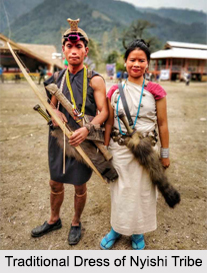
Traditional Dress of Nyishi Tribe
Traditional Dress of Nyishi Tribe is worn during festivals and social gathering. Men wear a cane helmet surmounted with the beak of the great Indian H...
Pasi Community
Pasi is an aboriginal race of India and are mainly distributed over the northern region of the country. The traditional occupation of Pasi is the extr...

Bhojas
Bhojas have been described as a very important tribe in the Aitareya Brahmana. Historical records have said that the Bhojas were settled towards the s...
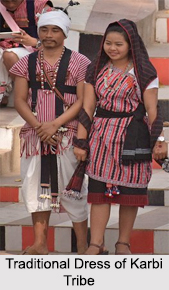
Traditional Dress of Karbi Tribe
Traditional Dress of Karbi Tribe can be easily recognized by the artistic designs inherited from their forefathers. Karbis have their own traditional...
Related articles in Tribes of India
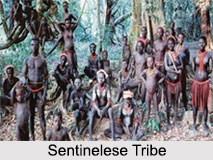
Sentinelese Tribe
Sentinelese tribal community is one of the most isolated and secluded tribes that are found in the whole world.
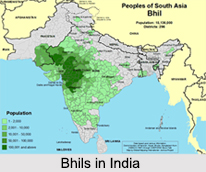
Bhil Tribe
The people of the Bhil tribe are the most widely distributed tribal groups in India.
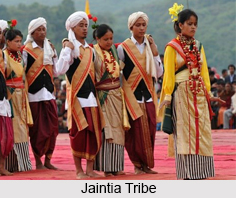
Jaintia Tribe
Jaintia Tribes are located in the Jaintia Hills of Meghalaya. They are also called the Pnars. They are famous for weaving of carpet, making of musical...
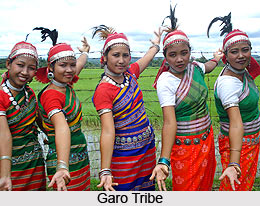
Garo Tribes
Garo Tribes are one of the matrilineal tribes of North-East India who reside in the Garo hills of Meghalaya. Historically, the tribe originated in Tib...
Garasia Tribe
The Garasia tribal community holds a significant position within Indian culture, renowned for their distinctive way of life and rich cultural heritage...