


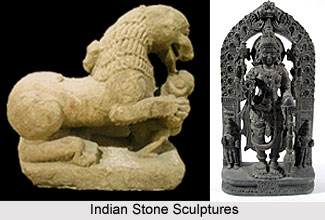
 Sarnath is one of the most beautiful sites in the world & sacred where the Lord Buddha delivered his first sermon, which was the introduction of Buddhism. The Lion Capital on top of one of pillar, which is recognized as the National Emblem of India, is from Sarnath. The Emperor Ashoka who worked in this life for spreading the Buddha's message of love and compassion visited Sarnath around 234 BC, and erected a Grand stupa. Along with it, several other Buddhist structures were raised at Sarnath between the 3rd century BC and the 11th century AD that represents today the most expansive ruins amongst places on the Buddhist trail. Sarnath is one of the most beautiful sites in the world & sacred where the Lord Buddha delivered his first sermon, which was the introduction of Buddhism. The Lion Capital on top of one of pillar, which is recognized as the National Emblem of India, is from Sarnath. The Emperor Ashoka who worked in this life for spreading the Buddha's message of love and compassion visited Sarnath around 234 BC, and erected a Grand stupa. Along with it, several other Buddhist structures were raised at Sarnath between the 3rd century BC and the 11th century AD that represents today the most expansive ruins amongst places on the Buddhist trail.
The main structure of the place has been enclosed and marked with the presence of a complex structure of monasteries that are half-ruined condition stupas. Dhamek Stupa is known for particular significance at Sarnath as it signifies the "seat of the holy Buddha", after he proclaimed his faith. Believed to be constructed 5th to 6th century, it is a cylindrical tower of around 30 meters high with a solid structure. But the sculptural beauty is maintained with all the architectural techniques. The trunk of the stupa is decorated using panels carved with geometric and floral designs. Another ruined stupa named the Dharmarajika Stupa is believed to have been built by Emperor Ashoka. And in its architectural settings, within its solid hemispherical mound a casket of funerary relics was found. Even the structure of Mulgandhakuti temple, the chief shrine of the Buddha, about 61mtrs high was erected during the Gupta period in the 4th-6th century A.D. After so many years of its construction, still it gleams in polished sandstone and truly represents the hieratic art under the rule of Mauryan. Known as Ashokan pillar, it displays all the characteristics of monoliths like exquisite proportion with polished touch & succinct instructions. The Lion Capital at Sarnath is certainly the excellent specimen of Mauryan art. 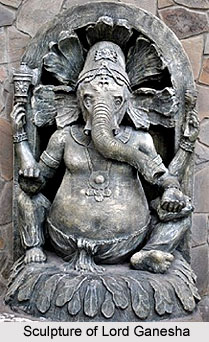 The rock cut caves of Ajanta are also famous for their stone sculpture. These rock cut caves show carving out of elaborate statues, pillars, and meditation rooms. The paintings at Ajanta are decorated with remarkable murals and regarded universally as the artistic treasures. By using simple tools like hammer and chisel, the monks had carved the impressive figures that helped in adorning the walls of these structures. Many of the caves were depicting stories from the Jatakas, which is a rich mine of tales of the several incarnations of the Buddha. Images of nymphs and princesses amongst others are also elaborately portrayed at inside of the caves. From all the best of the sculptures & of architectural skills are the cave no. 10, the only chaitya, and the cave no. 12, a three-storied vihara. During the monsoons, its beauty gets doubled, as the place is decorated naturally with lush greenery and very pretty waterfalls. The rock cut caves of Ajanta are also famous for their stone sculpture. These rock cut caves show carving out of elaborate statues, pillars, and meditation rooms. The paintings at Ajanta are decorated with remarkable murals and regarded universally as the artistic treasures. By using simple tools like hammer and chisel, the monks had carved the impressive figures that helped in adorning the walls of these structures. Many of the caves were depicting stories from the Jatakas, which is a rich mine of tales of the several incarnations of the Buddha. Images of nymphs and princesses amongst others are also elaborately portrayed at inside of the caves. From all the best of the sculptures & of architectural skills are the cave no. 10, the only chaitya, and the cave no. 12, a three-storied vihara. During the monsoons, its beauty gets doubled, as the place is decorated naturally with lush greenery and very pretty waterfalls.
Above all, these paintings of Ajanta caves are one of the most valuable wealth of the art tradition of the world. The caves are clearly engaged in depiction of the evolution of Buddhist architecture from the Hinayana period to the Mahayana period. In Hinayana period, Buddha was not represented in human form but in the Mahayana period, he was shown with the larger than life statues. The main artistic image in the caves is the Padmapani image of Buddha - holding a lotus flower and standing besides his. The other marvelous images include a relief sculpture comprising of four deer sharing a common head, the chaitya of cave no.19 and the reclining statue of Buddha in cave no. 26. The main Buddha statue in the very first cave is supposed to depict three different moods depending upon in which direction the light is shown; an excellent example of rock-cut carving. From the time of the polished sandstone lion edict of Sarnath to the present time, this craft of stone has traveled a long distance. The rock-cut caves of Ajanta and Ellora and Udayagiri; the Chalukyan temple of Virupaksha, of Pattadakal, the great Chola temple of the Nayakas at Madurai, the Indo-Aryan temples at Bhubaneshwar, Puri and Konark, the Sun temple, Modhera, Gujarat and the Chandela temples of Khajuraho: these ageless edifices present an endless variety of exquisite stone carvings. Today, the stone artisans draw much of their inspiration from these monuments and statues. The glamorous delight of the Taj Mahal in Agra has captured the marble craft of India. Most of the statues in the state of Orissa show similarity in form and details to the sculptures of the Jagannath temple at Puri. Traditional motifs such as standing Deepalakshmis, courting apsaras, lotus blossoms are all adopted as decorative stands for table lamps, ash-trays, or stone flower vases. |
| |||



Indian Stone Sculptures
| An information resource on Indian Stone Sculptures displayed in temples and monuments .Indian stone sculpture had its origin in Mauryan Empire. Stupa at Sarnath is one of the greatest examples of Stone sculpture. |
| ||||||||||||||||||||||||||||

