


 Leather Crafts are one of the most cherished crafts in India reflecting an amalgamation of style and tradition. Leather Crafts of India has an alluring and unique style. India has earned substantial fame in leather crafts and has acquired a firm grip in the international market as well. Various leather crafts are prepared in different regions of India which caters the need of local, national as well as international markets. Leather Crafts are one of the most cherished crafts in India reflecting an amalgamation of style and tradition. Leather Crafts of India has an alluring and unique style. India has earned substantial fame in leather crafts and has acquired a firm grip in the international market as well. Various leather crafts are prepared in different regions of India which caters the need of local, national as well as international markets.
History of Leather Craft in India Leather Craft in India has marked its prominence since the Indus valley civilisation. The concept of Leather Craft came into existence when men realized the usage of animal skin for their clothing. Ancient texts also testify the usage of deer skin for meditation by ascetics and sages. The rural and tribal people initially practiced this craft in India. In addition to clothing and footwear, Leather Craft in ancient time was also used to make bags, caps, armours, saddles and many more artifacts. Some of the important tools and techniques that were used in the ancient times for Leather Crafts still find their utility in the modern world. 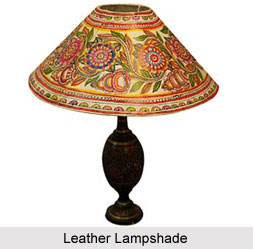 Leather Craft in Different Regions of India
Leather industry in India is one of the largest industries of the country. There are several regions in India where Leather Crafts are prevalent. Kolhapur city in Maharashtra is renowned for traditional leather footwear known as Kolhapuri chappals. These are crafted indigenously and are well admired in India as well as the world. Enchanting embroidered leather crafts are the specialty of Gwalior and Indore cities of Madhya Pradesh too. Decorative leather footwear of Rajasthan is also one of the acclaimed Leather Crafts of India. Embellished beautifully with beads, sequins, silk and metal embroideries, these leather crafts have also enlisted themselves in the most cherished crafts of India. Decorative leather saddles for horses and camels are found in Jaisalmer and Bikaner cities. Another state that holds a remarkable position in the field of leather crafts is West Bengal. Santiniketan pattern is a famous leather craft of Bengal. Apart from this, other traditional decorative leather artifacts are also well known products of Bengal. Besides this, Leather Crafts are also manufactured in many other parts of India as well. Leather Artifacts In recent times Leather Craft has lots of things to offer including clothing, footwear, decorative items etc. Leather Craft has occupied a large industry that trades not only in India but the overseas. Utilitarian items of leather like shoes, lampshades, suitcases, pouches, bags, belts, wallets, stuffed toys etc are found in umpteen amounts and maintain an indigenous quality. Leather jackets, gloves and coats are considered very trendy these days. Different cities and regions have their specialty in different items. Exclusively designed lamp and lampshades made from leather have an eye-catching effect. Leather shoes, jutties, masks, embroidered leather items are also found in different regions in accordance to the demand. Toys and puppets made of leather were used by the puppet masters in India since ages and are still reckoned as one of the finest example of Leather Craft. Knuckle pad is an embroidered Leather Craft that is vividly colourful and has an elegant look. Apart from this, ladies hand bags, ornaments, diary folders, leather seats, puffs and 'pidis' are also in great demand and found in polished attractive hues. Home decors like leather sofa sets, cushion covers etc are also crafted which blends beautifully with the recent fashion and trend of interior decorations. 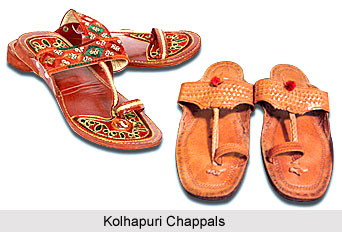 Traditional Leather Crafts
Leather items such as traditional shoes are specialized Leather Crafts of a particular locale. Creative leather products painted with epics and mythological pictures with gold and silver are beautiful portrayals of the culture and traditions of India. 'Zari' works with gold and silver threads in leather items like 'jooties' and 'chappals' are testaments of outstanding artistry and imparts elegance to the embroidered products. Traditional leather 'jooties' are sometimes decorated with silk and beads; sometimes appliqu‚ work is also done to add magnificence to the item. The leather is embroidered, studded, sequined, and stitched in a variety of attractive traditional designs. Sometimes the shoes are intricately decorated with gold and multicoloured threads to give them a gorgeous look. Leather artifacts having a traditional touch are immensely loved by the people throughout the country. Mojris (also known as jootis or pagarkhiyas), a kind of footwear, is also a Leather Craft that is well admired for its craftsmanship and variations of designs. "Kashidakari" is an art that is done on the 'jootis' with silk, metal, beads or as appliqu‚ with thin leather pieces of different colours. 'Peshwari' is another kind of jooti that is worn by both men and women. 'Nagra' is another jooti that is admired in all places of India and are embroidered with Mughal motifs in gold and brightly coloured threads having intricate and brilliant designs. Leather Crafts serve as an important part of everyday life. Over time, different regions of India have developed their specialty in different leather artifacts. Leather Crafts have evolved over the years and the craving for this craft has always increased with time. The wide range of unique products crafted by leather is an excellent example of the brilliant craftsmanship of India. |
| |||



Leather Craft
| Leather Crafts is one of the most admired handicrafts of India. It offers a wide range of products for utilitarian as well as decorative purposes. |
| ||||||||||||||||||||||||||||

