
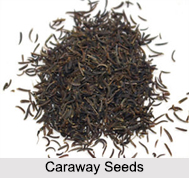
 Caraway seed is a very popular spice in India. It is one of the herbs renowned for its excellence of its aromatic dried seeds. These seeds are used as a condiment and an aid to digestion. The dried fruit or seed is brown in colour, has a pleasant aromatic flavour, warm and somewhat of sharp taste. Caraway seed aroma is just a little bitter than cumin seeds.
Caraway Seeds
Caraway seeds are typically used as a popular spice to add flavour to a variety of dishes.
Introduction
Caraway seed is a very popular spice in India. It is one of the herbs renowned for its excellence of its aromatic dried seeds. These seeds are used as a condiment and an aid to digestion. The dried fruit or seed is brown in colour, has a pleasant aromatic flavour, warm and somewhat of sharp taste. Caraway seed aroma is just a little bitter than cumin seeds.Etymology of Caraway Seeds
Caraway is Persian cumin which possesses the botanical name "Carum carvi Linn" and belongs to the family of "Umbellifereae". This herb is commonly found in the regions of Himachal Pradesh in India. The plant is known by different names in different languages all over the country. It is popularly known as "Shah Jeera" in Hindi, "Sheema Jilkara" in Telugu, "Shimayishiragam" in Tamil, "Kari Jeerige" in Kannada, "Shaahjeeru" in Gujarati, "Shahaajire" in Marathi and "Shajire" in Bengali.
Properties of Caraway Seeds
Caraway seed is an excellent source of minerals like iron, copper, calcium, potassium, manganese, selenium, zinc and magnesium. The seeds also contain many vital vitamins like A, E, C and B-complex. Caraway seeds are also a rich source of dietary fibre.
Use of Caraway Seeds in Cuisine
Caraway is widely used as a spice for culinary purposes and for flavouring bread, biscuits, cakes and cheese. Caraway seeds feature warm, sweet, and slightly peppery aroma when squeezed between index and thumb fingers. They are used extensively in European and Mediterranean cooking.
To keep their fragrance and flavour intact; caraway seeds are roasted gently under low flame and are ground just before using them in a recipe. A number of recipes for using caraway seeds in cooking include "naan bread", "Caraway Biscuits" and many more.
To keep their fragrance and flavour intact; caraway seeds are roasted gently under low flame and are ground just before using them in a recipe. A number of recipes for using caraway seeds in cooking include "naan bread", "Caraway Biscuits" and many more.
Usage of Caraway Seeds in Medicine
Caraway tea and infusions are best for treating intestinal parasites, urinary tract infections, coughs, colds, bronchitis and fever. They also help in boosting immunity. They are known to increase appetite in patients undergoing chemotherapy and are also useful for improving lactation in new mothers. Caraway oil is also used to help people cough up phlegm, improve control of urination, kill bacteria in the body and relieve constipation.
Uses of Caraway
Caraway seeds have various uses as it contains a substantial amount of moisture, protein, fat, carbohydrates, besides ash, calcium, phosphorus, sodium, potassium, iron, thiamine, riboflavin and niacin. It also contains vitamins C and A. Its calorific value is 465 per 100 gram. Uses of Caraway are varied as a valuable essential oil, containing substantial amounts of carvone, is obtained from caraway seeds. This oil is colourless or pale yellow with a strong odour and flavour of the fruit. The volatile oil contains a mixture of ketone, carvone, a terpene and traces of carvacrol. Caraway fruits may contain 3 percent to 7 percent essential oil. The aroma of the oil is mostly dominated by carvone which is present in 50 to 85 percent and limonene, 20 to 30 percent; the other components carveol, dihydrocarveol, alpha and beta -pinene, sabinene and perillyl alcohol are of much minor importance.
Uses of Caraway are identified with its medicinal values. It is recommended to cure dyspepsia and symptoms attending hysteria and other disorders. The Caraway Seeds have admirable healing power and curative properties. The whole of the caraway plant is useful for variety of purposes. The seeds, leaves and roots all are considered to have valuable properties. The plant is useful in activating the glands, besides increasing the action of the kidneys. Caraway oil is used in medicine to relieve flatulency. It is also used to cure the nauseating and griping effects of some medicines. Moreover the distilled Caraway water is considered as a useful remedy for the children. Caraway is used in treating earache and the powder of the seeds, made into a poultice acts as a remedy for bruises. In addition to that caraway seeds sweeten the breath, improve appetite, counter heart irregularity caused by excess digestive gas, and ease menstrual cramps. The Seeds of caraway soothe the digestive tract, acting directly on the intestinal muscles to relieve colic and cramps as well as all types of bloating.
The medicinal properties of caraway seeds include diuretic, expectorant, and tonic, and are frequently used in bronchitis and cough remedies. Caraway helps the nursing mother by increasing breast-milk production. Furthermore, the diluted essential oil is a useful remedy for scabies. Caraway also stimulates the appetite. Its astringency helps in the treatment laryngitis. Carvone isolated from caraway oil is used as anthelmintic in hookworm disease. Caraway seed oil is used in oral preparations for overcoming an unpleasant odour or taste. When employed for scenting of soaps, the soap gives the characteristic. Decarvonised oil consists of limonene with traces of Carvone and it is used for scenting soaps.
Caraway has culinary properties also. It is used for flavouring breads, biscuits, cakes and cheese. It is also used as an ingredient in sausages and as a seasoning and pickling spices. The oil from caraway is useful chiefly for flavouring purposes and in medicine as a carminative to relieve flatulence. Uses of Caraway can also be seen in the commercial field . The exhausted seed, after the distillation of the oil, contains a high percentage of protein and fat which is used as a cattle food. The Caraway seeds are widely used to flavour and season rye breads, cakes, biscuits, cheeses, omelettes, pasta, soups, salad dressing, applesauce, rice, and seafood. Moreover, the Caraway leaves are used in soups, stews, and salads. The essential oil from caraway seeds is used to flavour marinades, preserved meats, confectionery, condiments, candy, ice cream, and alcoholic beverages such as aquavit and kummel.
Uses of Caraway are identified with its medicinal values. It is recommended to cure dyspepsia and symptoms attending hysteria and other disorders. The Caraway Seeds have admirable healing power and curative properties. The whole of the caraway plant is useful for variety of purposes. The seeds, leaves and roots all are considered to have valuable properties. The plant is useful in activating the glands, besides increasing the action of the kidneys. Caraway oil is used in medicine to relieve flatulency. It is also used to cure the nauseating and griping effects of some medicines. Moreover the distilled Caraway water is considered as a useful remedy for the children. Caraway is used in treating earache and the powder of the seeds, made into a poultice acts as a remedy for bruises. In addition to that caraway seeds sweeten the breath, improve appetite, counter heart irregularity caused by excess digestive gas, and ease menstrual cramps. The Seeds of caraway soothe the digestive tract, acting directly on the intestinal muscles to relieve colic and cramps as well as all types of bloating.
The medicinal properties of caraway seeds include diuretic, expectorant, and tonic, and are frequently used in bronchitis and cough remedies. Caraway helps the nursing mother by increasing breast-milk production. Furthermore, the diluted essential oil is a useful remedy for scabies. Caraway also stimulates the appetite. Its astringency helps in the treatment laryngitis. Carvone isolated from caraway oil is used as anthelmintic in hookworm disease. Caraway seed oil is used in oral preparations for overcoming an unpleasant odour or taste. When employed for scenting of soaps, the soap gives the characteristic. Decarvonised oil consists of limonene with traces of Carvone and it is used for scenting soaps.
Caraway has culinary properties also. It is used for flavouring breads, biscuits, cakes and cheese. It is also used as an ingredient in sausages and as a seasoning and pickling spices. The oil from caraway is useful chiefly for flavouring purposes and in medicine as a carminative to relieve flatulence. Uses of Caraway can also be seen in the commercial field . The exhausted seed, after the distillation of the oil, contains a high percentage of protein and fat which is used as a cattle food. The Caraway seeds are widely used to flavour and season rye breads, cakes, biscuits, cheeses, omelettes, pasta, soups, salad dressing, applesauce, rice, and seafood. Moreover, the Caraway leaves are used in soups, stews, and salads. The essential oil from caraway seeds is used to flavour marinades, preserved meats, confectionery, condiments, candy, ice cream, and alcoholic beverages such as aquavit and kummel.
Caraway Oil
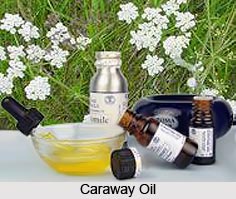 Extraction of Caraway Oil : The essential oil of Caraway is extracted from the seeds of the caraway plant. Caraway is scientifically known as "Carum Carvi". Sometimes, it is also labeled with the scientific name "Apium Carvi".
Health Benefits of Caraway Oil :
• Caraway is used for digestive problems including heartburn, bloating, gas, loss of appetite, and mild spasms of the stomach and intestines.
• Caraway oil is also used to help people cough up phlegm, improve control of urination, kill bacteria in the body, and relieve constipation.
• Women use caraway oil to start menstruation and relieve menstrual cramps; nursing mothers use it to increase the flow of breast milk.
• Caraway is used in mouthwashes and in skin rubs to improve local blood flow.
• Caraway oil is also used to flavour certain medications.
• It is also commonly used as a fragrance in toothpaste, soap, and cosmetics.
There are many other applications for caraway oil. Its external application can clear congestion in cases of cough and cold, makes the skin bright and fair, can cure inflammation of inner thighs and the areas around the genitals, as well as curing vitiligo, leprosy, rashes, acne, warts, rheumatism, arthritis, gout, vision loss, headache, backache, toothache, and hair loss. Its internal application is capable of curing nervousness and tension, fatigue, meningitis, loss of memory, diabetes, renal calculi, nausea, vomiting, heart diseases, impotency, hypertension, diarrhea, fever, insomnia and problems related to secretions from the endocrine glands. Regular intake of caraway oil is said to protect from all ailments and diseases and keep people healthy and looking young for a long time.
Caution: There are no inherent dangers to Caraway essential oil, except in some rare cases of irritation when a highly concentrated form was applied to the skin.
Blending: Caraway oil blends well with Dill , Fennel , Anise , Basil , Jasmine , Coriander, Frankincense, Chamomile, Ginger, Orange and Lavender Oils.
Recently updated articles in Food in India

Mehboob Alam Khan
Mehboob Alam Khan is a renowned culinary historian, chef, and educator dedicated to preserving Hyderabad's rich gastronomic heritage. Celebrated for r...
Assamese Cuisine
Assamese Cuisine is a mixture of different indigenous styles with regional variations and considerable external influences. Assamese use simple and fl...
Tamarind
Tamarind Pulp is the thick pulp of ripe fruit of Tamarind which is commonly used as condiment.
Food in Mauryan Period
Food in Mauryan Period largely includes the food and drinks during 300BC to 75 AD which has been extensively discussed in Arthashastra, rock edicts of...

Shilarna Vaze
Shilarna Vaze, also known as Chef Chinu, is a celebrated chef, entrepreneur, and sustainability advocate. Co-founder of Gaia Gourmet, she blends globa...
Related articles in Food in India
Food in Ancient India
Food in Ancient India has been largely agro based as the society in India in the ancient times was primarily agro based. The food of ancient India ref...
Food in Indus Valley civilization
Food in Indus Valley civilization largely depicts the agrarian culture of ancient India. As this had been one of the earliest civilisations of India,...
Indian Regional Cuisines
The intriguing style of different cooking style contributes to the diversity of the Indian regional cuisines.
Indian Festive Foods
Indian Festive foods augmenting the richness of Indian festivals, have gained popularity.
Ancient Buddhist Cuisine
Ancient Buddhist Cuisine has been well described in the early Buddhist works in which food has been classified into four categories.