


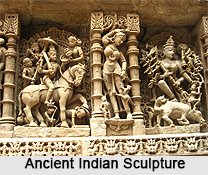
 Ancient Indian Sculpture is an integral part of Indian art and culture. Ancient Indian sculptures were relatively simple and date back to the days of the Indus Valley Civilization of the 2nd and 3rd millennium BC. The rich intricate sculptures of this civilization mainly emphasised on the works of stone, terra cotta and bronze. Starting from Indus Valley Civilization to the various rulers who ruled India, different sculptures portray different history of their own. Ancient Indian Sculpture is an integral part of Indian art and culture. Ancient Indian sculptures were relatively simple and date back to the days of the Indus Valley Civilization of the 2nd and 3rd millennium BC. The rich intricate sculptures of this civilization mainly emphasised on the works of stone, terra cotta and bronze. Starting from Indus Valley Civilization to the various rulers who ruled India, different sculptures portray different history of their own.
Design of Ancient Indian Sculpture Ancient Indian sculpture features various elegant designs and themes taken from lifestyle. A characteristic of Indian sculpture is that it is primarily realistic in nature and the human forms appear in it more closely related with the surrounding. Flora and fauna have also found its presence in sculptures of India along with the innumerable respected deities. Sculpture found in excavated cities consists of small pieces, terra-cotta objects, soapstone, or steatite, seals carved with animals, and a few statuettes of stone and bronze. The terracotta figurines are modelled and provided with elaborate jewellery. It was made separately and applied to the surface of the piece. The work is easy excepting for a small group of human heads with horns which have been made very skilfully. Animal figures are common like bulls. A unicorn is another animal, but it has been stylized frequently. Seals are carved with bisons, elephants, rhinoceroses and tigers. There are also images of religious significance. 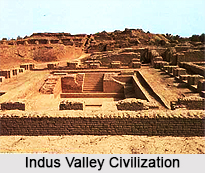
The terra-cotta sculpture and the seals show two clear and distinct stylistic trends. The sculptures are sensuous and the seals are linear and abstract. Full and refined modelling is a fragmentary torso from Harappa. A jaunty bronze dancing girl with head tilted upward is also from Mohenjo-daro. There is also a headless figure of a male dancer from Harappa whose shoulders twisted in a circular movement. The bearded figure from Mohenjo-daro wearing a robe decorated with a pattern made of trefoil motifs is another well known sculpture. These sculptures have tight, compressed body shape. The expansive modelling of the head reveals that the two aspects of form in Indus valley art interacted with each other. It is also indicated in the interplay of modelled form and textured surface. |
| |||



Ancient Indian Sculpture
| Ancient Indian sculptures date back to the days of the Indus Valley Civilization. It was relatively simple. |
| ||||||||||||||||||||||||||||

