
The Tiruppavai, also known as Thiruppavai, is a compilation of 30 Paasuram or stanzas in Tamil language, composed by Antal (Andal) in honour and praise of Lord Vishnu, known as Perumal in Tamil. It is comprised as a part of Divya Prabandha, which is a work of the 12 Alvars (devotees of Lord Vishnu). Tiruppavai is one of the most significant works of Tamil literature. The Tiruppavai collection belongs to the Pavai genre of hymns and songs. Pavai is a unique custom in Tamil Nadu, where the Pavai vow is observed in the Tamil month of Margazhi, initially by unmarried maidens who pray to the goddess Pavai, related to goddess Parvati, for an idyllic married life. The Paasurams of Tiruppavai are sung by Sri Vaishnavas throughout the year in their residences as well as in the temples. This Tamil tradition gets special importance particularly during Margazhi as each day of this Tamil month is named from one of the 30 verses of Tiruppavai. There are also references to this vow in Paripatal, a Tamil poetic anthology from the late Sangam age.
The verses and hymns composed by Antal consist of the basic principles of Vaishnavism which are strictly followed during the month of Marghazhi. Vaishnavas chant these hymns in order to attain prosperity, peace and divine grace. Antal adopts the appearance of a cowherd in the 30 verses. She appears focused on performing a specific religious vow to marry Lord Vishnu, thus acquire the Lord`s eternal companionship and inviting all her female friends to support and join the author. Near the climax, it is revealed that Antal actually did not perform a religious ritual; but simply just prayed to be granted the service of Lord Vishnu for infinity. She desires for unending happiness and service of the Lord.
Content of Tiruppavai
The initial 5 stanzas give an introduction to the key subject matter, its principle and objective. According to Antal, every devotee should give up the luxuries and comforts during that particular month and thus maintain a pure, rigorous ascetic life style for the worship of the lord. Honest prayers to Lord Vishnu would fetch plentiful rain and thus affluence. The rains would promise the grand fertility and the greenery accompanied with bountiful affluence from the Almighty. It is also important to offering fresh flowers to Lord Krishna as it would redress sins committed previously and even the sins that might be committed in future. In the next 10 stanzas, Antal narrates the value of community participation. She requests her friends to join her and collect flowers. The poet also explains the ambience at the village, the twittering of birds, vibrant blossoms, the melodic sound of churning butter, herds of cattle with tinkling bells and the sounding of the conch that reverberates from the temple.
Antal visits every house, awakens her friends and invites them to join her for a bath in a pond located nearby. She also sings and lauds the various incarnations of Lord Vishnu. The next 5 stanzas mentions about her visit to the temple along with her friends. She wishes to make Suprabhata gently to wake up Vishnu. She and her friends pacify the guards of the temple, enter the premises of the temple and chant prayers praising the parents of Lord Krishna. The group pleads them to wake up Lord Krishna and Balarama. Then Antal and her friends approach Neela Devi, the companion of the Lord, to have a Darshan (view).
The final 9 stanzas are about the magnificence of Lord Vishnu. After acquiring his blessings, Antal mentions about her demands; milk for the Vrata (fasting), white conch, flowers, lamp, abundance of ghee and butter and precious costume and jewellery. The concluding stanza identifies the author as the adopted daughter of Periyalvar, who made this compilation of 30 stanzas or Paasurams. It also mentions that those who recite the verses with love and devotion will obtain the blessings of Lord Vishnu.
Tiruppavai
Tiruppavai or Thiruppavai is a collection of 30 stanzas composed by Antal (Andal) in honour and praise of Lord Vishnu in Tamil language. It is a part of Divya Prabandha.
Recently updated articles in Indian Literature
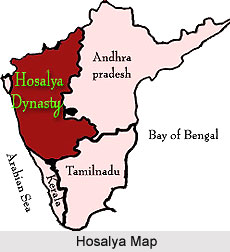
Gadyakarnamrita
Gadyakarnamrita is a 13th-century Sanskrit literary work written mainly in prose. It describes the ninety-day battle at Srirangam between the Hoysala...
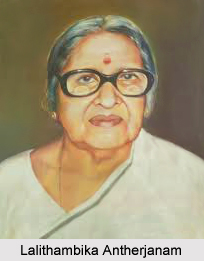
Women Writers in Malayalam Literature
Women writers in Malayalam literature have worked incessantly to make a place for their literary works. In the earlier periods, they were completely o...
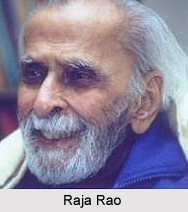
Comrade Kirillov, Novel by Raja Rao
Comrade Kirillov, a distinctive creation of Raja Rao, is presented as a brief yet incisive novelette that offers an ironic portrayal of the self-contr...
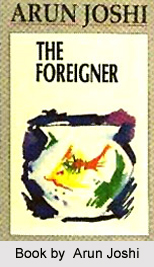
The Foreigner, Novel by Arun Joshi
“The Foreigner” is a book authored by Arun Joshi and published by Vision. It is an illustrious creation in the entire career of Arun Joshi, the famous...
Short Story in Telugu Literature
Short Story in twentieth century Telugu Literature was extremely popular and growing in and developing in a major way. Their popularity was greatly fa...
Related articles in Indian Literature
Mythological Themes in Indian Literature
Mythological themes in Indian literature have been integral to every ancient and contemporary writer and their path to f
Literature During Gupta Age
It is during the Gupta Age literature in the form of poetry, epos and drama gained a colossal importance.
Literature of Aravidu Dynasty
Sanskrit and Telugu were the popular literary medium of communication during Aravidu dynasty.
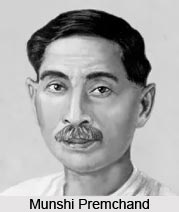
Munshi Premchand
Munshi Premchand was a legendary Indian writer notable for his modern Hindustani literature. A writer of a very high caliber, Premchand`s writings hav...
Sanskrit Poets
The names of some of the Sanskrit Poets are Bharavi, Devarshi Ramanath Shastri, Jayadeva and Srinivas Rath.