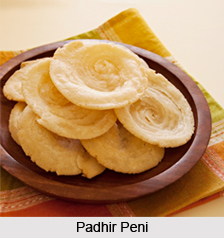
 Padhir Peni is a very famous and traditional sweet recipe of Karnataka. Since, it is an ancient recipe; the fame of its deliciousness has faded away. But, Padhir Peni is making a comeback these days. Though it is not a quick sweet to make, neither is it easy. But it"s not complicated too. Some people call this as "Karnataka Special Peni" also. This is a very delicious dessert.
Padhir Peni is one of those status symbol sweets of Karnataka. If Padhir Peni is served at a wedding, it usually means the family is well off, has good taste and can flaunt it. Marriages or big functions in Karnataka are not complete without Peni.
Ingredients for Poori:
•Almonds - 1 and 1/2 cups, blanched peeled and ground to a paste
•Maida - 2 to 3 cups
•Baking Powder - 1/2 tsp
•Salt - a pinch
•Ghee - 2 tbsp
•Ghee/Oil - for deep frying
Ingredients for Padhir:
•Ghee - 1/4 cup + 4 tbsp
•Rice Flour - 3 to 4 tbsp
Ingredients for Sugar Syrup:
•Sugar - 2 cups
•Water - 3/4 cup
•Whole Green Cardamom - 3
Method:
1. Mix maida, salt and ghee in a bowl. Add baking powder and mix well.
2. Blend it till flour resembles fine bread crumbs.
3. Add the almond paste little at a time, sprinkle water and knead very well to a thick dough.
4. Cover and set aside the dough for a few minutes.
5. Rub rice flour and the ghee together in a flat plate for 5 to 10 minutes till it becomes shiny and soft.
6. Divide the dough into even sized balls.
7. Roll out each ball into thin chapati.
8. Apply little butter paste on top and put one more chapati on top.
9. Repeat the process to obtain 3 in one pile.
10. Apply paste on top of the 3rd and roll from one end.
11. Divide the roll into 3 by pressing and breaking it with hand gently.
12. Gently press and make a ball in such a way that inside filling is closed and sealed.
13. Roll it into a flat thick circle.
14. Deep fry in moderately hot oil or ghee till crisp and brown on both sides. Keep heat medium throughout for crispy, flaky pooris.
15. Remove from fire.
16. Prepare sugar syrup by adding sugar to a pan and just sufficient water to immerse the sugar.
17. Heat the pan. Wait for the sugar to dissolve and then get sticky. When it is about 1 string consistency, switch off.
18. Dip each fried poori quickly into the hot sugar syrup, tap off excess syrup and pile on a plate.
19. Serve warm or at room temperature.
Notes for Padhir Peni
There are multiple versions of the Padhir Peni recipe. Some use maida and fine semolina (sooji), some use just maida like the one here and some use just semolina. Don"t let pooris soak in the syrup. Let the sugar syrup soaked pooris cool down completely before storing them in airtight containers. Instead of dunking the poori into the syrup, one can dust these with powdered sugar or top them with sweetened slightly thickened milk or even Badam milk for a different taste. These are best eaten the day they are made or within 2-3 days.
Related Articles
Food in Ancient India
Food in Vedic Period
Recipes in Vedic Period
Indian Food
Indian Desserts
Indian Sweets
Indian Sweet Recipe
Indian Fried Sweets
Karnataka Cuisine
North Karnataka Cuisine