
The Mallas were a powerful people of East India at the time of Gautama Buddha. There has been ample mention of the Mallas in Buddhist literature. The Mallas were divided into two confederacies one with headquarters Pava, and the other with headquarters at Kusinara. The territory of the Mallas of Kusinara and Pava was on the mountain slopes to the east of the Sakya land and to the north of the Vajjian confederation. Another town of the Mallas was Anupiya, where Lord Buddha resided for some time. This Anupiya may be the same as the mango-grove called Anupiya, where Gautama had spent the first seven days after his renunciation, on his way to Rajagriha.
The Mallas belonged to the Kshatriya caste; and they are repeatedly addressed by Lord Buddha as well as by Ananda and others as Vasetthas or Vasisthas showing that, like the Icchavis, they belonged to the Vasistha gotra. The Mallas have been described by Manus as born of a Kshatriya mother and of a Kshatriya father who was a vratya i.e. who had not gone through the ceremony of Vedic initiation at the proper age.
Historical records state that Kautaliya believed that the Mallas were a sangha or corporation of which the members called them rajas, just as, the Licchavis did. It is said that the Mallas of Pava and Kusinara, then, had their respective Council-Halls, where all matters, both political and religious, were discussed. The Mahaparinibadna Suttanta has mentioned that there is a set of Purusas among the Mallas of Kusmara. It seems that the Mallas were a martial race and were devoted to manly sports like wrestling. But the Mallas cultivated learning as well as political culture within their tribe.
Historical records testify that before the advent of Jainism and Buddhism, the Mallas were worshippers like their neighbours. One of their shrines called Makuta Bandhana, to the east of Kusmara. Jainism found many followers among the Mallas.
The Mallas were much attached to the founder of Jainism. Buddhism also attracted many devotees among the Mallas some of whom, like the venerable Dabba, attained a high and respected position among the brethren. It is said that Mallas then met together in their Council-Hall to devise some means of honouring the earthly remains of the Lord in a stable manner, and carried them with music to the shrine of the Jatakas, called the Makuta-bandhana, to the east of their city.
The Mallas appear to have usually been on friendly terms with their neighbours, the Licchavis, with whom they had many ties of kinship, though, as was inevitable, there were occasional rivalries between the two States. It has been recorded in History that the Mallas appear to have lost their independence to the ambitious monarch of Magadha, Ajatashatru, and their dominion was annexed to the Magadhan Empire.
Malla Tribe
Mallas were from the eastern part of India. The time period to which they belong can be traced to the time of Gautama Buddha. Mallas were Kastriyas.
Recently updated articles in Tribes of India

Arakh Tribe
Arakh Tribe is one of the ancient tribes located in several parts of central India. Their origin dates back to the Tughlaq era. Arakh tribe appears to...
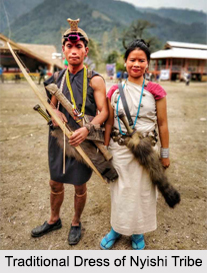
Traditional Dress of Nyishi Tribe
Traditional Dress of Nyishi Tribe is worn during festivals and social gathering. Men wear a cane helmet surmounted with the beak of the great Indian H...
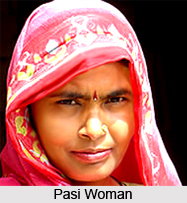
Pasi Community
Pasi is an aboriginal race of India and are mainly distributed over the northern region of the country. The traditional occupation of Pasi is the extr...

Bhojas
Bhojas have been described as a very important tribe in the Aitareya Brahmana. Historical records have said that the Bhojas were settled towards the s...
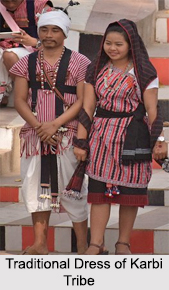
Traditional Dress of Karbi Tribe
Traditional Dress of Karbi Tribe can be easily recognized by the artistic designs inherited from their forefathers. Karbis have their own traditional...
Related articles in Tribes of India
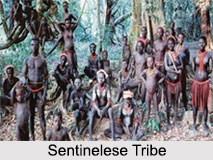
Sentinelese Tribe
Sentinelese tribal community is one of the most isolated and secluded tribes that are found in the whole world.
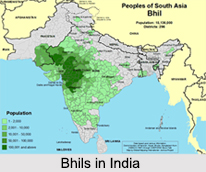
Bhil Tribe
The people of the Bhil tribe are the most widely distributed tribal groups in India.
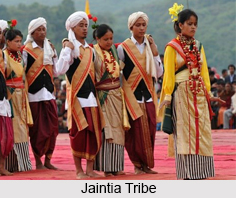
Jaintia Tribe
Jaintia Tribes are located in the Jaintia Hills of Meghalaya. They are also called the Pnars. They are famous for weaving of carpet, making of musical...
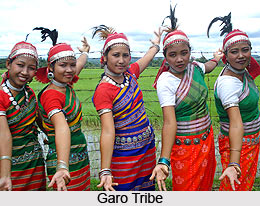
Garo Tribes
Garo Tribes are one of the matrilineal tribes of North-East India who reside in the Garo hills of Meghalaya. Historically, the tribe originated in Tib...
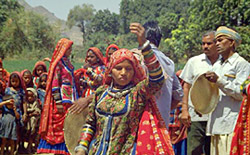
Garasia Tribe
The Garasia tribal community holds a significant position within Indian culture, renowned for their distinctive way of life and rich cultural heritage...